Earth Day Garden Projects: 5 Things You Can Do This Weekend
Earth Day is April 22, and the easiest way to mark it is to do something permanent in your garden. Not a social media post. Not a pledge. Something physical that changes the land you’re responsible for, even slightly, in a direction that supports the ecosystem you live in.
These five projects are practical, completable in a few hours, and require no special expertise. Each one makes a measurable difference, reducing runoff, supporting pollinators, building soil, or converting unproductive space into something alive.
Pick one or do all five. Your garden will be better for it every day for years.
1. Plant a Native Shrub for Birds
Time: 1 hour | Cost: $15–$40
A single native shrub provides food (berries, insects on foliage), shelter (nesting sites, wind protection), and cover (predator escape) for dozens of bird species. One shrub. Dozens of birds.
What to Plant
Choose a species native to your region that produces fruit:
- Serviceberry (Amelanchier): Spring flowers, summer berries, fall color. Birds devour the berries. Zones 3–9.
- Winterberry holly (Ilex verticillata): Bright red berries that persist into winter when birds need food most. Needs a male pollinator within 50 feet. Zones 3–9.
- Elderberry (Sambucus): Fast-growing, heavy fruit production, attracts birds and pollinators. Zones 3–9.
- Spicebush (Lindera benzoin): Understory shrub for shade. Red berries in fall. Host plant for spicebush swallowtail butterfly. Zones 4–9.
- Chokeberry (Aronia): Tough, adaptable, beautiful fall color. Berries persist because birds eat them last (emergency winter food). Zones 3–8.
How to Plant
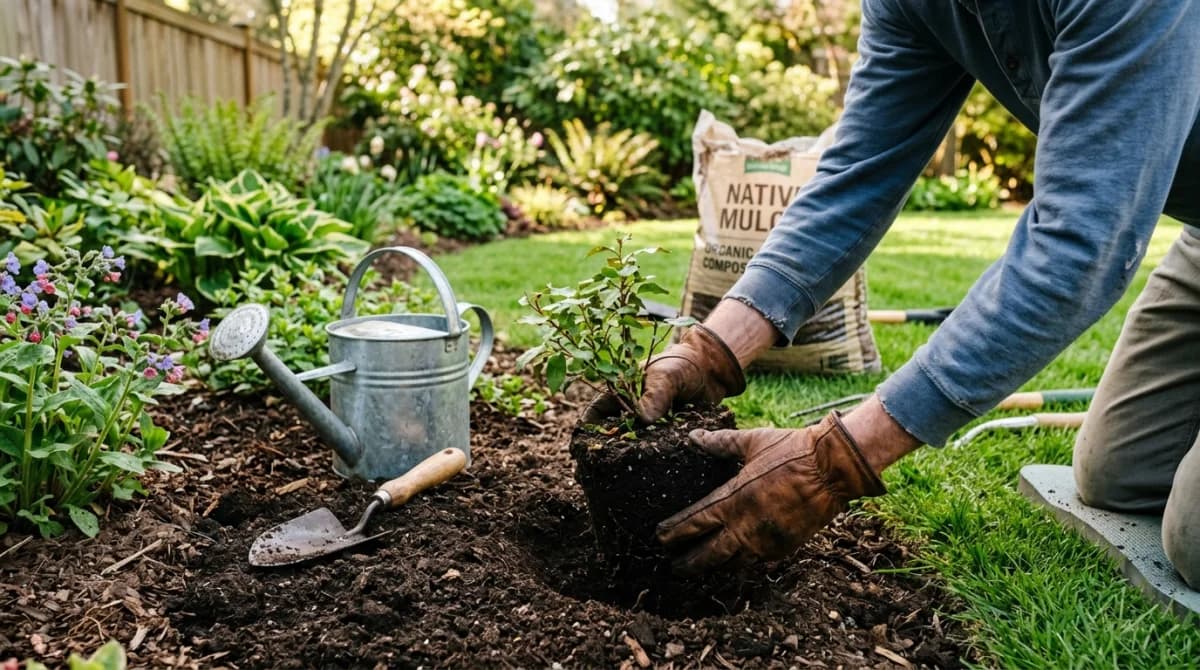
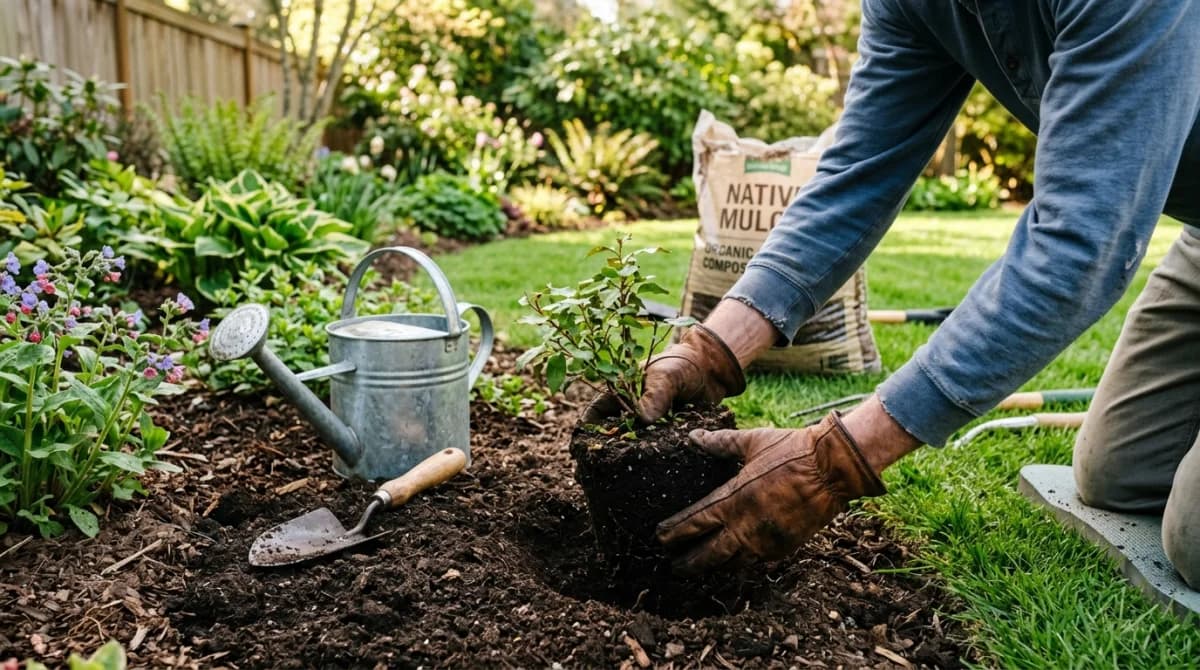
Dig a hole twice the width of the root ball and the same depth. Set the shrub so the top of the root ball is level with the surrounding soil. Backfill with the native soil you removed (no amendments needed for native plants in native soil). Water deeply and mulch with 2 to 3 inches of shredded bark or leaves, keeping mulch away from the stem.
That’s it. One shrub, one hour, years of benefit.
2. Build a Simple Rain Garden
Time: 3–4 hours | Cost: $30–$80 (plants and compost)
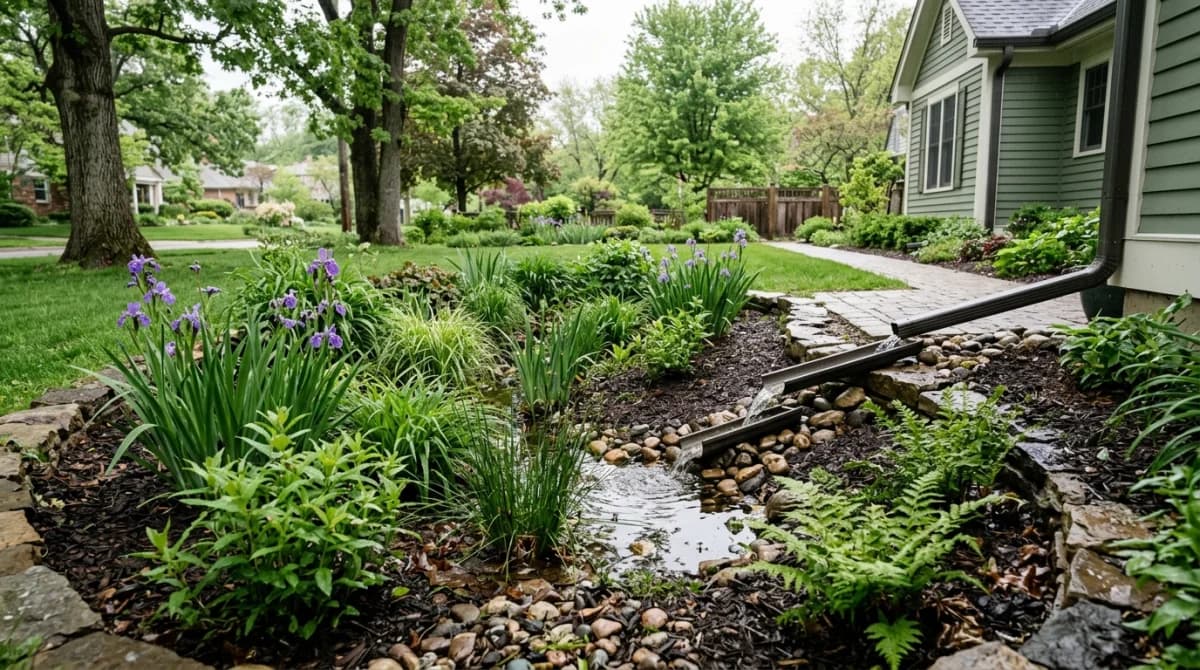
A rain garden is a shallow depression planted with deep-rooted native plants that captures and filters stormwater runoff from your roof, driveway, or lawn. Instead of letting runoff flow into storm drains (carrying fertilizer, oil, and sediment into waterways), a rain garden absorbs it on site.
Site Selection
Find a spot at least 10 feet from the house foundation where water naturally flows or collects after rain. The area should drain within 24 to 48 hours (a rain garden is not a pond). Avoid utility lines and septic fields.
Building It
- Mark out an area roughly 6 to 10 feet across (bigger is better for more runoff).
- Dig a shallow basin 4 to 8 inches deep with gently sloped sides.
- Amend the excavated soil with compost (about 30 percent compost by volume) and return it to the basin.
- Create a berm on the downhill side with the excess soil to contain water.
- Plant with deep-rooted natives: blue flag iris, swamp milkweed, Joe-Pye weed, switchgrass, cardinal flower. Choose plants that tolerate both wet feet and dry periods.
- Mulch with shredded bark.
- Direct a downspout or create a shallow swale to channel water into the garden.
A rain garden absorbs 30 percent more water than a lawn. It filters pollutants through root systems and soil biology, and it creates habitat for pollinators and beneficial insects.
3. Start a Compost Bin
Time: 30 minutes to 1 hour | Cost: $0–$30
If you don’t already compost, Earth Day is the perfect excuse to start. You don’t need a fancy system. A circle of wire fencing on a back corner of bare ground is enough.
Quickest Setup
Buy a 10-foot length of 3-foot-tall welded wire fencing at the hardware store. Bend it into a circle and clip the ends together with wire or zip ties. Set it on bare soil. Start filling with alternating layers of brown material (dried leaves, cardboard) and green material (kitchen scraps, fresh garden trimmings).
That’s a functional compost bin for under $20 that will convert your kitchen and yard waste into soil amendment indefinitely.
If you have fall leaves stockpiled, build a full pile today using alternating layers. If not, start adding kitchen scraps now, covering each addition with brown material, and by summer you’ll have the beginnings of usable compost.
4. Create a Pollinator Water Station
Time: 15 minutes | Cost: $0–$10
Pollinators need water, but they can’t use open water like a birdbath: they’ll drown. They need shallow water with landing spots.
How to Build One
Take a shallow dish, saucer, or tray (a terracotta plant saucer works perfectly). Fill it with flat pebbles, marbles, or small stones until they rise above the rim. Add water until it’s just below the top of the stones.
Place it near your flower garden in a spot that gets some sun. Refill daily, as the water evaporates fast in warm weather.
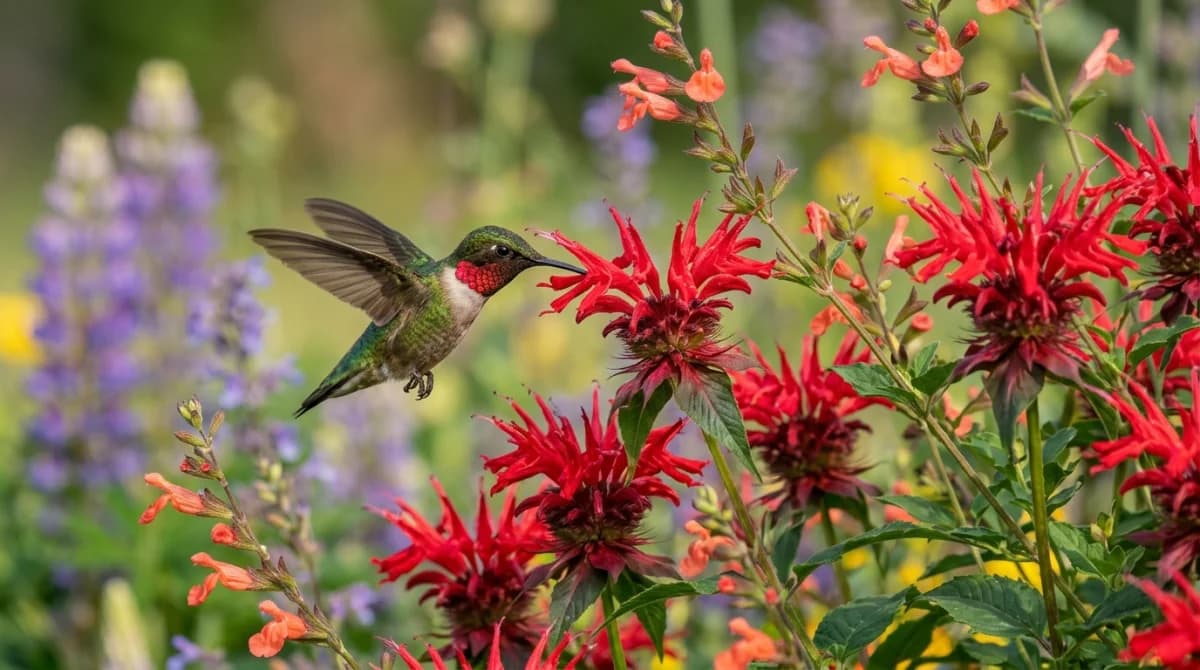
For an upgraded version, add a pinch of salt to the water. Butterflies specifically seek out mineral-rich water sources (called puddling). A shallow tray of moist sand with a pinch of salt and a splash of water is a butterfly magnet.
5. Replace a Patch of Lawn With Groundcover
Time: 2–3 hours | Cost: $20–$60
Lawn is the largest irrigated crop in North America. Most residential lawn serves no functional purpose: it’s not walked on, played on, or enjoyed. It just gets mowed.
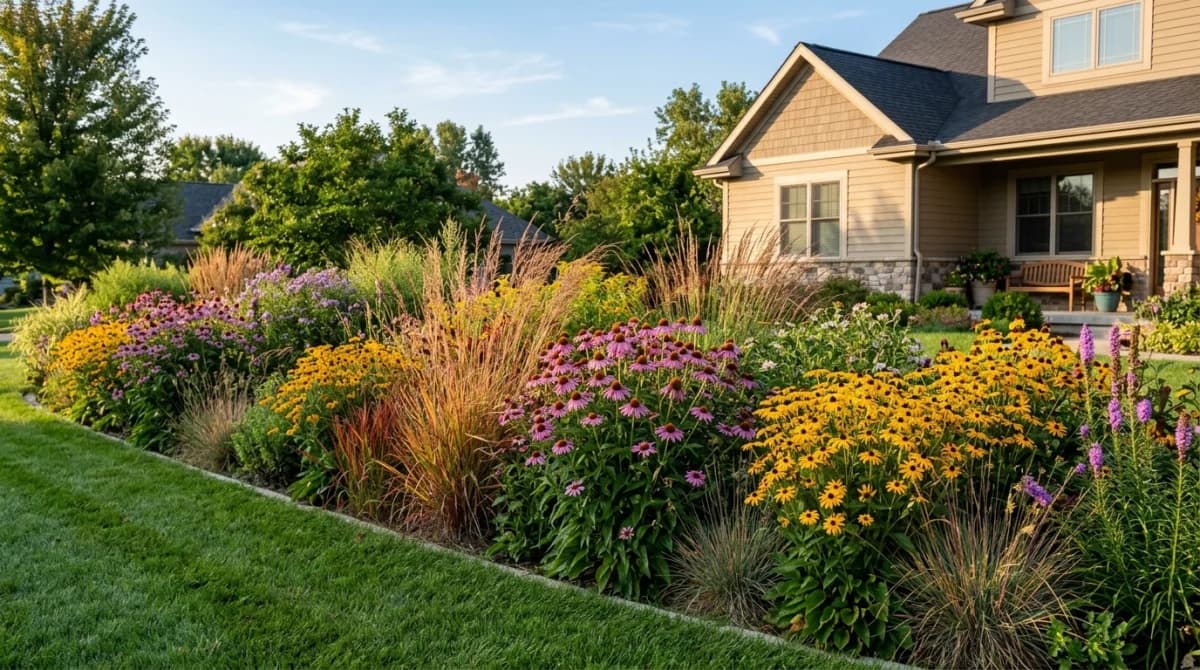
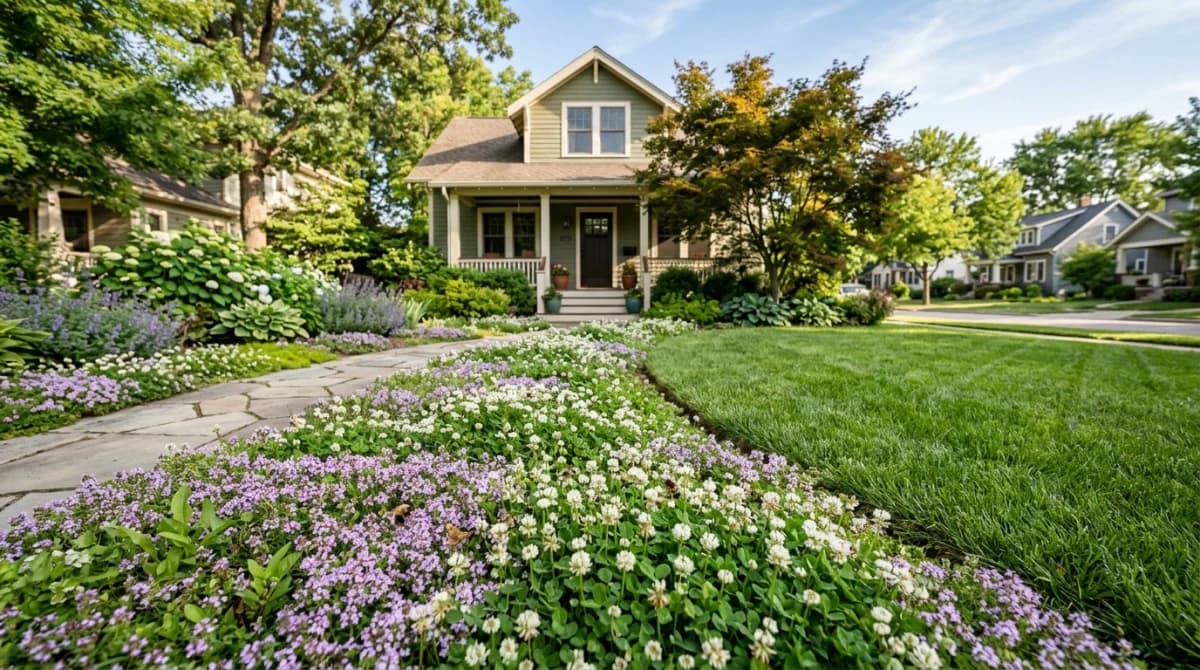
Converting even a small section of unused lawn to groundcover or native plants reduces mowing, eliminates fertilizer and water use in that area, and creates habitat.
How to Convert
The smother method: Cover the lawn section with cardboard (overlapping edges by 6 inches), wet it thoroughly, and top with 4 to 6 inches of mulch. Wait 8 to 12 weeks. The grass dies underneath, the cardboard decomposes, and you can plant directly into the mulch layer.
The immediate plant method: Strip the sod with a flat shovel, amend the soil with compost, and plant groundcovers immediately. More labor but instant results.
What to Plant
- White clover: Fixes nitrogen, stays low, feeds pollinators, soft underfoot. Direct seed onto bare soil.
- Creeping thyme: Fragrant, flowers in summer, tolerates light foot traffic. Plant plugs 8 to 12 inches apart.
- Native sedge (Carex pensylvanica): Looks like a fine-textured grass, needs one annual mow, thrives in shade under trees. Plant plugs 6 inches apart.
Start small. A 4-by-8-foot section is enough to demonstrate the concept. You can always expand.
The Bigger Picture
These projects aren’t gestures. Each one addresses a specific ecological function:
- Native shrub → food web support for birds and insects
- Rain garden → stormwater management and water quality
- Compost → waste reduction and soil building
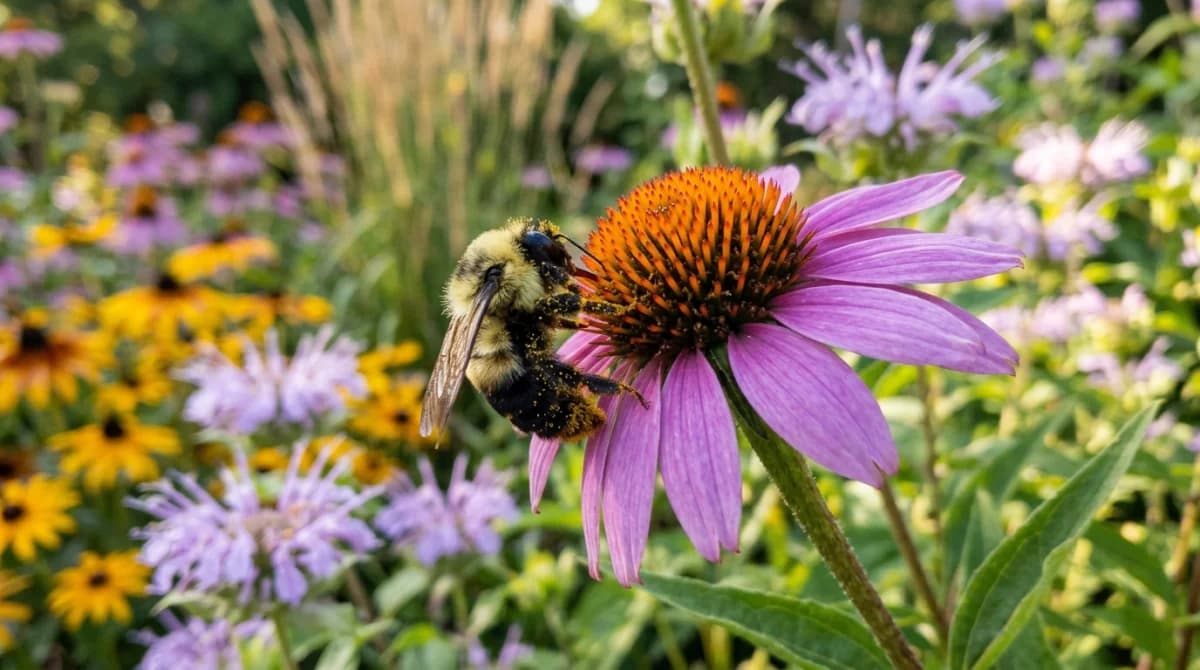
- Water station → pollinator support
- Lawn conversion → habitat creation and resource reduction
Together, they transform a standard residential yard from an ecological dead zone into a functional habitat. The changes are permanent, the maintenance is minimal, and the benefit compounds over time.
If you’re thinking about redesigning your garden with sustainability in mind, tools like Gardenly can help you plan where native plantings, rain gardens, and habitat features will have the most impact, and make sure they look good in the process.
The best Earth Day project is one that outlasts Earth Day. Plant something permanent this weekend.