How to Design a Garden You’ll Love in Every Season
Most gardens peak for about six weeks and then coast downhill. The peonies bloom in June, the daylilies follow in July, and by September the garden is a collection of tired foliage waiting for frost. From November through March, it’s essentially empty.
This is a design failure, not a climate inevitability. A well-designed garden provides something worth looking at in every month of the year. Not necessarily peak bloom, but structure, texture, color, movement, fragrance, or wildlife interest that makes the garden worth visiting in January and August alike.
The framework is simple: structure first, flowers second. Flowers are seasonal. Structure is permanent. A garden built on structure with flowers layered on top always looks good. A garden built entirely on flowers looks spectacular for a few weeks and vacant for the rest.
The Framework: Structure First
Structural elements are the bones of the garden: the things that look good whether or not anything is blooming.
Evergreens
Evergreen plants provide year-round form and color. In winter, they’re the difference between a garden and an empty lot. In summer, they provide a backdrop that makes flowers pop.
Not just conifers. Yes, spruces, pines, and junipers provide classic evergreen structure. But broadleaf evergreens add variety: holly, rhododendron, boxwood, inkberry, leucothoe, and (in mild climates) camellias and gardenias.
A garden needs 25 to 30 percent evergreen content to look intentionally designed in winter. Below that threshold, the winter garden feels sparse and accidental.
Hardscape
Walls, paths, fences, pergolas, and raised beds provide permanent structure regardless of season. A well-designed stone wall looks as good in February as it does in June. A pergola frames the sky when nothing else is happening.
Good hardscape also creates the architecture that plantings fill. The shape of a bed, the line of a path, the mass of a wall: these define the garden’s character year-round.
Trees
Trees are the largest structural elements in the garden. Choose trees that provide interest across multiple seasons:
- Flowering in spring: Serviceberry, redbud, dogwood, crabapple
- Foliage in summer: Shade, texture, and scale
- Color in fall: Sugar maple, sweetgum, sassafras, oakleaf hydrangea
- Bark and form in winter: Paperbark maple (cinnamon peeling bark), river birch (creamy exfoliating bark), Japanese maple (sculptural branching)
A single multi-season tree is worth more than a dozen plants that peak for two weeks.
Layering the Seasons
With structure in place, layer seasonal interest so something is always happening.
Spring (March–May)
Spring interest starts at ground level with bulbs and gradually moves upward as trees and shrubs bloom.
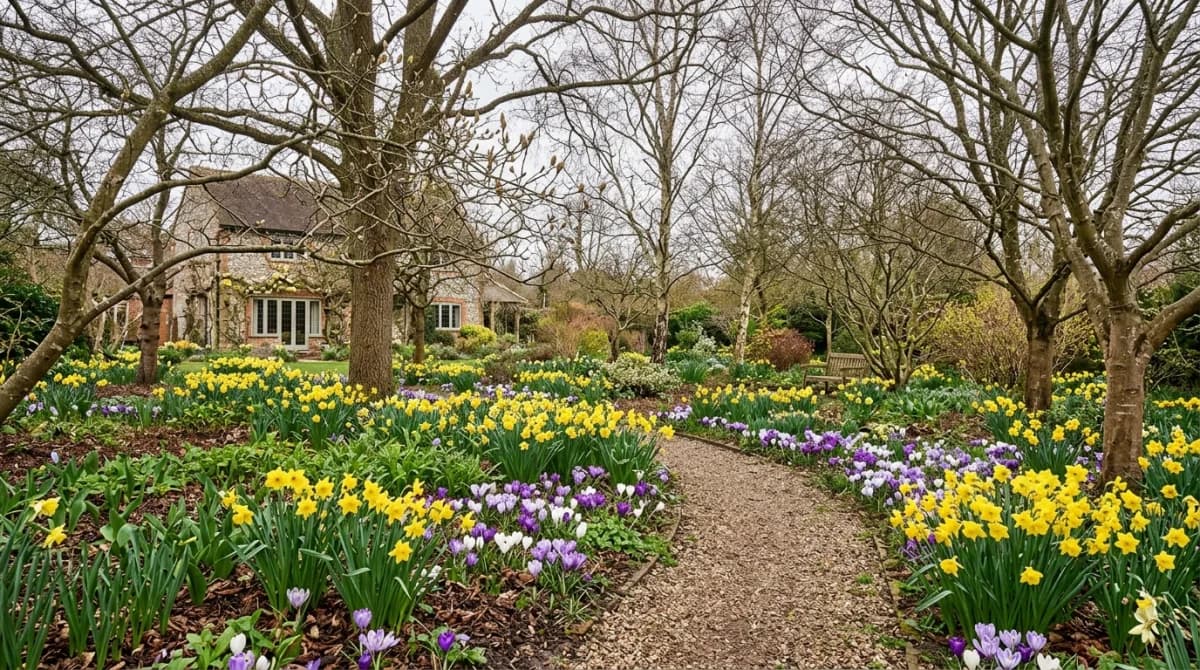
Bulbs are the most cost-effective spring investment. A hundred crocus bulbs planted in fall cost $20 and provide a carpet of color for years. Layer bulbs at different depths for a succession of bloom:
- Early spring (March): Snowdrops, crocus, winter aconite; ground-level gems that appear through the last snow
- Mid-spring (April): Daffodils, tulips, hyacinth (the main event)
- Late spring (May): Allium, late tulips, camassia; these bridge the gap to summer perennials
Spring ephemerals (Virginia bluebells, bloodroot, trillium) bloom under deciduous trees before the canopy leafs out, then go dormant as shade develops. They occupy the same space as summer shade plants without competing.
Flowering trees and shrubs (serviceberry, witchhazel, magnolia, forsythia, lilac) provide the first large-scale color and fragrance of the year.
Summer (June–August)
The easiest season to design for because everything is growing.
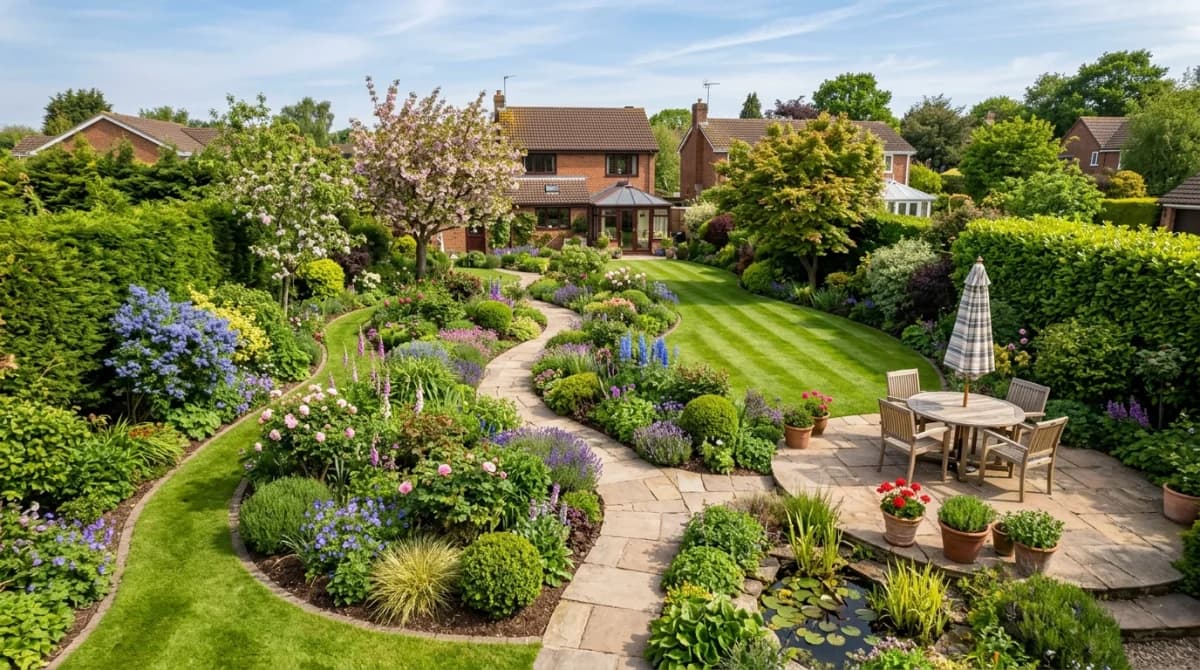
Perennial bloom succession is the key. Plan for overlapping bloom periods so color is continuous:
- June: Peonies, iris, baptisia, catmint
- July: Daylilies, echinacea, Shasta daisies, monarda
- August: Rudbeckia, liatris, phlox, Russian sage
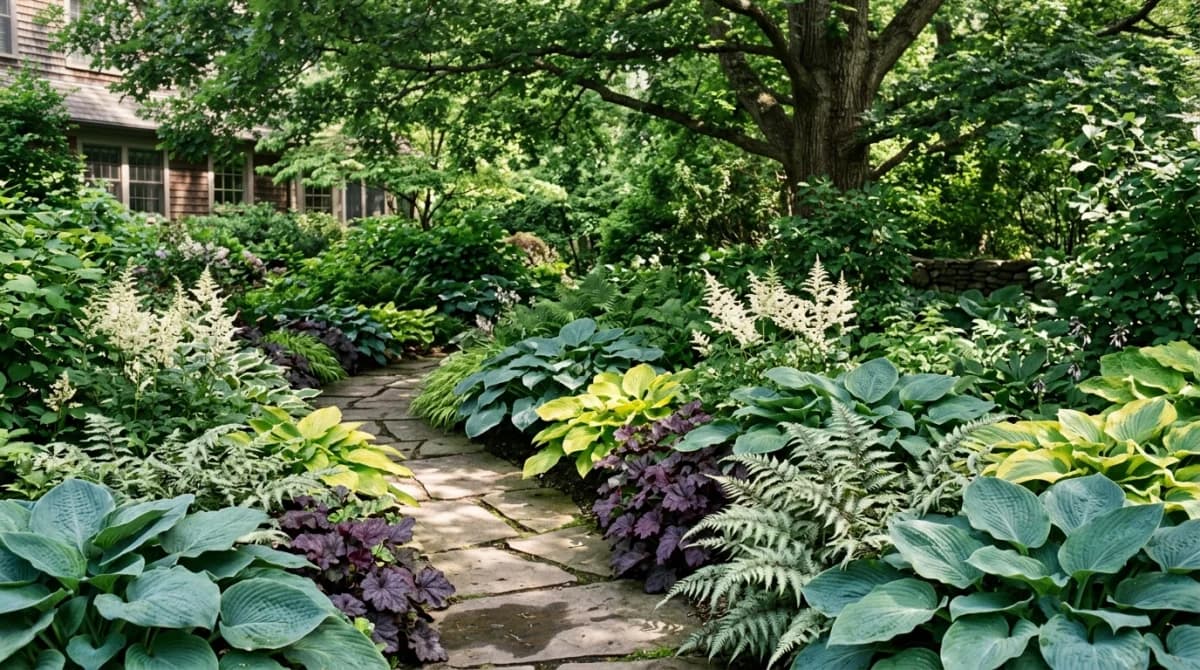
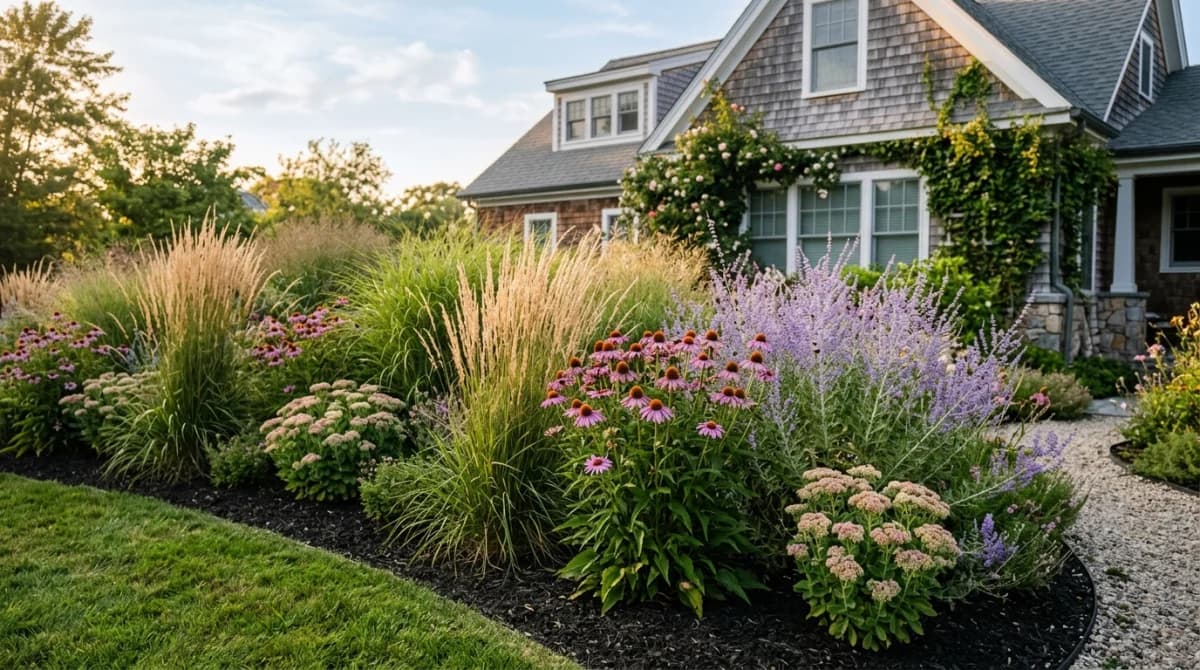
Foliage texture carries the garden between blooms. Ornamental grasses (miscanthus, switchgrass), bold-leaved plants (ligularia, rodgersia), and fine-textured plants (threadleaf coreopsis, gaura) provide continuous interest whether anything is flowering or not.
Annuals and tropicals in containers add movable color to patios and focal points. A few well-placed containers of bright flowers or dramatic foliage keep the garden feeling abundant.
Fall (September–November)
Fall is the most underused season in garden design. A garden with good fall interest stands out because most gardens look exhausted by September.
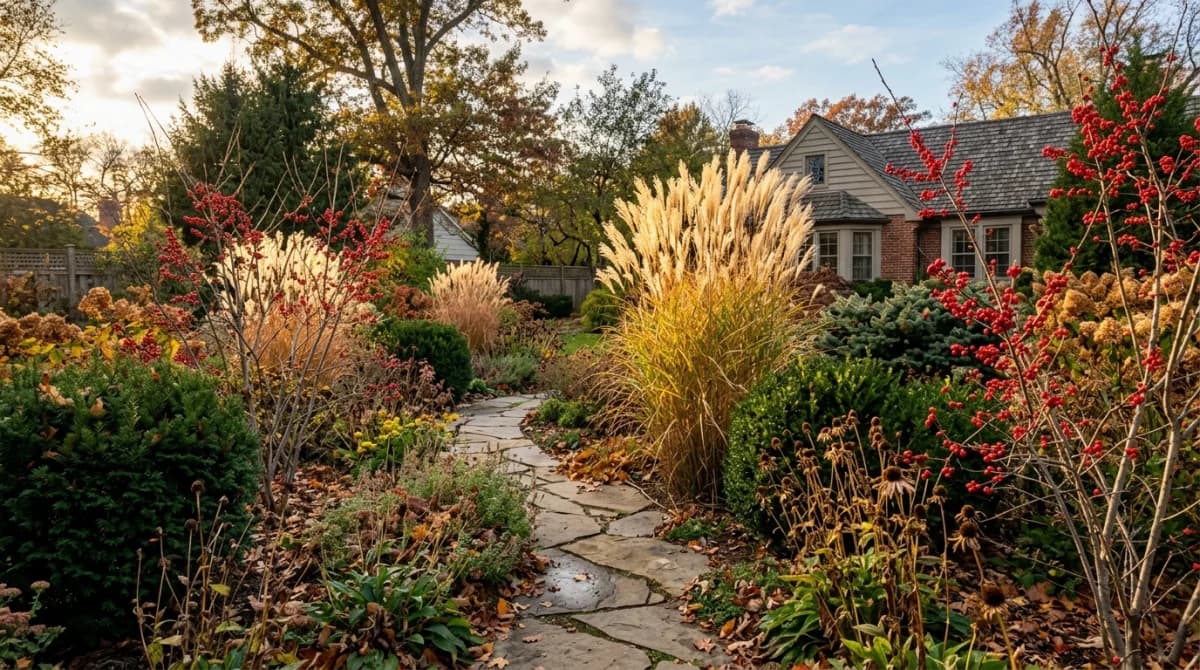
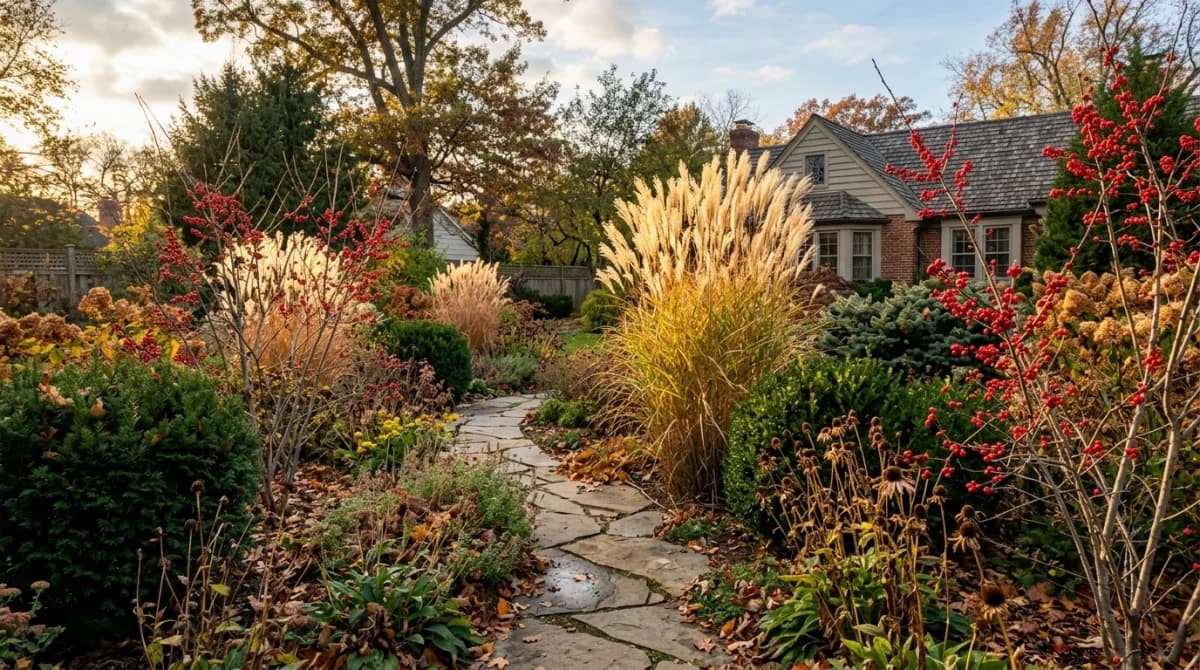
Ornamental grasses come into their own in fall. The flower plumes of miscanthus, switchgrass, and fountain grass glow when backlit by low autumn sun. They provide movement, sound, and texture that no other plant group offers.
Fall-blooming perennials extend the show: asters, anemones, goldenrod, chrysanthemums, sedums, and toad lilies. These are the plants that keep pollinators fed when little else is flowering.
Seed heads and dried flowers, left standing from summer blooms, provide sculptural interest. Coneflower heads, allium globes, and hydrangea panicles look beautiful frosted or covered in snow. Don’t cut them down; they’re doing valuable work through winter.
Fall color from deciduous trees and shrubs provides the most dramatic seasonal display in the landscape. Plant for it deliberately: sweetgum for reds and purples, birch for gold, oakleaf hydrangea for deep burgundy, witch hazel for warm yellow.
Berries appear in fall and persist into winter. Winterberry holly, chokeberry, beautyberry, and viburnum provide bright color and feed birds.
Winter (December–February)
Winter separates designed gardens from ones that just happened. A garden with good winter interest proves the design works because there’s nowhere for the structure to hide.
Bark becomes a primary feature. Paperbark maple (Acer griseum), river birch (Betula nigra), coral bark Japanese maple (Acer palmatum ‘Sango-kaku’), and red and yellow twig dogwood provide color when flowers are months away.
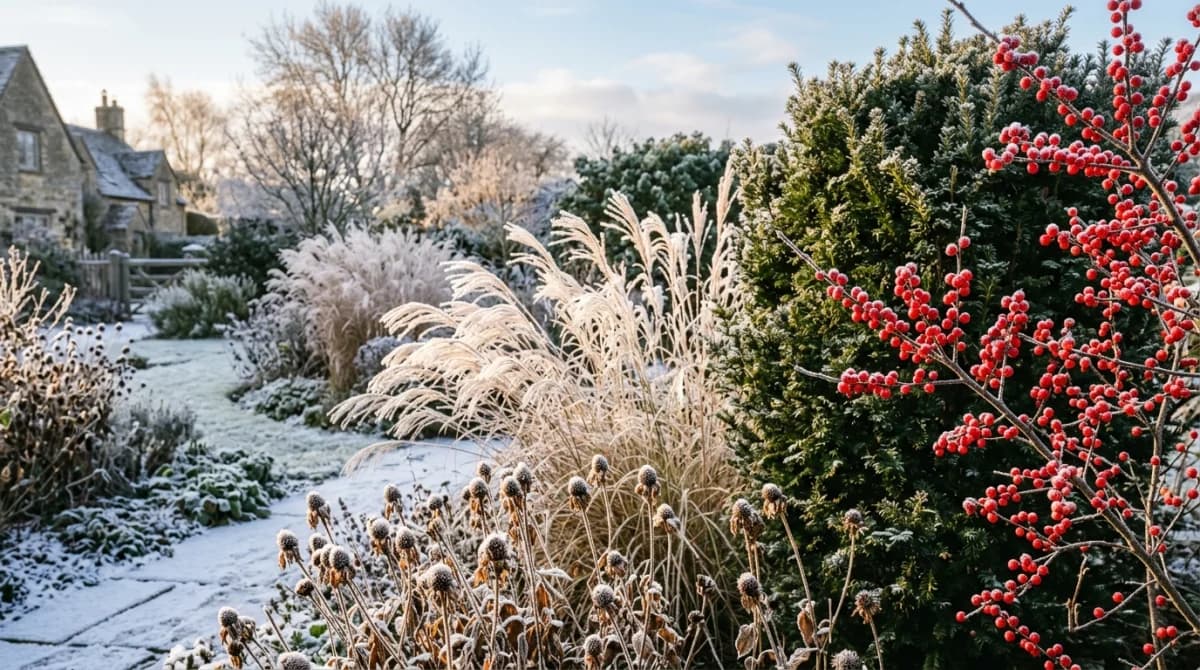
Evergreen structure anchors the winter garden. This is when your evergreen investment pays off most dramatically. The green forms against snow or gray sky define spaces and provide weight.
Ornamental grasses left standing catch frost, snow, and winter light. A miscanthus or switchgrass clump frosted on a January morning is as beautiful as any summer bloom.
Seed heads on coneflowers, sedum, and rudbeckia provide food for birds and sculptural interest. Leave them through winter and cut back in late March.
Witch hazel blooms in January or February, scenting the cold air with fragrant yellow flowers. It’s the first show of the new gardening year.
Winter containers at entrances with evergreen boughs, berried branches, and dried grasses keep the approach to your home looking intentional.
Creating a Seasonal Map
The most useful planning tool for a four-season garden is a simple seasonal map. For each area of your garden, list what provides interest in each season:
| Area | Spring | Summer | Fall | Winter |
|---|---|---|---|---|
| Front bed | Daffodils, tulips | Daylilies, catmint | Sedum, aster | Evergreen boxwood, dried sedum |
| Side path | Bleeding heart | Hosta, fern | Japanese anemone | Hellebore, evergreen fern |
| Back border | Serviceberry bloom | Perennial mix | Ornamental grasses, berries | Grass structure, bark |
| Entrance | Crocus, hellebore | Container flowers | Mums, kale pots | Evergreen boughs, berries |
If any cell is empty, that’s a gap to fill. The goal is no empty cells; every area should contribute something in every season.
The Practical Test
Walk through your garden in the worst month. For most people, that’s late February or early March. Look at every area from every angle.
What do you see? If the answer is “bare soil, dead stems, and emptiness,” your garden needs more structure and winter interest.
Now imagine those same views with the additions described above:
- Evergreen anchors providing green mass
- Ornamental grasses catching winter light
- A witch hazel blooming by the path
- Red twig dogwood stems against the fence
- Seed heads topped with snow
- A few hellebores blooming by the door
That’s a garden that earns its space every month.
Tools like Gardenly can help you visualize your garden design across seasons, ensuring that the plan you create looks as good in December as it does in June. Because a garden that only works in summer is only half a garden. You deserve all four seasons.