Watering Your Garden the Right Way (Most People Overdo It)
The quickest way to kill a garden is to love it too much with the hose. New gardeners especially tend to water every day regardless of whether the soil actually needs it. The plants look fine for a while, then the roots rot, the leaves yellow, and the whole garden slides into decline, and the gardener’s first instinct is to water more.
Overwatering drowns roots by filling soil air spaces with water. Plant roots need oxygen as much as they need moisture, and saturated soil provides neither. The symptoms of overwatering (wilting, yellowing, slow growth) look almost identical to underwatering, which is why so many people get trapped in a cycle of making the problem worse.
Here is how to water based on what your garden actually needs instead of anxiety.
How Much Water Plants Actually Need
Most garden plants need about one inch of water per week, including rainfall. That’s a useful guideline but a terrible rule, because it ignores soil type, temperature, wind, plant maturity, and a dozen other variables.
A better approach: learn to read the soil.
The Finger Test
Push your index finger into the soil next to a plant, about an inch deep. If the soil feels moist, don’t water. If it feels dry, water thoroughly. That’s it. This takes five seconds per plant and is more accurate than any schedule.
For containers, the finger test works the same way but you may need to check daily, as containers dry out much faster than in-ground beds.
Soil Type Changes Everything
Sandy soil drains fast and holds little moisture. Gardens in sandy soil need more frequent watering with less water per session. An inch of water applied at once will drain straight through before roots can absorb it. Better to water half an inch twice a week.
Clay soil holds water like a sponge and drains slowly. Gardens in clay need less frequent but deeper watering. Water slowly to prevent runoff, as clay takes time to absorb moisture. Once wet, clay stays moist for days.
Loam (the ideal garden soil) holds moisture while still draining adequately. An inch per week applied in one or two deep sessions works well.
New Plants vs. Established Plants
Newly planted transplants and seedlings need consistent moisture for the first two to four weeks while roots establish. This means daily or every-other-day watering in the first week, then gradually reducing frequency.
Established perennials, shrubs, and trees have deep root systems that can access soil moisture well below the surface. Many established plants only need supplemental watering during extended dry spells. Overwatering established plants encourages shallow root growth, making them more vulnerable to drought, the opposite of what you want.
When to Water
Timing matters for both plant health and water efficiency.
Morning Is Best
Water between 6 AM and 10 AM. The soil absorbs moisture before the heat of the day causes rapid evaporation, and foliage dries quickly in the morning sun. Wet foliage overnight invites fungal diseases; powdery mildew, black spot, and blight all thrive in prolonged moisture.
Evening Is Second Best
If you can’t water in the morning, late afternoon (after 4 PM) is acceptable. The soil has time to absorb water before dark, and although foliage will stay wet longer, it’s better than watering in the midday heat when most of the water evaporates before reaching roots.
Midday Is Wasteful
Watering at noon on a hot day means losing 30 percent or more to evaporation before the water even reaches the root zone. It’s also unnecessary; the wilting you see in afternoon heat is normal and plants recover overnight. True drought stress shows as wilting in the morning, before the heat hits.
Irrigation Methods Compared
How you deliver water matters as much as how often.
Hand Watering
Good for small gardens, containers, and targeted watering of individual plants. Slow but precise. The main risk is inconsistency; it’s easy to underwater some plants and overwater others depending on your attention.
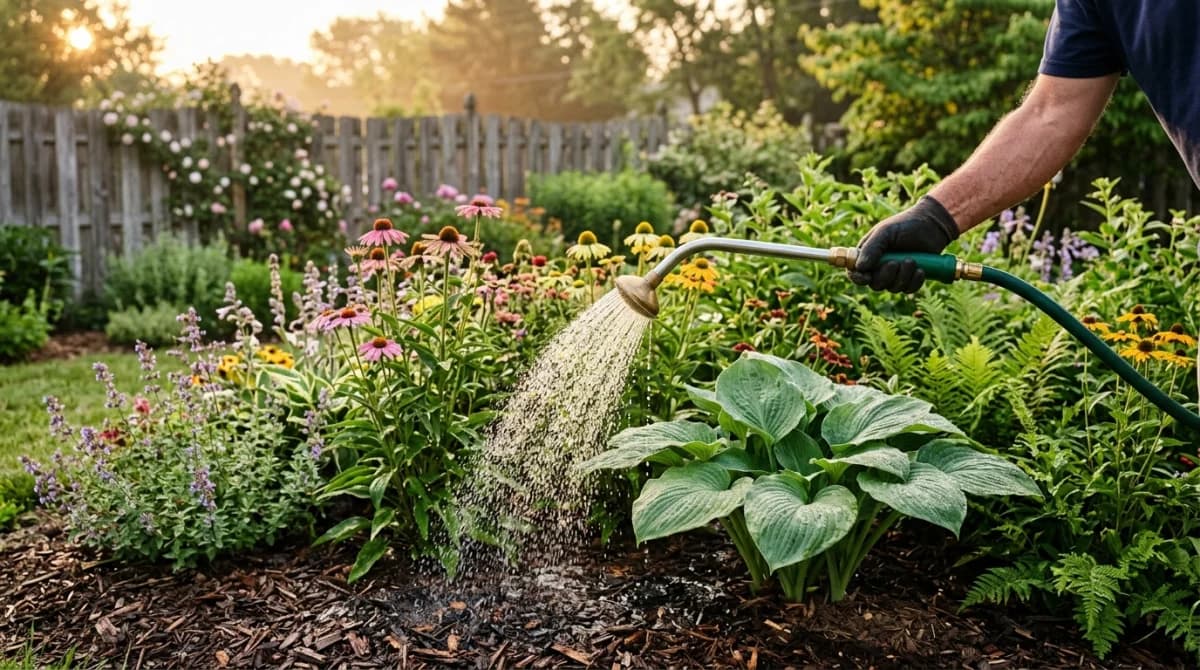
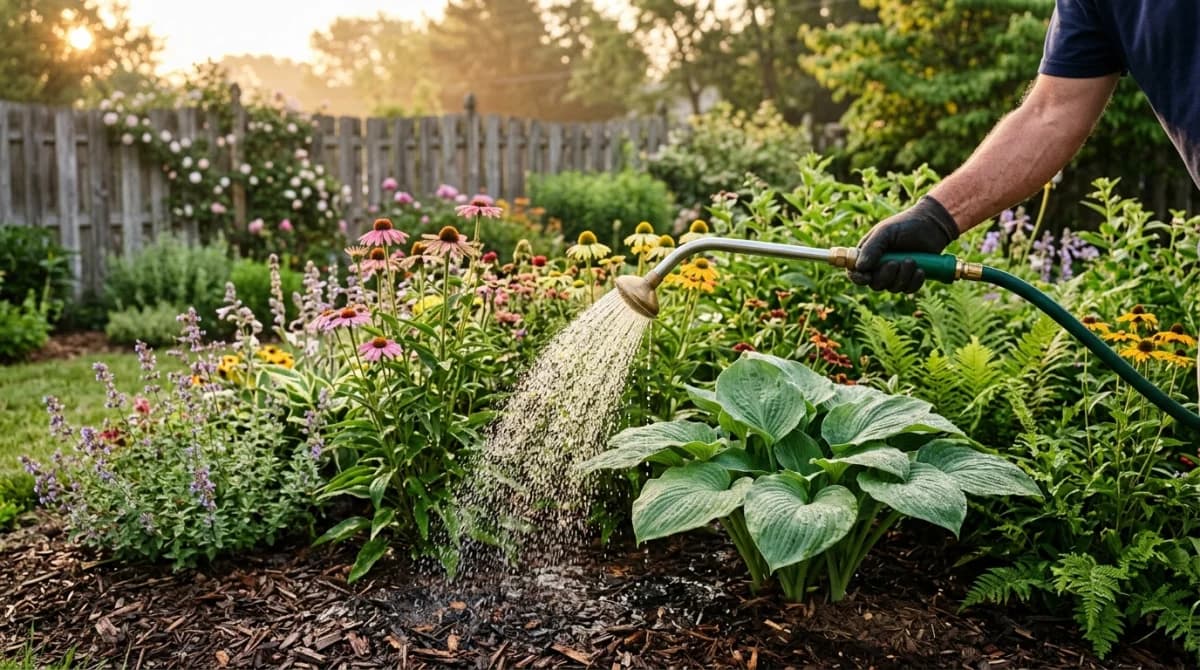
Use a watering wand with a soft shower head for gentle, even coverage. Avoid blast nozzles that compact soil and splash disease-carrying soil onto leaves.
Soaker Hoses
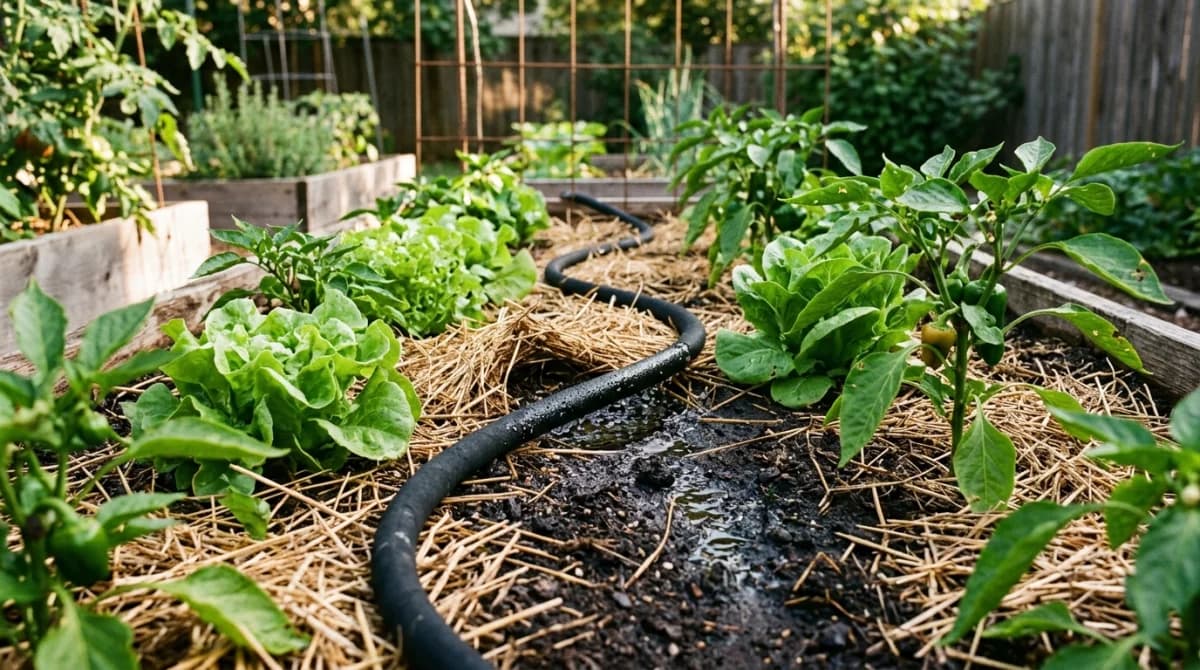
Soaker hoses weep water slowly along their entire length, delivering moisture directly to the soil surface. They’re inexpensive, easy to lay through beds, and waste very little water to evaporation.
Best for: rows of vegetables, perennial borders, and along hedges. Snake them through the bed, cover with mulch, and connect to a timer for fully automated watering.
Drip Irrigation
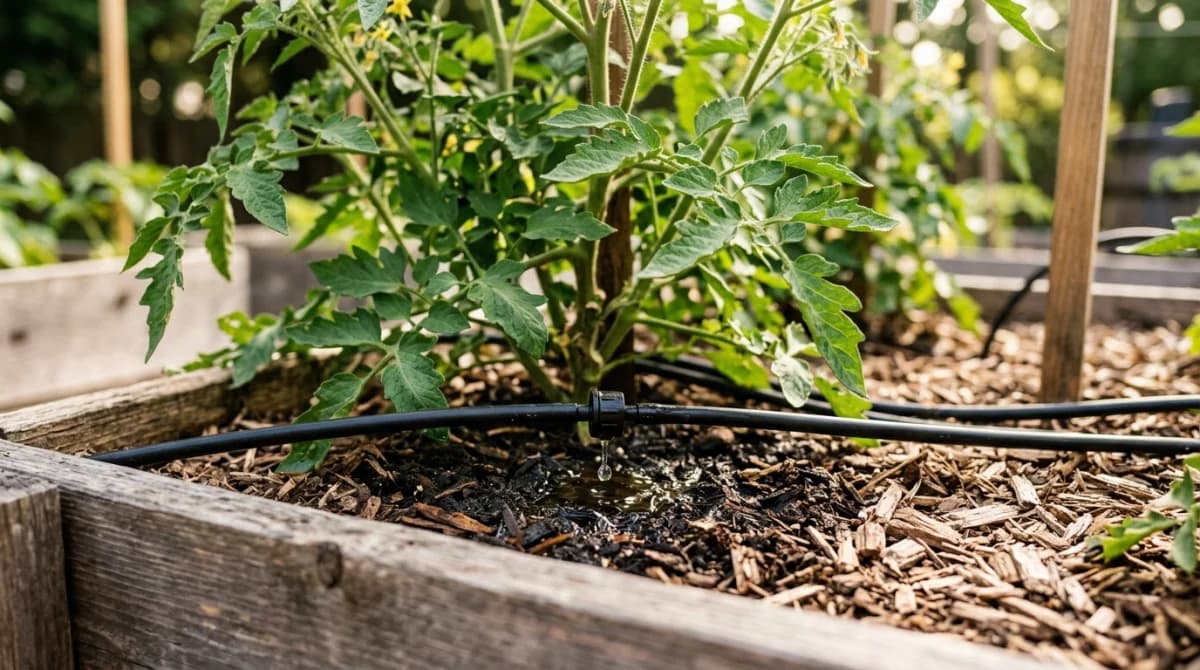
The most efficient irrigation method. Drip systems deliver water directly to each plant’s root zone through individual emitters, losing almost nothing to evaporation or runoff.
A basic drip system costs $30 to $80 to set up and connects to a standard outdoor faucet. You’ll need mainline tubing, distribution tubing, drip emitters, and a battery-powered timer. Most systems pay for themselves in a single season through water savings and better plant growth.
Best for: raised beds, mixed borders, container gardens, and any garden where water conservation matters.
Sprinklers
The least efficient method for gardens. Overhead sprinklers wet foliage (inviting disease), lose significant water to evaporation and wind, and water everything uniformly, including paths, mulch, and bare soil where you don’t want it.
Sprinklers are appropriate for lawns. For gardens, they’re almost always the wrong choice.
Setting Up a Simple Drip System
If you’ve never installed drip irrigation, a basic system for a raised bed takes about 30 minutes.
What you need:
- Battery-powered hose timer ($15 to $30)
- Pressure regulator and filter ($10)
- Half-inch mainline tubing ($10 for 50 feet)
- Quarter-inch distribution tubing ($8 for 50 feet)
- Drip emitters, 1 or 2 GPH ($5 for a pack of 25)
- Connectors, stakes, and plugs ($8)
Setup steps:
- Connect the timer, pressure regulator, and filter to your outdoor faucet.
- Run the mainline tubing along the edge or center of your bed.
- Punch holes in the mainline where you want to run quarter-inch lines to individual plants.
- Insert distribution tubing and run it to each plant, securing with stakes.
- Attach a drip emitter at each plant location.
- Plug the end of the mainline.
- Set the timer for 20 to 30 minutes, two to three times per week (adjust based on soil and weather).
Run the system and check that every emitter is dripping. Adjust the timer as the season progresses; hot July needs more water than mild April.
Mulch as a Watering Strategy
Mulch reduces watering needs by 25 to 50 percent. A 2-to-3-inch layer of organic mulch (shredded bark, straw, or shredded leaves) insulates the soil surface, dramatically slowing evaporation.
Mulch also keeps the soil temperature more consistent, which reduces plant stress and the amount of moisture plants lose through transpiration. If you do nothing else in this article, mulch your beds. It’s the single biggest water-saving practice available.
Signs You’re Watering Wrong
Overwatering symptoms:
- Yellowing leaves starting from the bottom
- Soft, mushy stems near the soil line
- Fungal growth on the soil surface
- Fungus gnats hovering around plants
- Slow growth despite adequate light and nutrients
Underwatering symptoms:
- Wilting that doesn’t recover overnight
- Dry, crispy leaf edges (starting from tips)
- Premature flower and fruit drop
- Soil pulling away from pot edges (containers)
- Stunted growth with small, hard fruits
The critical difference: Overwatered plants wilt during the day and recover somewhat overnight. Underwatered plants wilt and stay wilted, or they wilt early in the morning before heat is a factor.
The Bottom Line
Water deeply and infrequently rather than lightly every day. Check the soil before you water. Use drip irrigation or soaker hoses when possible. Mulch everything. And accept that a little bit of stress between waterings actually produces stronger, more resilient plants with deeper root systems.
Your garden doesn’t need as much water as you think it does. What it needs is the right water, at the right time, delivered to the right place.