Raised Bed Soil: The Mix That Professional Growers Use
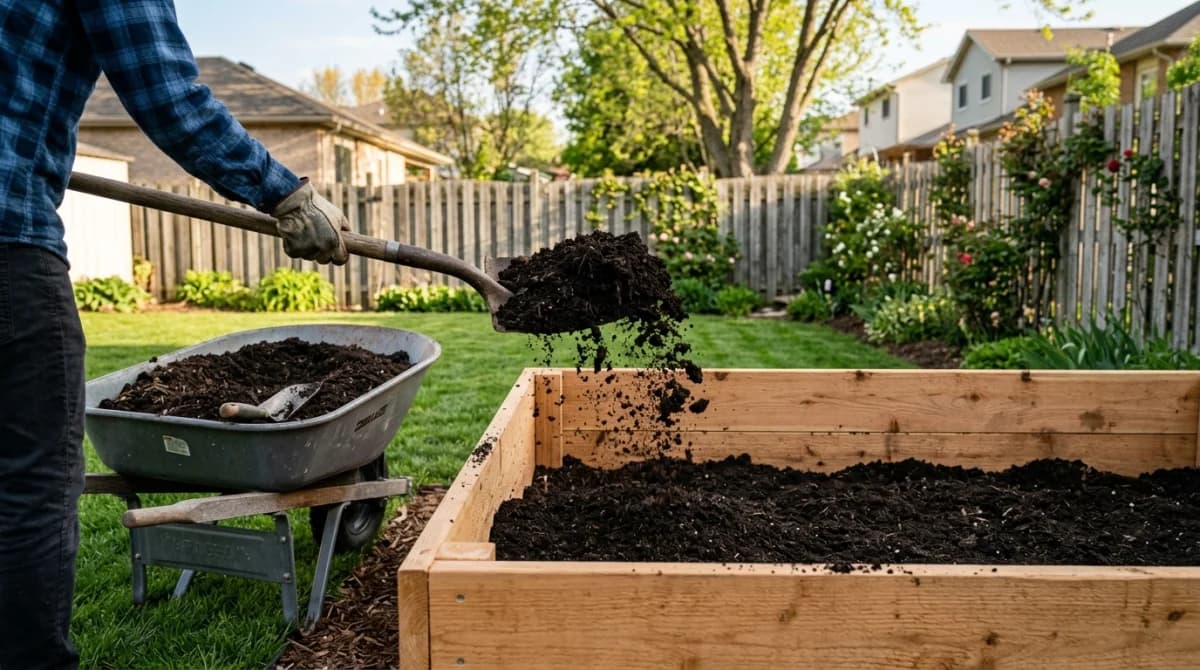
People spend weeks researching raised bed materials, debating cedar versus pine versus galvanized metal, agonizing over dimensions, watching build videos. Then they fill the bed with whatever cheap “garden soil” the hardware store sells and wonder why their tomatoes look terrible.
The soil mix is the most important decision in raised bed gardening. A perfectly built bed filled with bad soil will underperform a crude bed filled with great soil every single time. The bed is just a container. The soil is where your plants actually live.
Here is what professional growers and market gardeners use, why it works, and how to adapt it for a home garden.
Why Raised Bed Soil Is Different
In-ground gardens improve gradually as you add organic matter and the soil biology develops over years. Raised beds skip that process; you’re creating a growing medium from scratch. This means you have complete control, but it also means you can’t rely on the existing ecosystem to compensate for poor initial mix.
Raised bed soil needs to do three things simultaneously:
Drain well. Water must move through the profile quickly enough that roots never sit in saturated conditions. Waterlogged soil kills plants faster than drought.
Hold moisture. After draining, the mix needs to retain enough moisture in its pore spaces to keep roots hydrated between waterings. A mix that drains so fast it dries out in a day is no better than pure gravel.
Provide nutrients and biological activity. Plants need macro and micronutrients delivered by living soil organisms. A sterile mix of perlite and peat technically drains and holds water, but it has no biology and will require constant synthetic feeding.
The best raised bed mixes balance all three of these properties.
The Classic Mix: Three Equal Parts
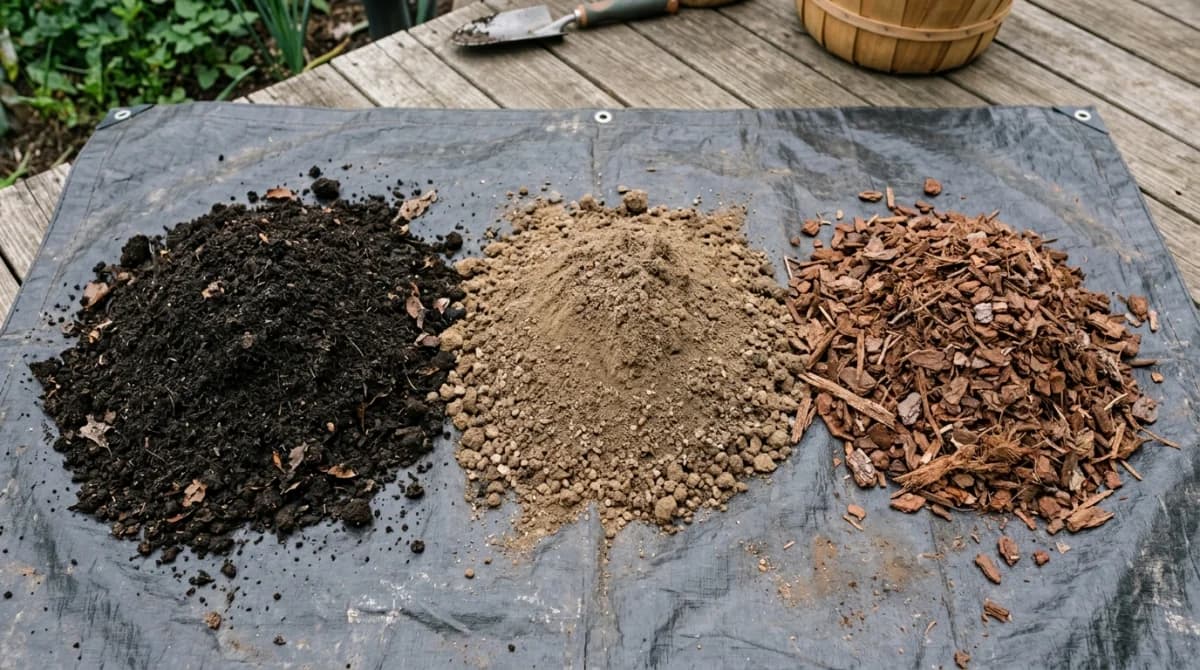
The most reliable starting mix for raised beds is one-third compost, one-third topsoil, and one-third aeration material.
Compost (One-Third)
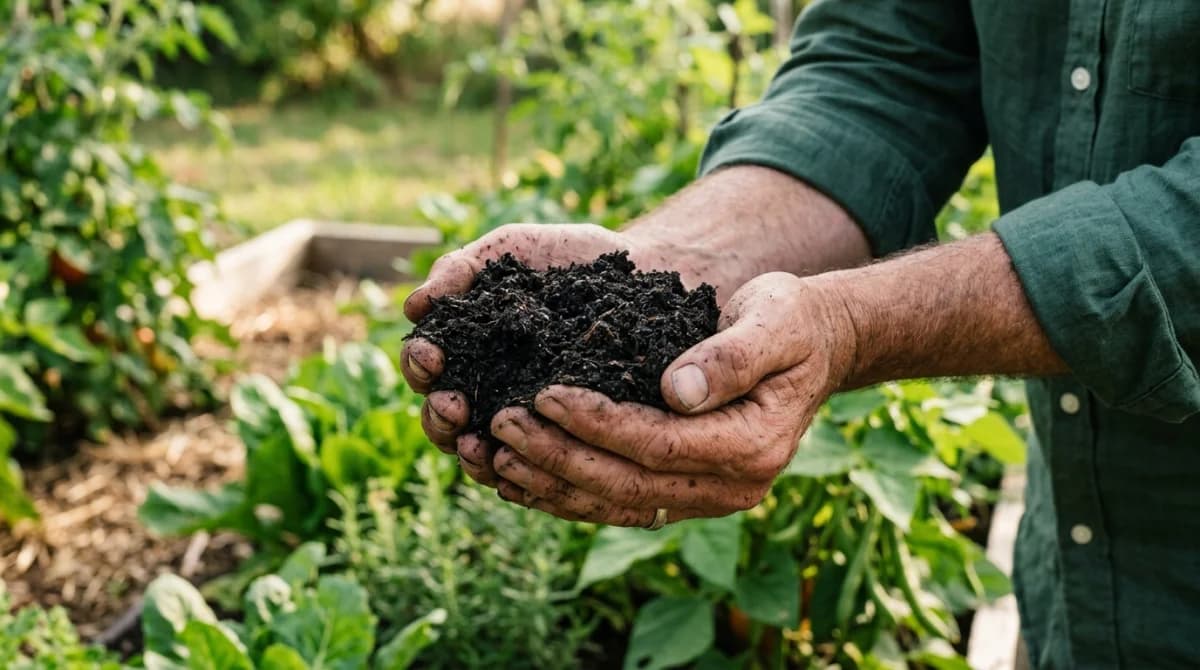
Finished compost provides nutrients, feeds soil biology, holds moisture, and gives the mix a dark, rich character. Use well-aged compost that smells earthy and looks uniform, with no identifiable chunks of food scraps or stems.
If buying in bulk, ask for “finished” or “aged” compost. Avoid anything that smells sour, hot, or like ammonia; it’s not done composting and can burn plant roots.
Quality varies enormously between sources. Municipal compost is inexpensive but may contain weed seeds or inconsistent ingredients. Compost from a dedicated composting operation is usually higher quality but costs more. If possible, buy a small amount first and test it with a few plants before filling all your beds.
Topsoil (One-Third)
Topsoil provides mineral content, weight, and a soil structure that pure compost lacks. It gives the mix substance and helps it retain form as the organic matter gradually breaks down.
Bulk topsoil quality varies widely. The best is a sandy loam: dark, crumbly, and free of rocks and debris. Avoid “fill dirt” sold as topsoil, which is often subsoil clay that will turn your raised bed into a brick.
If your native soil is decent loam, you can dig it from your yard instead of buying topsoil. This also has the advantage of introducing local soil biology to the bed.
Aeration Material (One-Third)
This is what keeps the mix from compacting over time. Options include:
- Perlite: Lightweight, sterile, excellent drainage. The standard choice for smaller beds. Expensive in large quantities.
- Coarse vermiculite: Holds more moisture than perlite while still providing aeration. Good for beds that tend to dry out.
- Pumice: Heavy, long-lasting, doesn’t float to the surface like perlite. The professional choice where available.
- Aged pine bark fines: Screened bark particles that provide drainage and slowly decompose, feeding the soil. Inexpensive in bulk.
For most home raised beds, aged pine bark fines provide the best combination of performance and value. They’re available at most landscape supply yards, significantly cheaper than perlite or pumice, and add organic matter as they break down.
Mel’s Mix (The Square Foot Gardening Approach)
Mel Bartholomew’s “Mel’s Mix” from the Square Foot Gardening method is one-third compost, one-third peat moss, and one-third coarse vermiculite. No topsoil at all.
Pros: Lightweight, excellent drainage, weed-free, easy to work with. It’s a great mix and has helped millions of gardeners get started.
Cons: Expensive at scale (vermiculite and peat moss add up fast for large beds). The mix lacks mineral soil, which means it relies entirely on compost for nutrients and has no clay particles to hold onto cations. It also breaks down and compresses faster than mixes containing topsoil, requiring more frequent topping off.
Mel’s Mix works well for beginners and small beds. For larger gardens or long-term beds, the three-part mix with topsoil is more sustainable and cost-effective.
What to Avoid
Pure Compost
Filling a raised bed with 100 percent compost seems logical (it’s the good stuff, right?) But pure compost has problems:
- It compacts. Compost has no structural material. Within a season, a bed full of compost will sink several inches as it compresses and decomposes.
- Nutrient overload. Pure compost can have excessive levels of nitrogen, salts, and some micronutrients. This can burn seedlings and cause nutrient imbalances.
- Water management. Pure compost can be hydrophobic when dry (repelling water) and water-retentive when wet (staying soggy). The inconsistency makes watering difficult.
Use compost as one component, not the entire fill.
Cheap “Garden Soil” Bags
The bags at hardware stores labeled “garden soil” or “raised bed mix” for $5 are often low-quality topsoil blended with minimal compost and filler material. They compact quickly, drain poorly, and contain few nutrients. You’ll use a dozen bags to fill one 4-by-8 bed and the results will disappoint you.
If buying bagged soil is your only option, supplement it heavily with compost and perlite to improve its structure.
Sand
Adding sand to a soil mix seems like it should improve drainage. In practice, sand particles fill the spaces between soil particles, and when combined with clay (present in most topsoil), the result can approach concrete in density. The exception is very coarse builder’s sand in large proportions, but at that point you’re making a sand-based mix, not amending a soil-based one.
How Much You Need
Raised beds are deeper than you think. A standard 4-by-8-foot bed that’s 12 inches tall needs 32 cubic feet of fill, roughly 1.2 cubic yards.
Quick volume calculator:
- Length (feet) × Width (feet) × Depth (feet) = Cubic feet
- Divide by 27 to convert to cubic yards
Common bed sizes:
- 4 × 4 × 1 foot: 16 cubic feet (0.6 cubic yards)
- 4 × 8 × 1 foot: 32 cubic feet (1.2 cubic yards)
- 4 × 8 × 2 feet: 64 cubic feet (2.4 cubic yards)
- 3 × 6 × 1 foot: 18 cubic feet (0.7 cubic yards)
Order each component in the right proportion. For the three-part mix filling a 4-by-8 bed at 12 inches deep, you need about 0.4 cubic yards each of compost, topsoil, and bark fines.
Buying tip: Bulk delivery from a landscape supply yard is dramatically cheaper than buying bags. A cubic yard of bulk compost costs $30 to $50 delivered. The same volume in bags costs $150 or more. Bulk delivery usually has a minimum order (often 1 to 2 cubic yards), so coordinate with neighbors if you need less.
Mixing and Filling
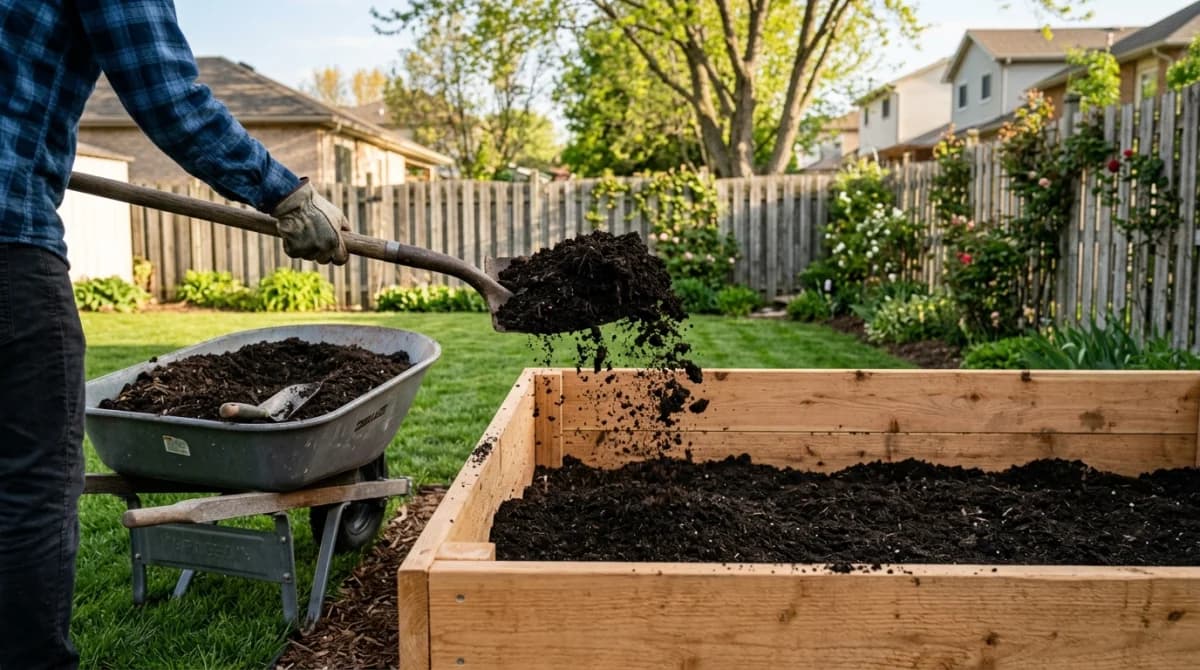
The best mixing method for home beds is layering. Alternate shovelfuls of each component as you fill the bed, then mix with a garden fork or rake. Don’t stress about perfect homogeneity; a roughly uniform blend is fine.
Water the bed thoroughly after filling and let it settle for a few days before planting. You’ll likely need to add another inch or two of mix after settling.
Refreshing Tired Beds
Raised bed soil degrades over time. Organic matter breaks down, the volume shrinks, nutrients deplete, and the mix compacts. By the second or third year, beds that started perfect may feel dense and lifeless.
Annual Refresh
At the start of each growing season, add 2 to 3 inches of finished compost to the surface of your beds and mix it into the top few inches with a fork. This replaces decomposed organic matter, adds nutrients, and reinvigorates soil biology.
Volume Top-Off
If the soil level has dropped more than 2 inches, add a proportional mix of compost and the original aeration material (bark fines or perlite). Don’t add topsoil at this stage; the existing mineral content doesn’t disappear, it just gets compressed.
Deep Refresh (Every 3–5 Years)
Remove the top 6 inches of soil and set it aside. Fork the bottom to loosen compaction. Mix the set-aside soil with fresh compost and aeration material, then put it back. This essentially rebuilds the bed without starting from scratch.
The Long View
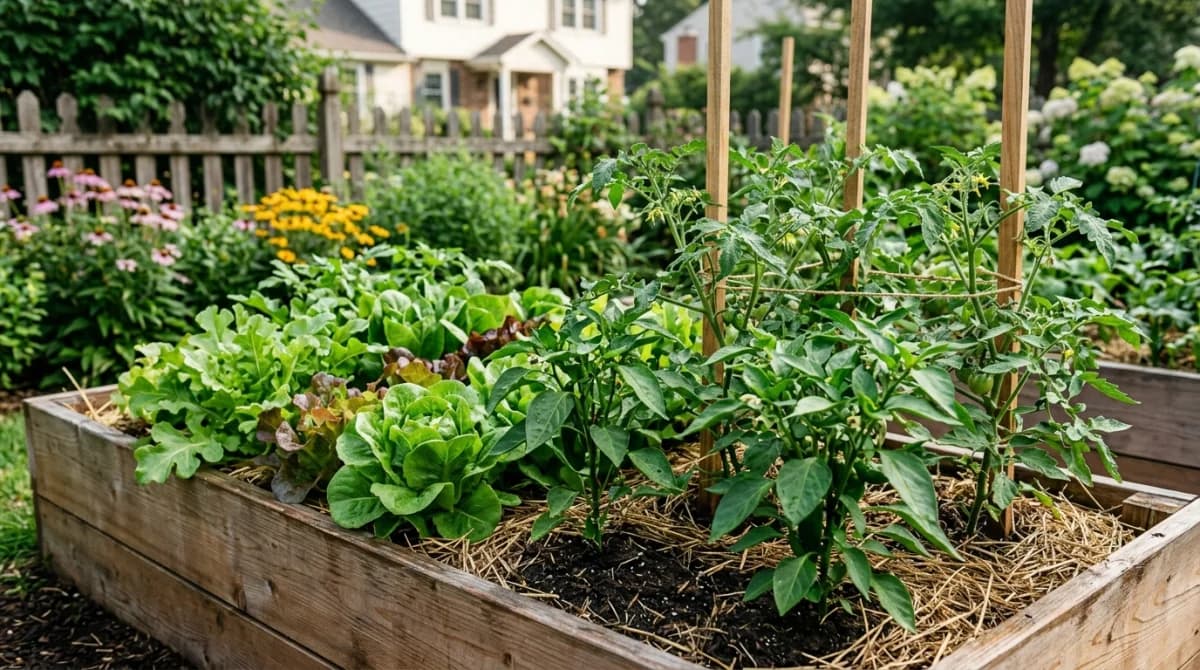
Good raised bed soil gets better with time if you maintain it. The biology establishes, the structure stabilizes, and the nutrient cycling becomes self-sustaining. After three to five years of consistent compost additions and cover cropping, you’ll have soil that any in-ground gardener would envy.
Invest in your soil mix the way you’d invest in a foundation for a house. Get it right at the start, maintain it seasonally, and everything you grow will reflect the quality of what’s underneath.