Growing Blueberries at Home: Plant This Spring, Harvest for Years
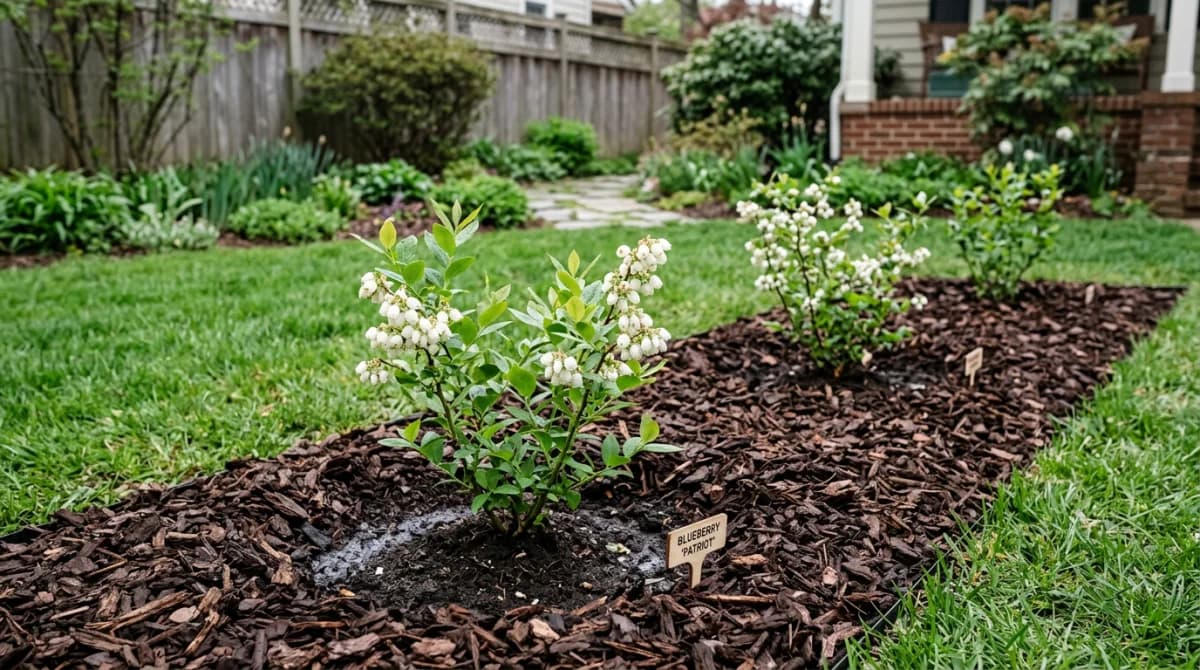
Few garden plants give back as generously as blueberries. A single well-tended bush produces fruit for 20 years or more, and unlike most fruit trees, blueberries start yielding a meaningful harvest within two or three seasons. They also happen to be among the most attractive shrubs you can grow — white bell-shaped flowers in spring, glossy green foliage in summer, blazing red and orange leaves in fall, and sculptural bare branches in winter.
Early spring, while the plants are still dormant, is the ideal planting window. Here is everything you need to get a productive blueberry patch started this month.
Understanding What Blueberries Need
Blueberries are members of the Ericaceae family, alongside azaleas, rhododendrons, and heathers. Like their relatives, they demand acidic soil — a pH between 4.5 and 5.5. This is the single most important factor in growing blueberries successfully, and it is where most failures begin.
Standard garden soil in much of North America sits between 6.0 and 7.0 pH. Planting blueberries directly into unamended soil almost always leads to yellowing leaves, stunted growth, and no fruit. The plant simply cannot absorb iron and other nutrients at the wrong pH.
Before you plant, test your soil pH. Inexpensive kits from any garden center will give you the number you need, or use our free soil pH calculator to check what amendments you might need. If your soil is above 5.5, you have some amending to do.
Choosing the Right Varieties
Blueberry varieties fall into a few categories, and choosing the right type for your climate makes the difference between bumper crops and frustration.
Highbush (Northern)
The standard for zones 4–7. These grow 5–8 feet tall and need 800–1000 chill hours (hours below 45°F during winter dormancy). Top choices:
- ‘Bluecrop’: The reliable workhorse. Heavy yields, good flavor, excellent disease resistance. Mid-season harvest.
- ‘Duke’: Early ripening, firm berries, vigorous growth. Handles late spring frosts well.
- ‘Elliott’: Late-season variety that extends your harvest into August. Berries hold well on the bush.
- ‘Jersey’: Heritage variety with outstanding flavor. Tall and vigorous. Late mid-season.
Southern Highbush
Bred for zones 7–10 with low chill requirements (150–500 hours). These tolerate heat and mild winters:
- ‘Jewel’: Outstanding flavor, early season. One of the best for warm climates.
- ‘O’Neal’: Very early, large berries. Needs another southern highbush nearby for pollination.
- ‘Star’: Large, sweet fruit. Low chill requirement, performs well in zone 8–9.
Half-High
Crosses between highbush and lowbush types, bred for extreme cold (zones 3–5). They stay compact at 3–4 feet:
- ‘Northblue’: Dense, productive, handles -35°F. Dark berries with wild blueberry flavor.
- ‘Polaris’: Very early, aromatic fruit. Compact habit works well in smaller gardens.
Pollination
Most blueberry varieties are partially self-fertile, but cross-pollination between two different varieties dramatically increases both fruit size and total yield. Always plant at least two different varieties that bloom at the same time.
Preparing the Soil
This is the step that separates productive blueberry patches from struggling ones.
Amending for Acidity
If your soil pH is above 5.5, you have two main approaches:
Elemental sulfur: The most reliable long-term solution. Work it into the top 6–8 inches of soil several months before planting when possible. For every full pH point you need to drop, apply roughly 1 pound of elemental sulfur per 100 square feet in sandy soils, or 2 pounds per 100 square feet in clay soils. Sulfur works slowly through bacterial conversion, so applying in fall for spring planting is ideal. If you are planting this spring without advance prep, apply half the sulfur now and the rest next fall.
Acidic organic matter: Amend the planting area with peat moss, composted pine bark, or aged pine needles. A mix of 50% native soil and 50% peat moss or pine bark fines creates a growing medium that holds moisture while providing acidity.
Building the Planting Bed
Blueberries have shallow, fibrous root systems. They need loose, well-drained, moisture-retentive soil — the seeming contradiction that organic matter resolves perfectly.
For a row of blueberries, dig a trench 2.5 feet wide and 1 foot deep. Mix the excavated soil with equal parts peat moss or composted pine bark. If your soil is heavy clay, raise the bed 6–8 inches above grade to ensure drainage and mound the amended mix on top.
Space highbush varieties 5–6 feet apart, half-high types 3–4 feet apart. This feels generous at planting time but prevents crowding and airflow problems once the bushes mature.
Planting Step by Step
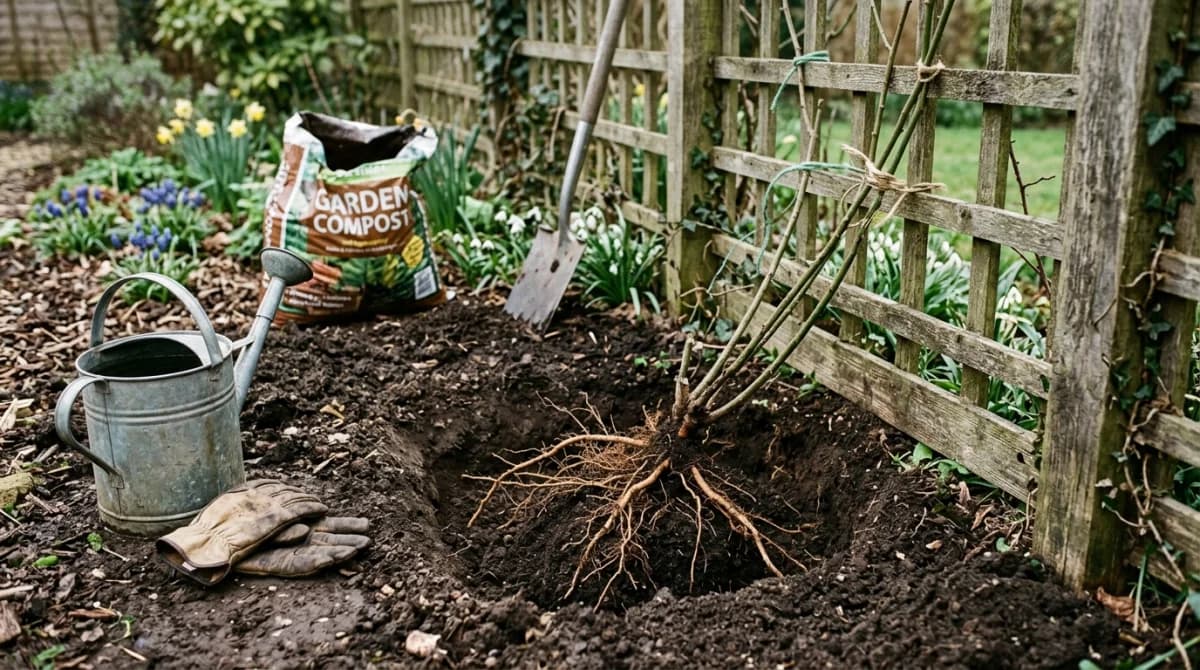
- Soak bare-root plants in water for one hour before planting. Container-grown plants should be watered thoroughly and have any circling roots gently teased loose.
- Dig a hole twice the width of the root ball but only as deep as the root mass — blueberries should sit at the same depth they were growing in the nursery, or up to one inch higher in heavy soils.
- Set the plant, backfill with your amended soil mix, and water deeply to settle the soil.
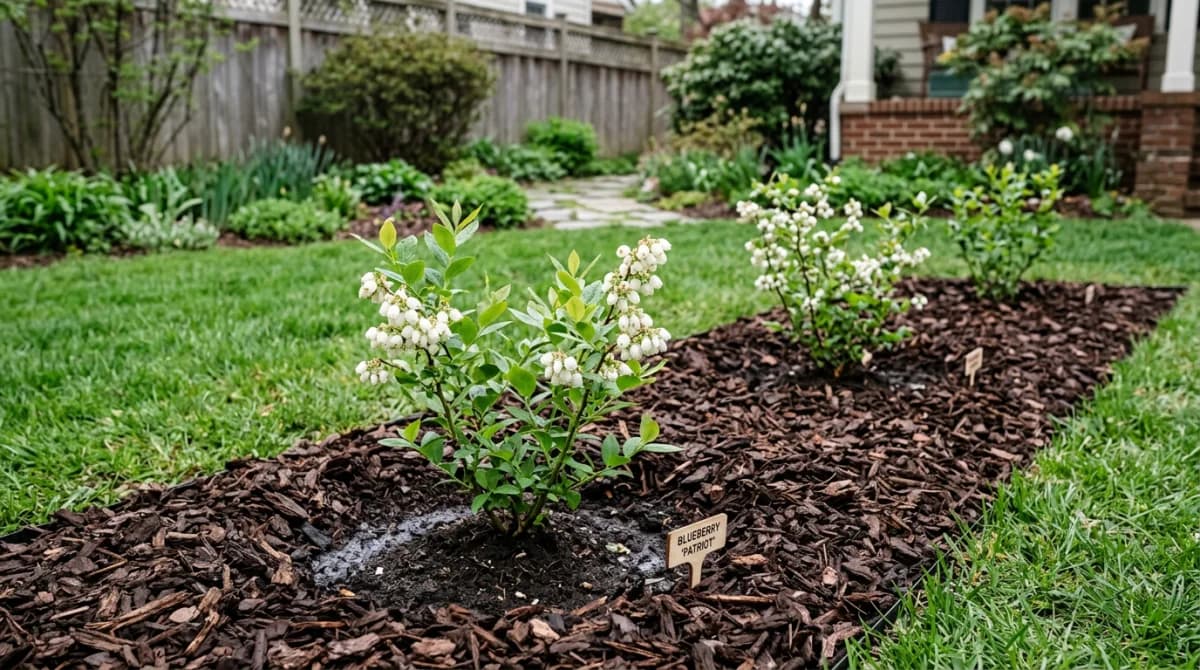
- Apply 3–4 inches of acidic mulch — pine bark, pine needles, or shredded oak leaves — in a wide ring around each plant. Keep mulch 2 inches away from the stem.
- Remove all flower buds the first spring after planting. This feels painful but directs all energy into root and branch development, leading to stronger plants and heavier future harvests.
Ongoing Care
Watering
Blueberries need consistent moisture — roughly 1–2 inches per week during the growing season. Their shallow roots dry out quickly, making mulch and drip irrigation valuable investments. Avoid overhead watering during fruiting, which can promote fruit rot.
Feeding
Use fertilizers formulated for acid-loving plants (rhododendron/azalea fertilizer works well). Apply in early spring when buds begin to swell and again after harvest. Avoid fertilizers containing nitrate nitrogen — blueberries prefer ammonium forms. Cottonseed meal and sulfur-coated urea are good organic options.
Never use fresh manure or lime near blueberries. Both raise pH.
Pruning
For the first three years, pruning is minimal — just remove dead or crossing branches. Beginning in year four, prune in late winter while the plant is dormant:
- Remove the oldest, thickest canes (those with gray, flaking bark) at ground level to encourage new productive wood
- Thin out twiggy growth at branch tips
- Aim for 6–8 strong canes per mature bush, with a mix of ages
Protecting the Harvest
Birds love blueberries as much as you do. Netting draped over a simple frame is the most effective defense. Install it when berries begin to turn blue and remove it after the final harvest. Make sure netting is taut and secured at ground level so birds cannot become tangled.
Blueberries as Landscape Plants
Beyond their productivity, blueberries earn their place in any designed garden on aesthetics alone. Consider using them as:
- Informal hedging: A row of highbush varieties creates a beautiful, productive screen along a property line or garden boundary
- Mixed border shrubs: Their multi-season interest — spring blooms, summer fruit, fall color, winter structure — rivals any ornamental shrub
- Foundation plantings: Half-high varieties work beautifully in front of taller shrubs, replacing generic boxwood with something that feeds you
- Container plants: Half-high and compact southern highbush types thrive in large containers (at least 20 gallons), which also lets you control soil pH perfectly
If you are planning where blueberries fit into your overall garden layout, tools like Gardenly can help you visualize how berry patches integrate with your existing beds and hardscaping before you start digging.
Timeline for Your First Harvest
- Year one: Focus on establishment. Remove all flowers. The plant builds its root system.
- Year two: Allow a small crop if the plant looks strong. Expect a handful of berries per bush.
- Year three: First real harvest. One to three pounds per bush depending on variety and care.
- Year four and beyond: Full production. A mature highbush plant can yield 5–10 pounds of fruit annually for decades.
The math works out remarkably well. Two or three bushes supply a household with enough berries for fresh eating. Six to eight bushes provide enough to freeze, bake, and share.
Plant them this March while they are still dormant, and by summer you will already see the first signs of what is coming — glossy new growth, strong branching, and the quiet promise of years of harvests ahead.
Sources & Further Reading
- Growing Blueberries in the Home Garden — University of Minnesota Extension
- Growing Blueberries in Your Home Garden — Oregon State University Extension
- Keys to Establishing a Successful Blueberry Planting — Penn State Extension
- Acidifying Soil for Blueberries and Ornamental Plants — Oregon State University Extension