How to Grow Strawberries: Plant Now for a Summer Full of Fruit

Strawberries are one of the most rewarding things you can grow. A small patch of 25 plants produces enough fruit for a family of four to eat fresh all summer, and the plants keep producing for three to five years with minimal effort. The catch is that the quality of your harvest depends almost entirely on what you do in the first few weeks after planting — and that window is right now.
Mid-March through mid-April is the ideal planting time for most of the country. The soil is workable, nights are still cool enough to encourage strong root development, and the plants have months to establish before the heat of summer arrives.
Choosing the Right Type
Strawberry varieties fall into three categories, and picking the right one shapes your entire harvest schedule.
June-Bearing
These produce one large, concentrated crop over two to three weeks in late spring or early summer. The berries tend to be the largest and most flavorful of any type. If you want to freeze, jam, or preserve strawberries, June-bearers give you the volume to do it.
Top varieties:
- ‘Earliglow’: The gold standard for flavor. Medium-sized fruit, excellent disease resistance, very early harvest. Zones 4-8.
- ‘Jewel’: Large, firm berries that hold up well after picking. Mid-season. A commercial favorite that performs just as well in home gardens. Zones 4-8.
- ‘Chandler’: Big, sweet fruit. The go-to variety in warmer climates where others struggle. Zones 5-9.
- ‘Allstar’: Huge berries, mild sweet flavor, resists most common diseases. Late mid-season. Zones 5-8.
Everbearing
Despite the name, these produce two distinct crops — one in late spring and another in early fall — rather than fruiting continuously. Berry size is slightly smaller than June-bearers, but you get two harvest windows instead of one.
- ‘Ozark Beauty’: The classic everbearing variety. Reliable, vigorous runners, good flavor. Zones 4-8.
- ‘Quinault’: Soft, sweet berries. Best eaten fresh the day you pick them. Zones 4-8.
Day-Neutral
True continuous producers. These fruit from late spring through fall as long as temperatures stay between 35-85°F. They produce fewer runners than other types, putting more energy into fruit. Ideal if you want a steady trickle of berries rather than a single glut.
- ‘Albion’: Outstanding flavor, firm texture, high yields. The best day-neutral for most growers. Zones 4-9.
- ‘Seascape’: Very productive, large berries, handles heat better than most. Zones 4-9.
- ‘Monterey’: Sweet and juicy with good disease resistance. Zones 4-8.
Which Type Should You Plant?
For most home gardeners, a mix works best. Plant a row of June-bearers for the big early harvest and a row of day-neutrals for fresh eating the rest of the season. You get the best of both worlds.
Preparing the Bed
Strawberries need full sun — a minimum of six hours, ideally eight. They tolerate partial shade but produce noticeably less fruit without strong direct light.
Soil Requirements
Strawberries prefer slightly acidic soil (pH 5.5-6.5) that drains well. They are shallow-rooted plants that sit right at the soil surface, so waterlogged ground quickly leads to crown rot, the number one killer of strawberry plants.
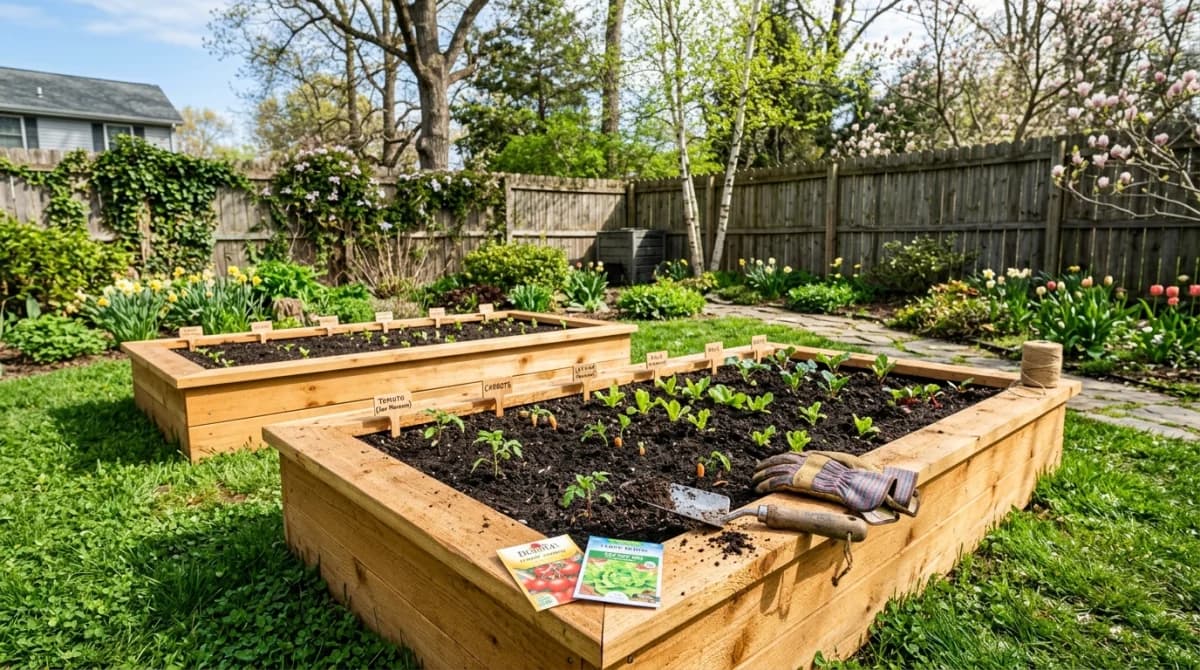
If your soil is heavy clay, either build raised beds 6-8 inches high or amend heavily with compost and coarse perlite. Sandy soils drain beautifully but dry out fast — add two to three inches of compost worked into the top eight inches.
The Critical Rule: Avoid Verticillium
Never plant strawberries where tomatoes, peppers, eggplant, or potatoes grew in the last three years. These crops harbor Verticillium wilt in the soil, a fungus that devastates strawberries. If your only available space is a former nightshade bed, plant in containers or raised beds filled with fresh soil mix.
Bed Layout
For a traditional matted-row system (best for June-bearers), space plants 18 inches apart in rows 3-4 feet apart. The runners will fill in the gaps during the first year, creating a dense mat of producing plants by year two.
For day-neutrals and everbearers, use a hill system: plant 12 inches apart in double or triple rows with 2 feet between sets of rows. Remove all runners as they appear, forcing the plants to channel energy into fruit production.
Planting Step by Step
Bare-root plants are the most economical and establish quickly when planted in early spring. Potted transplants work too but cost more.
- Soak bare-root plants in room-temperature water for 30 minutes before planting. Trim any roots longer than 5 inches.
- Dig a hole wide enough to spread the roots out in a fan shape without bending or cramming them.
- Set the plant so the crown — the thick central nub where the leaves emerge — sits exactly at soil level. This is the single most important detail. Too deep and the crown rots. Too shallow and the roots dry out. Getting this right eliminates most first-year failures.
- Firm the soil around the roots, water deeply, and apply 2-3 inches of straw mulch around (not over) each plant.
- For June-bearers: remove every flower for the entire first season. The plant needs to build a strong root system and send out runners. Sacrificing the first-year crop doubles your harvest in year two.
- For day-neutrals: remove flowers for the first six weeks only, then let them fruit.
Ongoing Care
Watering
Strawberries need about an inch of water per week, delivered consistently. Drip irrigation or soaker hoses are ideal — overhead watering promotes leaf diseases and makes ripe fruit rot. Water in the morning so foliage dries before nightfall.
During fruit production, consistent moisture is especially critical. Uneven watering causes misshapen, hollow berries.
Feeding
Apply a balanced fertilizer (10-10-10) at planting time — about one pound per 50 feet of row, worked lightly into the soil. Side-dress with the same fertilizer in mid-summer for day-neutrals and everbearers, or after the harvest ends for June-bearers.
Avoid high-nitrogen fertilizers during fruiting. Too much nitrogen produces lush foliage at the expense of berries and makes plants more susceptible to disease.
Mulching
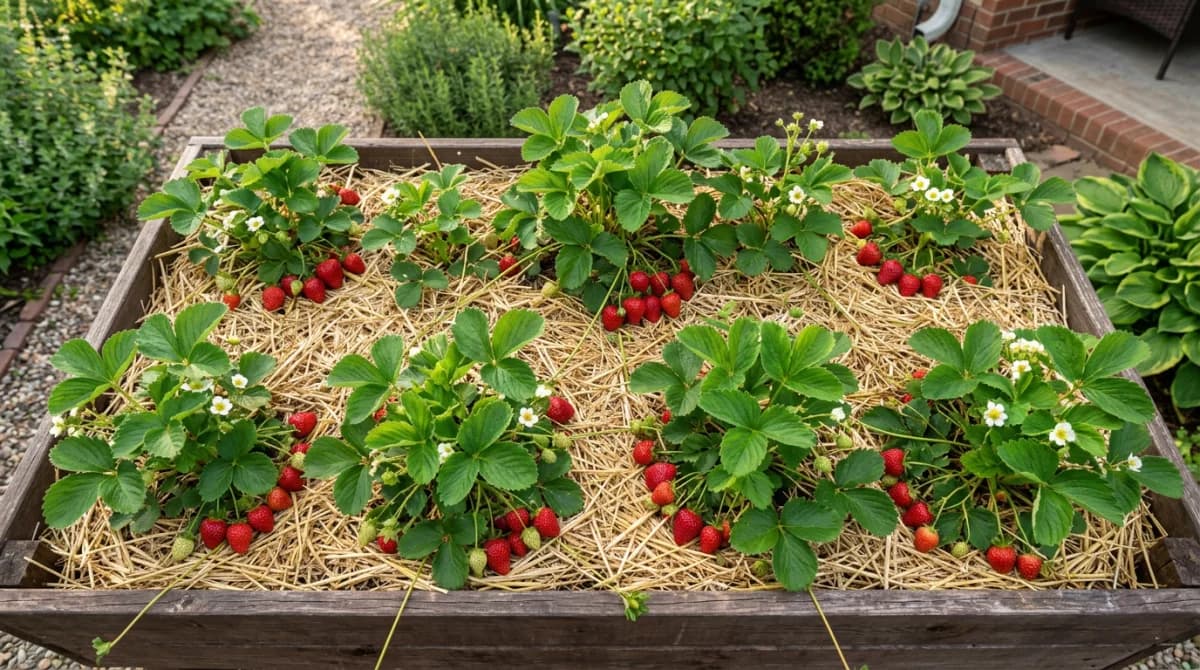
Straw is the traditional mulch for strawberries — it is where the name comes from. Apply 3-4 inches between rows and around plants after the ground freezes in fall. In spring, pull the straw back from the crowns as new growth emerges but leave it between rows to suppress weeds and keep fruit clean.
Pine needles work equally well and gently acidify the soil over time, which strawberries appreciate.
Runner Management
June-bearers produce abundant runners — long stems that stretch out and root new daughter plants. In the first year, guide four to six runners per plant into the spaces between mother plants to fill your row. Clip any extras. A matted row wider than 18 inches becomes overcrowded, reducing air circulation and fruit size.
Day-neutral varieties should have all runners removed throughout the season. Each runner a day-neutral plant sends out reduces fruit production.
Common Problems and How to Avoid Them
Gray mold (Botrytis): The fuzzy gray coating on berries. Caused by poor air circulation and wet fruit. Space plants properly, use straw mulch, avoid overhead watering, and pick ripe fruit promptly.
Slugs: They love ripe strawberries as much as you do. Straw mulch helps by creating a drier surface. Beer traps and iron phosphate bait (safe for pets and wildlife) are effective controls.
Birds: Netting draped over low hoops is the only reliable defense. Install it when the first berries start coloring and anchor the edges at ground level.
Small or misshapen fruit: Almost always a watering issue. Inconsistent moisture during fruit development produces weird-looking berries. Set up drip irrigation and mulch well.
Strawberries in Your Garden Design
Strawberries are more versatile in the landscape than most people realize. Beyond the traditional vegetable garden row, consider:
- Edging along paths: A border of day-neutral strawberries along a sunny garden path is both productive and attractive, with white flowers in spring and red fruit through summer.
- Ground cover on slopes: Strawberry runners naturally spread and root, stabilizing soil on sunny banks while producing fruit.
- Container growing: A single large container (at least 16 inches wide) supports three to four plants and works on patios, decks, and balconies. Use a well-draining potting mix and water daily in summer.
- Raised bed borders: Plant a row of strawberries along the outside edge of raised vegetable beds, where they receive full sun and the trailing runners soften the bed edges.
If you are planning how edible plants fit into your overall garden layout, Gardenly can help you visualize where strawberry beds work best alongside your existing plantings and hardscape.
Your First-Year Timeline
- March (now): Plant bare-root or potted starts. Remove all flowers on June-bearers. Remove flowers for six weeks on day-neutrals.
- April-May: Guide runners from June-bearers into position. Begin removing excess runners once you have four to six per plant.
- June-July: First fruit on day-neutrals. June-bearers focus on vegetative growth.
- August-September: Day-neutrals produce a strong fall crop. Feed all plants after the last harvest.
- November: Apply winter straw mulch after several hard frosts.
- Next March: Pull mulch back from crowns. Your June-bearers will produce their first full crop this year.
The investment is minimal — 25 bare-root plants cost less than three pints of grocery store berries. The difference is that your plants keep producing for years, and a sun-warmed strawberry picked 30 seconds ago tastes nothing like what arrives in a plastic clamshell from a thousand miles away.
Plant them this week while bare-root stock is still available at nurseries and online suppliers. By June, you will understand why people who grow their own strawberries never go back.
Sources & Further Reading
- Growing Strawberries in the Home Garden — University of Minnesota Extension
- Growing Strawberries in Your Home Garden — Oregon State University Extension
- Growing Strawberries — Penn State Extension
- Plant Strawberries in Early Spring for a Sweeter Summer — Oregon State University Extension