Growing Lettuce and Salad Greens: Your Guide to Fresh Harvests All Spring
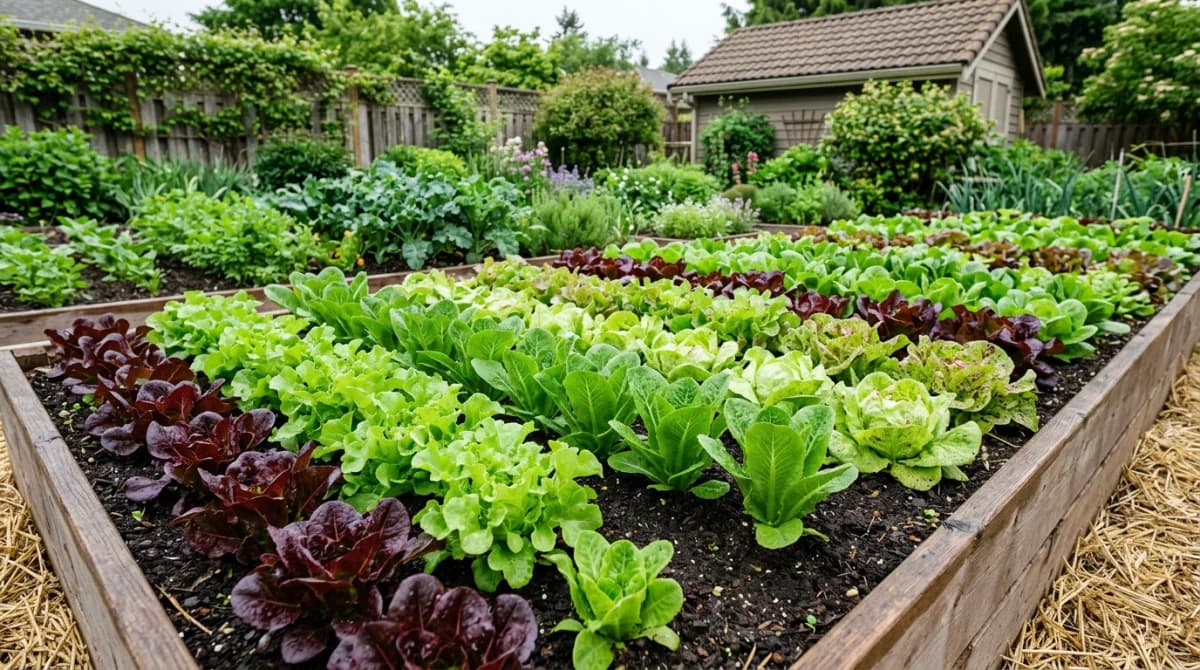
Nothing in the grocery store compares to lettuce picked ten minutes before dinner. The leaves are crisp, the flavor is actually interesting, and you get varieties that never show up in a plastic clamshell. Lettuce and salad greens are among the easiest crops to grow, and mid-March is exactly when to get them started outdoors in most of the country.
The secret to a spring full of salad is not planting one big batch. It is planting small amounts every two weeks so fresh leaves are always coming. Here is how to do it.
Choosing the Right Greens
Not all lettuce is the same. The four main types behave differently in the garden, and growing a mix gives you the best salads and the longest harvest window.
Loose-Leaf Lettuce
The easiest type for beginners. Loose-leaf varieties like ‘Red Sails’, ‘Black Seeded Simpson’, and ‘Salad Bowl’ grow fast, tolerate some heat, and let you pick individual leaves without pulling the whole plant. Most are ready for first harvest in 30 to 45 days.
Butterhead (Bibb) Lettuce
Soft, buttery heads with tender leaves that melt in your mouth. ‘Buttercrunch’ is the classic — it forms a loose rosette and handles heat better than most heading types. ‘Tom Thumb’ is a miniature variety perfect for small spaces and containers.
Romaine (Cos) Lettuce
Upright heads with crisp, thick-ribbed leaves. Romaine takes longer to mature — about 60 to 75 days — but produces for weeks when you harvest the outer leaves. ‘Parris Island Cos’ and ‘Little Gem’ (a compact mini romaine) are reliable performers.
Beyond Lettuce
Mix in other greens for flavor and texture:
- Arugula — peppery and fast, ready in 21 days. Bolts quickly in heat, so plant it early and often.
- Spinach — nutrient-dense and cold-hardy. ‘Bloomsdale Long Standing’ resists bolting better than most.
- Mizuna — mild Japanese mustard green with feathery leaves. Cold-tolerant and beautiful in the garden.
- Mâche (corn salad) — nutty, cold-loving, and completely unfazed by frost. Excellent for the earliest spring sowings.
- Claytonia (miner’s lettuce) — heart-shaped leaves with a mild, slightly succulent texture. Thrives in cool shade.
When to Plant
Lettuce seeds germinate in soil as cool as 40 degrees Fahrenheit, though 55 to 65 degrees is ideal. In most of zones 5 through 7, you can direct-sow outdoors from mid-March through May. Lettuce handles light frost without protection.
- Zones 3-4: Late April through June
- Zones 5-7: Mid-March through May, then again in late August
- Zones 8-9: February through March, then September through November
- Zone 10+: October through February (lettuce grows in winter here)
In all zones, lettuce struggles when daytime temperatures consistently exceed 75 to 80 degrees. That is when it bolts — sends up a flower stalk and turns bitter. The goal is to get as much harvesting done as possible before summer heat arrives.
Soil and Site
Lettuce is not fussy, but it rewards good soil with bigger, more tender leaves.
Pick a spot with full sun in early spring. As the season warms, a spot that gets afternoon shade extends your harvest by a week or two. If you are planting in raised beds, the east side of a taller crop like peas makes natural afternoon shade as the season progresses.
Work 2 to 3 inches of compost into the top 6 inches of soil. Lettuce has shallow roots and benefits from soil that holds moisture near the surface. A soil pH between 6.0 and 7.0 is fine — lettuce is not particular.
Planting
Direct Sowing
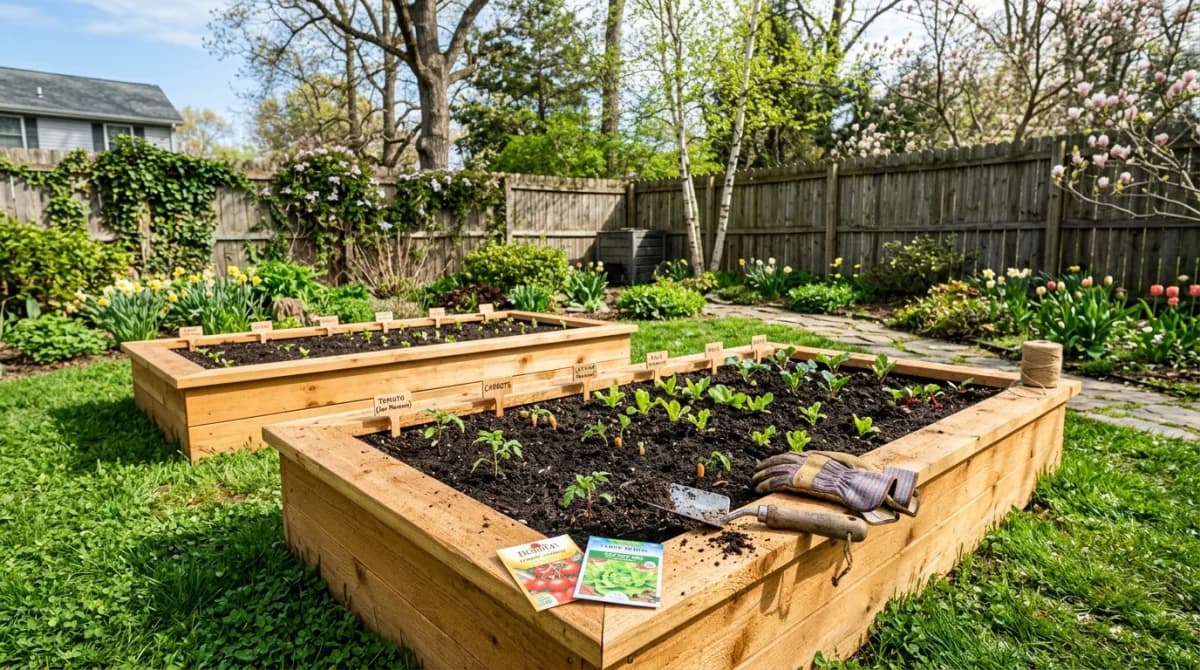
Scatter seeds thinly over prepared soil and press them in lightly. Lettuce seeds need light to germinate, so cover them with no more than a quarter inch of fine soil or vermiculite. Keep the surface moist until seedlings appear, usually in 7 to 14 days.
Thin seedlings to their final spacing once they have two or three true leaves:
- Loose-leaf varieties: 4 to 6 inches apart
- Butterhead: 6 to 8 inches apart
- Romaine: 8 to 10 inches apart
- Arugula and small greens: 2 to 4 inches apart
Do not throw away the thinnings. They are baby greens — wash them and eat them.
Transplanting
Starting seeds indoors 3 to 4 weeks before your outdoor planting date gives you a head start. Use cell trays with standard seed-starting mix. Lettuce seedlings transplant easily and establish fast. Harden them off for a few days before planting outside.
Transplanting works especially well for heading varieties like romaine and butterhead, where you want even spacing and a predictable harvest date.
Succession Planting: The Real Secret
One sowing of lettuce gives you about three to four weeks of good harvesting before the plants either run out of leaves or bolt. To keep salad on the table from March through June, you need succession planting.
The method is simple: sow a new small batch of seeds every 10 to 14 days. A 2-foot row is enough for one planting — that gives a household of two plenty of salad for a couple of weeks.
Here is a sample schedule for zone 6:
| Sowing Date | Varieties | First Harvest |
|---|---|---|
| March 15 | Arugula, mâche, spinach | April 10 |
| March 29 | ’Red Sails’ loose-leaf, spinach | April 25 |
| April 12 | ’Buttercrunch’, mizuna, arugula | May 10 |
| April 26 | ’Little Gem’ romaine, ‘Salad Bowl’ | May 25 |
| May 10 | Heat-tolerant: ‘Jericho’ romaine, ‘Muir’ | June 10 |
By the time your first sowing is done, the second is hitting its stride. By early June you are harvesting heat-tolerant varieties that carry you through the transition to summer crops.
Watering and Mulch
Lettuce is about 95 percent water, and it shows when the plants are thirsty. Wilted, bitter leaves are almost always a watering problem.
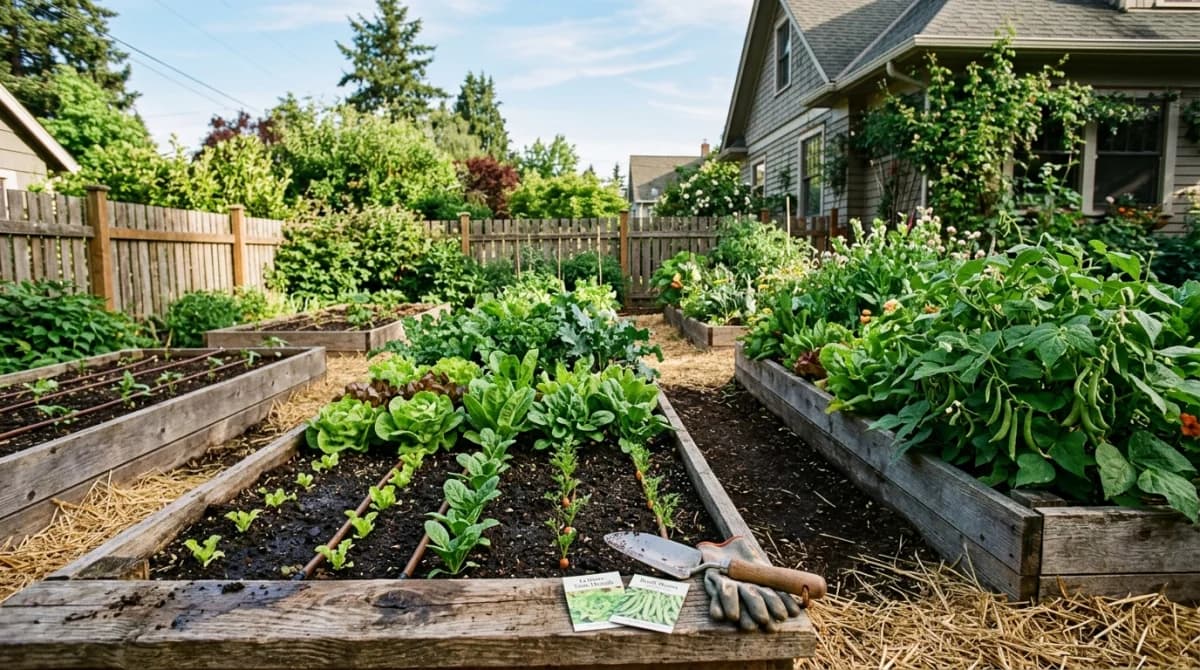
Water consistently — about an inch per week — and keep the soil evenly moist. A thin layer of straw mulch or shredded leaves around the plants holds moisture, keeps the soil cool, and prevents soil from splashing onto the leaves (which keeps them cleaner for harvest).
Drip irrigation or a soaker hose is ideal. Overhead watering works fine in cool spring weather but can promote downy mildew and leaf rot as temperatures rise. If you water with a sprinkler, do it in the morning so leaves dry before evening.
Harvesting
This is the best part: lettuce harvests are forgiving and flexible.
Cut-and-Come-Again
For loose-leaf varieties, snip the outer leaves when they reach 4 to 6 inches long, leaving the center growing point intact. The plant keeps producing new leaves from the center for weeks. Cut about an inch above the soil line if you want to harvest the whole plant — many varieties will regrow from the stump for a second (smaller) harvest.
Head Harvest
For butterhead and romaine, you can either pick outer leaves progressively or wait for the head to form and harvest the whole thing by cutting at the base. Heads are ready when they feel firm when gently squeezed.
When to Stop
Once you see a central stalk elongating from the middle of the plant, that is bolting. The leaves will turn bitter within days. Pull the plant, compost it, and be glad you have the next succession sowing already growing.
Extending the Season
A few techniques push your salad harvest deeper into warm weather:
- Shade cloth: A 30 to 50 percent shade cloth suspended over the bed drops the temperature several degrees and delays bolting by a week or more.
- Heat-tolerant varieties: ‘Jericho’ romaine was bred in the Negev Desert. ‘Muir’ and ‘Concept’ are modern varieties with strong bolt resistance. Plant these for your latest spring sowings.
- Afternoon shade: Planting on the east side of a fence, trellis, or tall crop gives lettuce relief from the hottest part of the day.
- Mulch heavily: Cool soil means cool roots, which slows the hormonal trigger for bolting.
Common Problems
Slugs: The number one lettuce pest. They feed at night, leaving ragged holes and slime trails. Beer traps, copper tape around raised beds, and hand-picking at dusk all help. Iron phosphate bait is organic-approved and effective.
Aphids: Small green or black insects clustering on leaf undersides. A strong spray of water knocks them off. Ladybugs and lacewings eat them by the hundreds if you avoid broad-spectrum pesticides.
Tip burn: Brown edges on inner leaves, usually in heading varieties. Caused by calcium deficiency triggered by uneven watering. Keep moisture consistent and it rarely appears.
Downy mildew: Yellowish patches on leaf tops with gray fuzz underneath. Improve air circulation by spacing plants properly, and water in the morning. Some modern varieties carry resistance.
Designing Your Salad Garden
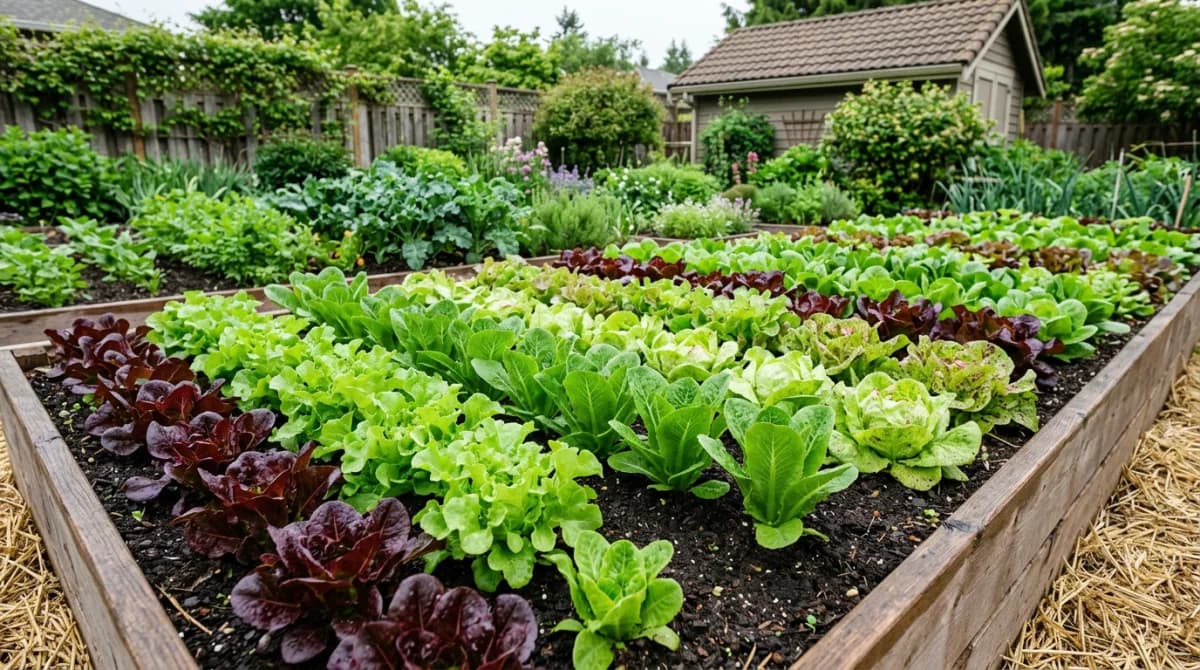
Salad greens look surprisingly good in the garden when you use them intentionally. A bed with alternating rows of red and green lettuce, frilly-leaved varieties next to smooth romaine, and a border of compact arugula creates a tapestry effect that rivals ornamental plantings.
If you are planning your spring garden layout, Gardenly can help you visualize where a dedicated salad bed fits alongside your other plantings and how it integrates with the overall design of your space.
Start This Week
A packet of lettuce seed costs a couple of dollars and contains enough seed for an entire season of succession plantings. Grab three or four varieties — a loose-leaf, a butterhead, arugula, and something adventurous like mizuna or claytonia — and sow the first batch this week.
In a month you will be eating salads that remind you why people bother growing food at all.
Sources & Further Reading
- Growing Lettuce, Endive and Radicchio in Home Gardens — University of Minnesota Extension
- Growing Lettuce and Other Greens — Oregon State University Extension
- Growing Salad Greens — UC Master Gardener Program of Sonoma County