The Best Houseplants for Low Winter Light
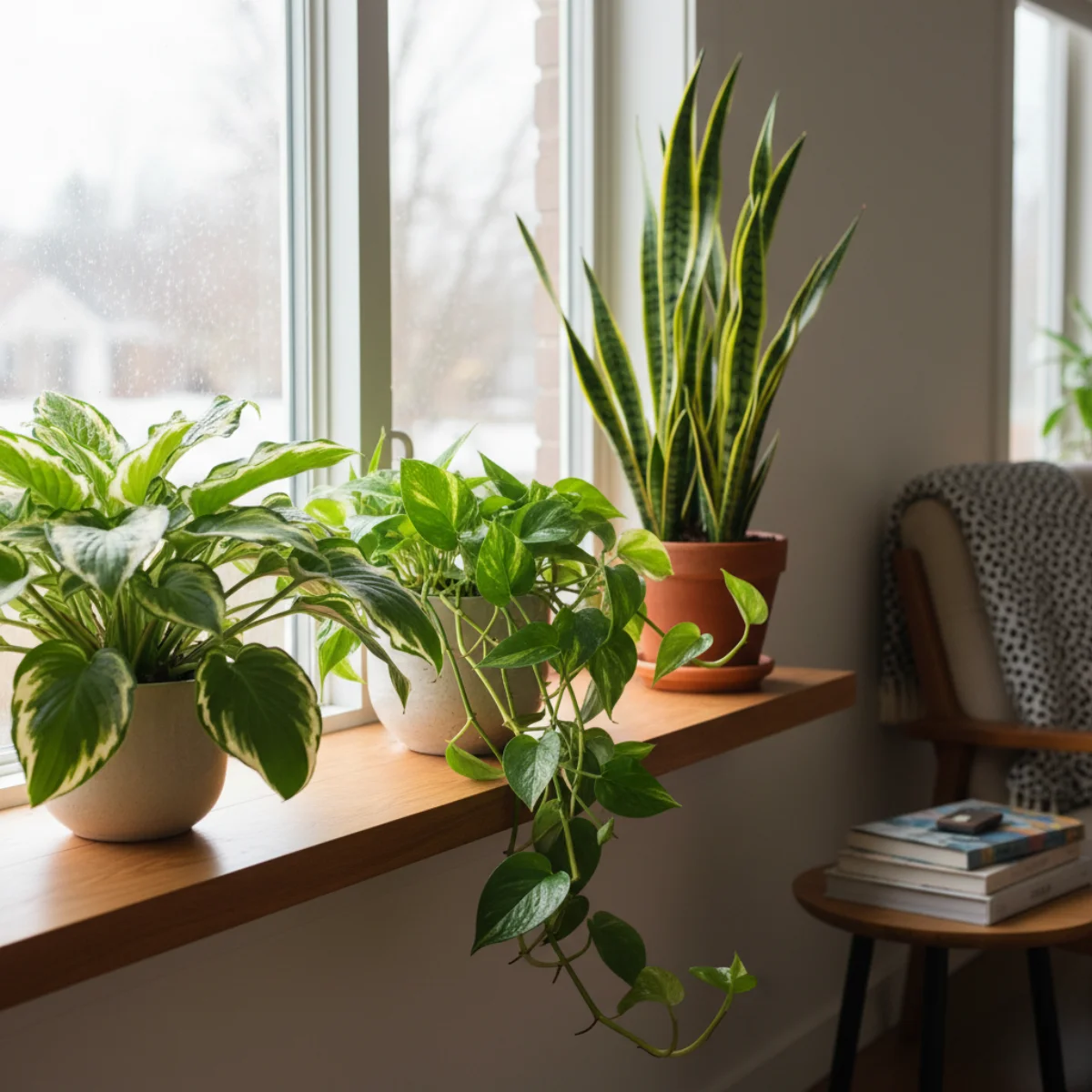
Houseplants can look fine from October through November, then noticeably decline through January—dropping leaves, fading in color, refusing to grow, or developing root rot from a watering schedule designed for summer. The culprit, more often than not, is light.
In December and January in the northern hemisphere, daylight hours drop to their minimum and the sun’s angle is low. Even a south-facing window provides only a fraction of the light it did in June. Tropical plants that grew happily in summer with indirect light may now be in conditions closer to deep shade.
The solution isn’t necessarily a grow light (though that helps—see our guide). It’s also choosing plants that genuinely thrive with less light, not just plants that survive it.
Understanding Low Light
“Low light” is relative and often misunderstood. It doesn’t mean darkness. Plants cannot photosynthesize in true darkness and will eventually die there, regardless of species.
Low-light plants are adapted to the forest understory or similar shaded environments. They’ve evolved to make the most of filtered, indirect, or diffused light. In a home setting, this translates to spots away from windows, rooms with small windows, or north-facing rooms.
An easy test: hold your hand above a sheet of white paper in your low-light spot at midday. If you can see a clear, defined shadow, there’s enough light for low-light plants. If you see no shadow at all, most plants will struggle, but very tolerant species (cast iron plant, some dracaenas) may still manage.
Top Low-Light Houseplants
Pothos (Epipremnum aureum)
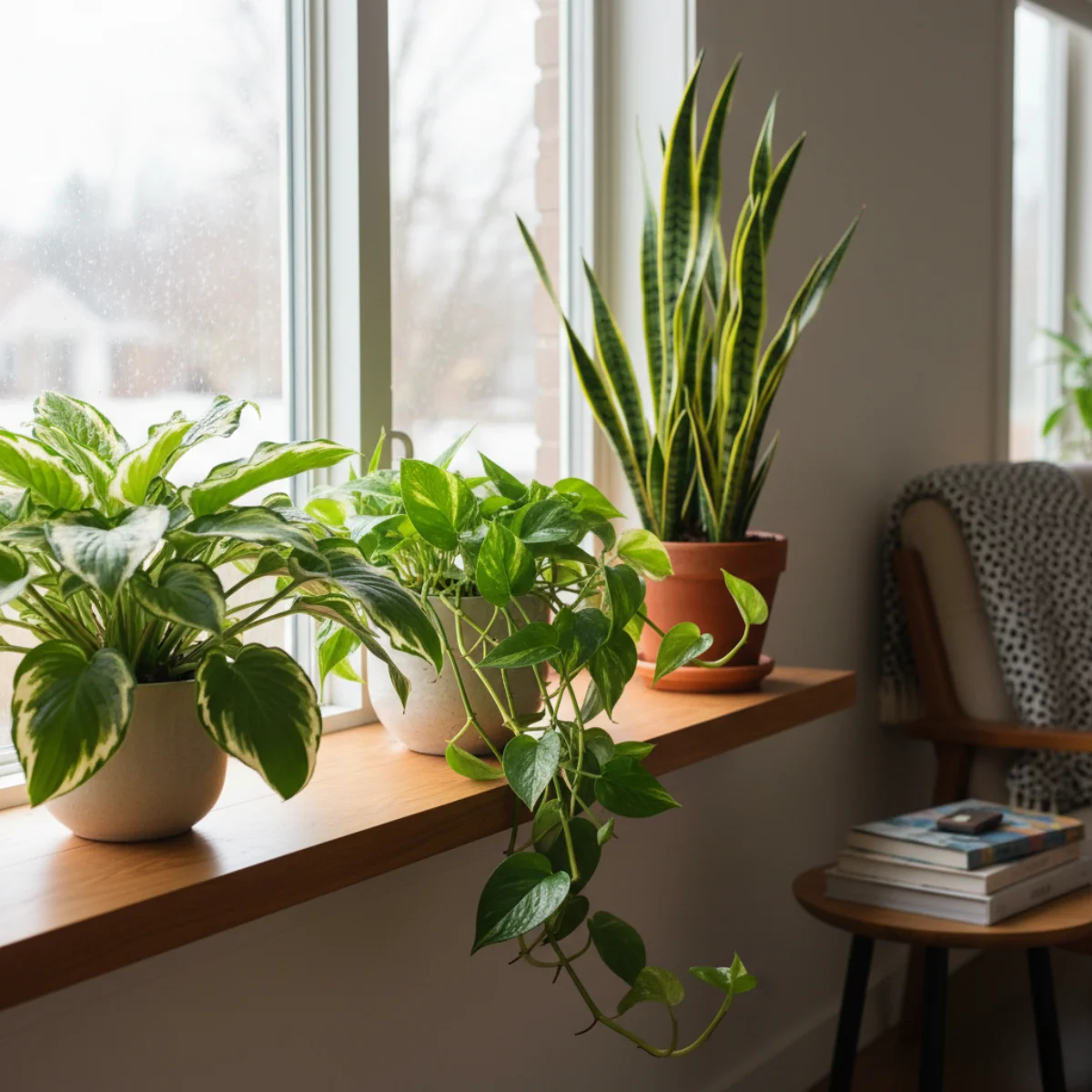
The most forgiving houseplant in existence. Pothos grows in conditions that would kill most other plants: low light, irregular watering, root-bound containers, drafts. The solid-green varieties (‘Jade Pothos’) tolerate the lowest light; variegated forms (‘Golden’, ‘Marble Queen’) need more light to maintain their coloring.
Pothos trails beautifully from shelves or climbs a moss pole. It’s an excellent signal plant: its leaves will tell you when it needs water (they begin to look slightly dull and soft) and when light is inadequate (long, stretched stems with large gaps between leaves).
ZZ Plant (Zamioculcas zamiifolia)
The ZZ plant has become a staple of low-light interiors for good reason: it genuinely thrives with minimal light and very infrequent watering. Its waxy leaves reflect what light there is, and its rhizomatous roots store water for long dry periods.
New growth is a bright lime green that ages to deep, glossy dark green. Growth is slow, which is also an advantage—it won’t outgrow its spot quickly.
One caution: the ZZ is toxic if ingested, so keep away from pets and children.
Snake Plant (Sansevieria / Dracaena trifasciata)
Virtually indestructible. Snake plants tolerate low light, infrequent watering, low humidity, and neglect with equanimity. They grow upright and architectural—useful in floor-standing pots in corners or narrow spaces.
The most tolerant varieties for low light are the all-green types; ‘Laurentii’ (with yellow margins) needs slightly more light to maintain its variegation.
Water infrequently in winter—once a month or even less. Overwatering is the main way to kill a snake plant.
Peace Lily (Spathiphyllum)
Peace lilies have a reputation for tolerating low light, which is partly deserved but requires nuance. They’ll survive in low-light conditions, but to produce their white flowers (spathes), they need moderate indirect light. In winter, a position near a window with some daylight is better than a dark corner.
Peace lilies are also one of the best signal plants: their leaves droop visibly when they need water, then recover remarkably quickly after watering. This makes them good plants for people still learning watering rhythms.
Cast Iron Plant (Aspidistra elatior)
This plant earned its common name honestly. Aspidistra is one of the few plants that will survive genuinely dark conditions: north-facing rooms, hallways, spots far from windows. Victorian gardeners knew it well for exactly this reason—it survived the gas-lit, smoggy interiors of 19th-century homes when nothing else would.
Growth is extremely slow and flowers are inconspicuous (borne at soil level). But the dark, arching, leathery leaves are elegant in a restrained way, and no other common houseplant matches its genuine tolerance for darkness.
Heartleaf Philodendron (Philodendron hederaceum)
Similar to pothos in appearance and care requirements, but with matte rather than waxy leaves. Often available in a larger range of colors than pothos: lime green (‘Lemon Lime’), deep green, and even the nearly black ‘Micans’ variety with iridescent purple-bronze leaves.
Philodendrons appreciate slightly more humidity than pothos and do best in moderate rather than very low light, but they tolerate low-light conditions better than most.
Chinese Evergreen (Aglaonema)
Aglaonemas produce boldly patterned leaves in combinations of green, silver, red, and pink. The darker-leafed varieties are the most light-tolerant—solid green or silver-green types do well in low light. The bright pink and red varieties (‘Siam Aurora’, ‘Prestige’) need more light to maintain their coloring.
Very easy care: water moderately, avoid cold drafts, and provide average indoor humidity.
Dracaena
Several dracaena species are well-suited to lower light conditions, particularly ‘Janet Craig’ (Dracaena fragrans ‘Compacta’), which is one of the best true low-light performers among the family. D. marginata (dragon tree) needs more light.
The palm-like or structural forms of dracaenas work well as statement plants in corners and darker rooms.
Parlor Palm (Chamaedorea elegans)
The parlor palm was a staple of Victorian interiors for the same reason as the cast iron plant: genuine low-light tolerance. It grows slowly but consistently, producing elegant pinnate fronds that bring a tropical feel to any room.
Water moderately, mist or run a humidifier nearby in dry heated homes, and avoid root rot by ensuring good drainage.
Caring for Low-Light Plants in Winter
Even low-light plants need adjustments in winter:
Water less frequently: Growth slows dramatically in low winter light, which means the soil stays wet longer. Overwatering in winter is a common killer of plants that otherwise tolerate neglect. Let the top inch or two of soil dry out between waterings—more than you would in summer.
Stop or reduce fertilizing: Plants in low light aren’t actively growing, so fertilizer sits unused in the soil and can build up to damaging levels. Resume fertilizing in late winter as light improves.
Clean leaves: Dust accumulates on leaves and blocks what little light there is. Wipe leaves with a damp cloth every 4-6 weeks. This also helps you spot pests early.
Move plants closer to windows: Even a foot or two matters. Move the most light-hungry of your “low-light” plants closer to windows for the winter months, then move them back to their usual spots as light improves in spring.
The right plants in the right spots keep your home green and growing through the darkest months—no grow lights required.
Sources & Further Reading
- Lighting for Indoor Plants and Starting Seeds — University of Minnesota Extension
- Pothos (Epipremnum aureum) — University of Wisconsin Horticulture Extension
- ZZ Plant Brightens Up Cold Winter Days — University of Minnesota Extension
- Houseplant Care — University of Wisconsin Horticulture Extension