Plant Out Your Courgettes and Squash This Week — Once the Frost Risk Has Passed
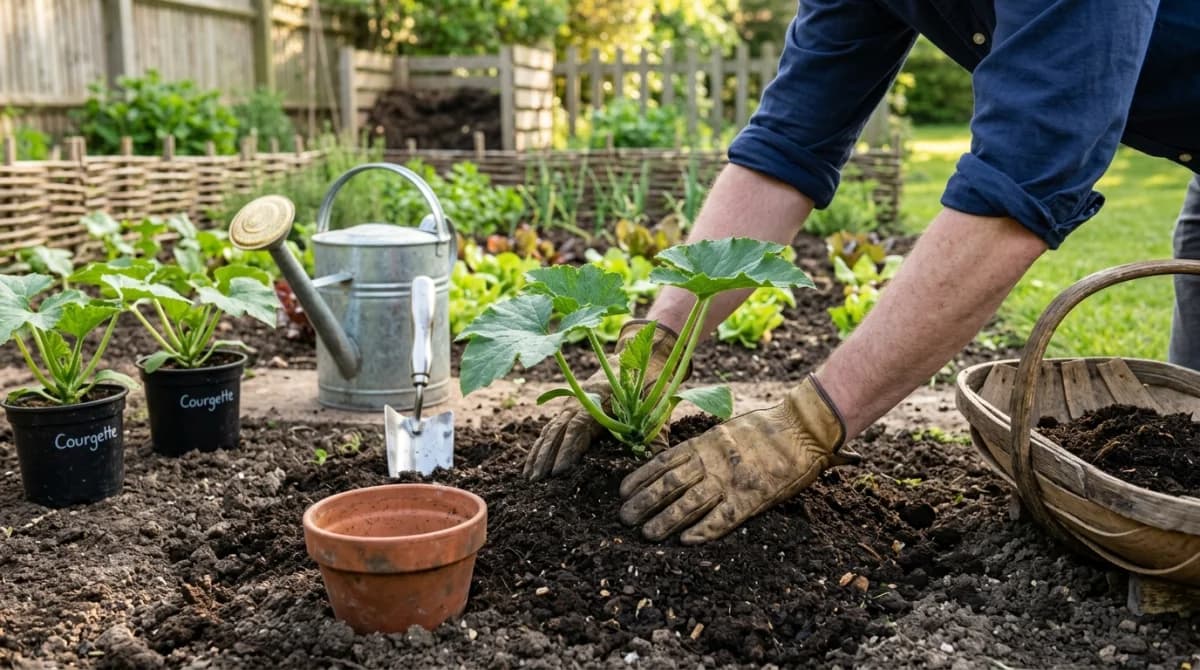
There is a particular moment in late May when the vegetable garden tips over from caution into confidence, and for courgettes and squash that moment is the one that matters most. These are tender plants — frost-tender to the core — and a single cold night will reduce a healthy young courgette to a collapsed, blackened ruin in a way that is genuinely shocking the first time you see it. For weeks the advice has been to wait, to hold the plants back, to resist the warm spell that tempts you out too early. The last week of May is, for most temperate gardens, the moment that wait finally ends. The frost risk has passed, the soil has warmed, and the plants you have been nursing on a windowsill or in a cold frame can finally go where they belong: out in the open ground, in full sun, to begin the most productive few months of the kitchen garden year.
Courgettes and summer squash (Cucurbita pepo) and their winter squash and pumpkin cousins (Cucurbita maxima and Cucurbita moschata) are among the most rewarding crops a beginner can grow, precisely because once they are safely planted and established they need very little. The whole skill lies in the planting — in not jumping the gun, in hardening the plants off properly, and in giving each one the rich, warm, sheltered station it wants. Get the late-May planting right and the plants effectively grow themselves.
Why Timing Is Everything
Courgettes have no frost tolerance whatsoever. Unlike peas or broad beans, which shrug off a cold night, a courgette plant exposed to even a light frost is usually killed outright, or checked so badly it never fully recovers. This is why the calendar matters more for this crop than for almost anything else in the garden. The traditional guidance — wait until all danger of frost has passed — is not fussiness. It is the difference between a thriving plant and a dead one.
In most temperate gardens, the last frost date falls somewhere between mid and late May, which is why the third and fourth weeks of the month are the natural planting-out window. But last frost dates are averages, and averages hide cold corners. A garden in a frost pocket, on high ground, or far from the coast can catch a late cold night well into the month. If you are unsure of your own garden, hold your nerve for a few more days rather than risk the plants — courgettes planted in early June still crop heavily, while courgettes killed by a late frost crop not at all. Watch the forecast, and if a cold night threatens after you have planted, throw a layer of horticultural fleece over the young plants for the night and lift it again once the morning warms.
There is a soil reason for the timing too. Courgettes and squash are warm-season plants that resent cold, wet ground. Their roots will sit and sulk in soil below about 12°C, refusing to grow away. By late May the soil has had weeks of lengthening days to warm through, and a plant set into warm soil establishes in days rather than weeks.
Harden Off Before You Plant
A plant raised indoors or under glass has lived its whole short life in still, warm, filtered conditions. Move it straight out into open ground, wind and full sun, and the shock alone can check it badly — scorched leaves, wilting, a stall in growth. Hardening off is the bridge, and it is not optional.
For seven to ten days before planting out, move the plants outside into a sheltered, partly shaded spot during the day and bring them back under cover at night. Over the period, increase the time outdoors and the exposure to sun and breeze, so that by the end of the week the plants are spending nights out and standing up to full conditions. A cold frame makes this easy — simply open it wider each day and close it at night. The plants you set out at the end of this process are tougher, with thicker leaves and sturdier stems, and they take the move into open ground in their stride. A plant that has not been hardened off is a plant gambling on perfect weather.
Giving Each Plant the Right Station
Courgettes and squash are hungry, thirsty plants, and they are also large ones — a single courgette plant will, by midsummer, sprawl across a square yard, and a trailing winter squash or pumpkin can run for several yards. Space and richness are the two things to get right at planting.
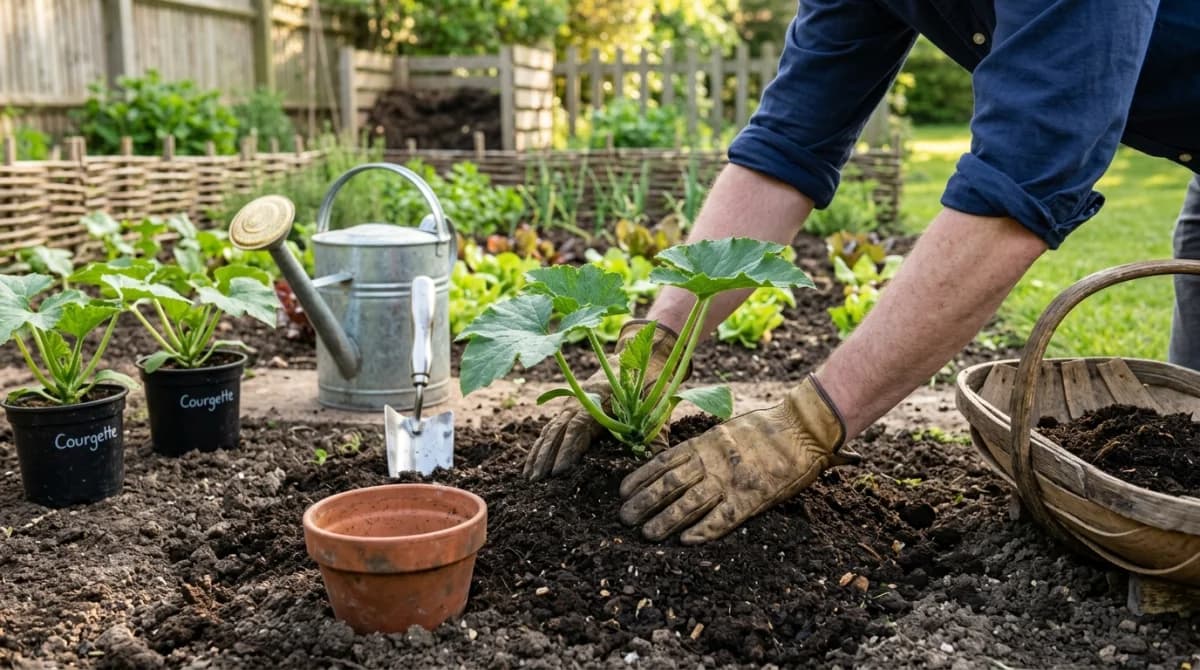
Choose a spot in full sun, sheltered from strong wind, with room for the plant to spread. For each plant, dig a generous hole and work in a spadeful or two of well-rotted manure or rich garden compost — these crops genuinely cannot be over-fed at planting, and the richness you build into the station now feeds the plant through its whole long cropping season. Many gardeners plant courgettes on a slight mound or low ridge, which warms faster, drains freely, and lets you water into a basin around the plant without the crown sitting wet. Set the plants out at least three feet apart for bush courgettes, and considerably more — four to six feet, or train them up a sturdy support — for trailing squash and pumpkins.
Plant in the evening or on an overcast day if you can, so the plant settles before it has to face full sun. Firm it gently in at the same depth it sat in its pot, and water it in thoroughly — a full can around each plant — to settle the soil around the roots and remove air pockets. A common, effective trick is to sink an empty plant pot or a length of pipe into the soil beside each plant at planting time, and water into that; it delivers water straight down to the roots rather than wetting the leaves, which helps keep powdery mildew at bay later in the season.
Slugs, Water, and the First Few Weeks
A newly planted courgette is, for a week or two, exactly the right size and softness to be a slug’s idea of dinner, and slugs can shred a young plant overnight. This is the one vulnerable period, so protect the plants while they are small — a barrier of grit or crushed shell around each stem, beer traps sunk nearby, or a regular evening patrol all work — and once the plants are large and growing strongly they outgrow the danger.
The other early need is water. A freshly planted courgette has a small root system and a lot of leaf, and it dries out fast. Water generously and regularly for the first few weeks until the plant is visibly growing away and has rooted out into the surrounding soil. After that, courgettes and squash still want a deep soak in dry spells — especially once the fruits begin to swell — but the frequent attention belongs to the establishment phase.
A mulch of compost or grass clippings spread around each plant once it is in and watered locks moisture into the soil, keeps weeds down, and means far less watering through the summer. It is ten minutes of work that pays back all season.
Why the Crop Is Worth the Care
The reason courgettes have a reputation as the crop that overwhelms the gardener is simple: planted well in late May, a single plant is astonishingly productive. From midsummer onward it will throw fruit faster than most households can keep up with, and the standard joke about leaving surplus courgettes on neighbours’ doorsteps is a joke rooted entirely in truth. Two or three plants will feed a family through the whole summer. Squash and pumpkins, slower to crop, reward the long season with fruit that stores for months — a row planted now is a shelf of winter eating in October.
All of it rests on the planting. A courgette set out at the right moment, hardened off, given a rich and sunny station and watered through its first fortnight, asks almost nothing more of you. The frost danger is behind it, the soil is warm, and the plant simply gets on with the job.
If you are still working out where the courgettes should go — which corner stays sunny and sheltered, where a sprawling squash can run without swamping its neighbours, how to leave room for the plants to reach full midsummer size without crowding the paths — Gardenly can render your plot in full summer growth from a photo of the space, so you can see how much room a row of courgettes really takes before you commit a single plant to the ground. Useful for a kitchen garden where these generous, sprawling crops need their space planned for rather than squeezed in.
Sources
- Royal Horticultural Society — Courgettes: Growing Guide
- Royal Horticultural Society — Squash and Pumpkins: Growing Guide
- University of Minnesota Extension — Growing Summer Squash and Zucchini
- Garden Organic — Courgette and Marrow Growing Guide