Plan Your Best Garden Year Yet—Starting Right Now
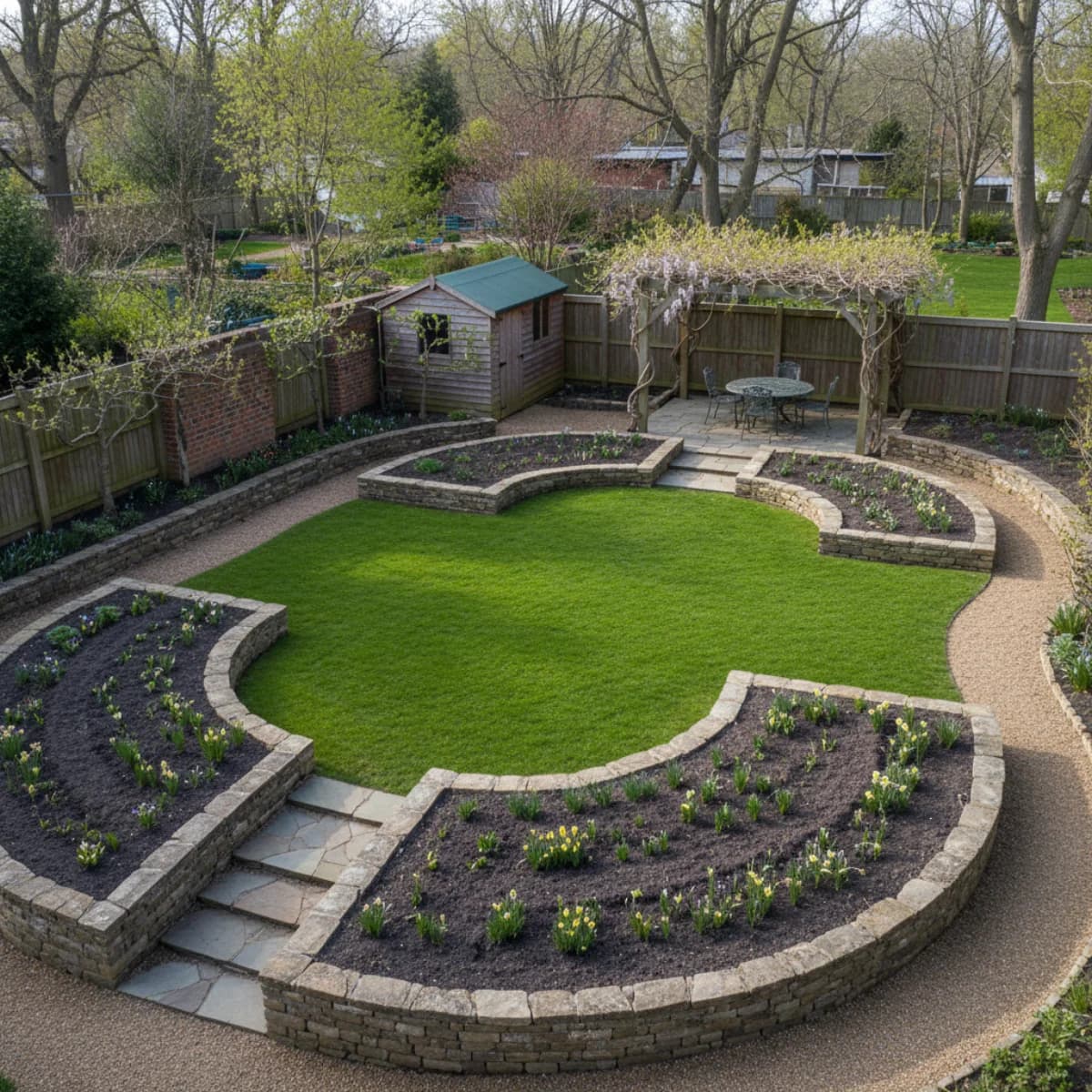
There’s a small but significant window every year where the gardening calendar creates perfect conditions for thinking clearly about the season ahead. Late January through mid-February, before seed-starting demands your attention and before the ground opens and pulls you into reactive mode. This window is right now.
Gardeners who use it consistently have better seasons than those who wait for spring to figure things out. Not because they’re more disciplined—but because planning in the off-season is genuinely easier. You’re not surrounded by mud, half-started projects, and time pressure. You can think.
Here’s how to make the most of the next few weeks.
Start With an Honest Review of Last Year
Before looking forward, look back.
The most useful planning happens when you’re specific about what actually happened last year—not your general impression, but the actual details. This is why garden journals are valuable. If you kept one, pull it out. If you didn’t, do your best to reconstruct:
What worked well?
- Which crops produced abundantly and tasted great?
- Which design decisions paid off (the path you added, the bed you relocated)?
- What pest or disease management strategies actually worked?
- Which plant varieties outperformed others?
What failed or fell short?
- Crops you planted but barely harvested
- Areas of the garden that never came together visually
- Maintenance tasks that consistently didn’t get done
- Plants that underperformed their reputation
What did you not have enough of?
- Fresh herbs running out before you wanted?
- Cut flowers done too early in the season?
- Not enough shade for midsummer?
What caused you the most frustration? This is revealing. The things that frustrate you most are usually worth solving directly rather than working around.
Spend some time with these questions. The answers shape what you prioritize this year.
Set Specific, Achievable Goals
Vague goals produce vague results. “Have a better garden” is not a goal. These are goals:
- Grow 80% of the salad greens we eat from May through September
- Build one new 4x8 raised bed in the side yard
- Establish a cut flower patch with continuous bloom from June through October
- Solve the drainage problem in the northwest corner of the backyard
- Plant five native species I haven’t grown before
Specific goals give you a clear picture of success—and make it possible to evaluate at the end of the year whether you actually achieved them.
Three to five goals is plenty. The tendency is to set too many, which means nothing gets the attention it needs.
Make a Real Design Before You Plant
The gardens that consistently look put-together share one quality: they were designed before plants went in the ground. Not necessarily by a professional—but by someone who thought about the space and made deliberate decisions about it before planting season urgency took over.
A design, at minimum, answers these questions:
Where are the beds, and what size are they? Measure your actual space. Know the dimensions you’re working with. Even rough beds whose edges you’ve never precisely thought about benefit from being measured and mapped.
What’s the light situation? Different areas of your garden receive different amounts and types of light. The vegetable garden needs 6-8 hours of direct sun. The shade garden needs less. Where does your space have what?
What’s the overall layout? Where do people walk? Where do they sit? How does the garden flow from one area to another? These are landscape architecture questions that can be answered simply by watching how you actually use your outdoor space.
What’s the visual anchor? Every garden needs something that draws the eye and gives the space structure—a large shrub, a tree, an urn, a garden structure. Without an anchor, the garden feels scattered.
What’s the plant palette? Coherent gardens use a limited color palette and repeat plants throughout for unity. A garden where every plant is different in every bed tends to feel busy and unresolved.
Using AI Tools to Accelerate Design
What used to require hiring a landscape designer—visualizing how different design decisions would actually look in your specific space—is now accessible through tools like Gardenly .
Upload a photo of your current garden or outdoor space. Select a design direction: cottage garden, modern minimalist, native plants, Japanese garden. See a realistic rendering of what that approach looks like in your actual yard, not a generic stock photo.
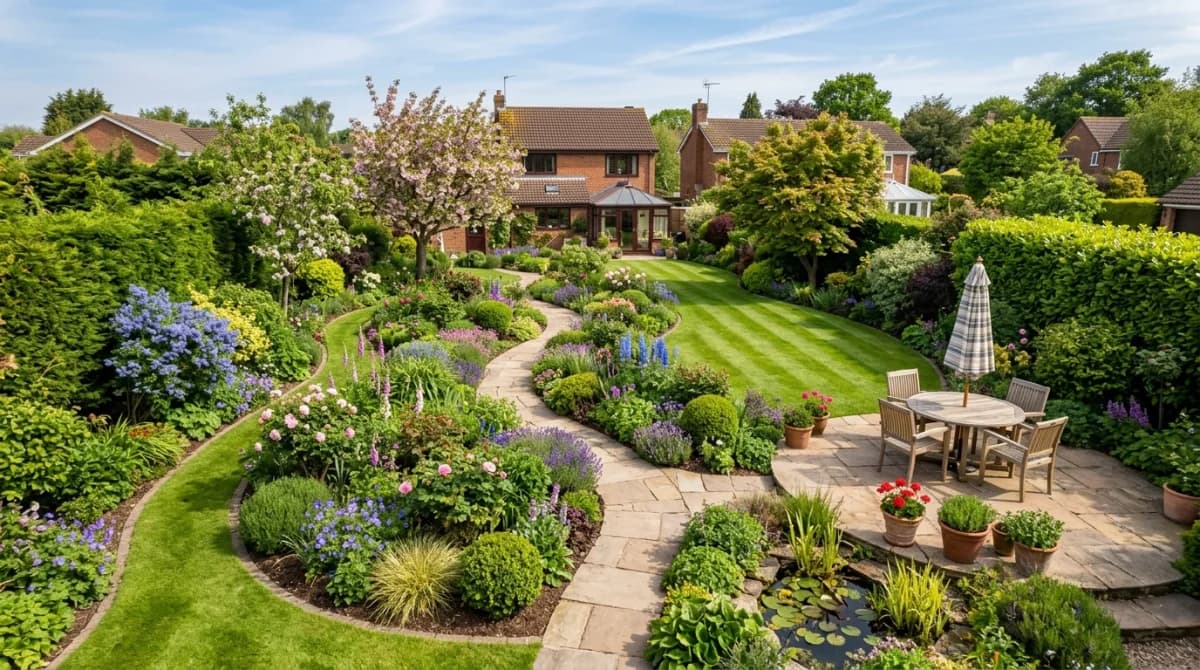
This matters more than it sounds. Design decisions made on paper or in spreadsheets often look different in reality. Seeing a realistic rendering of your backyard with a proposed perennial border, or your front yard with a native plant meadow replacing the lawn, makes the design decision concrete rather than abstract. You can change course quickly if it’s not what you imagined—before you’ve spent money and labor.
The iteration speed is valuable. In an hour with a design tool, you can explore more design directions than you could implement in five years. That exploration narrows your thinking to what actually fits your taste and your space.
Map Your Planting Schedule
Once you have goals and a design direction, map the planting schedule.
Work backward from harvest or bloom timing:
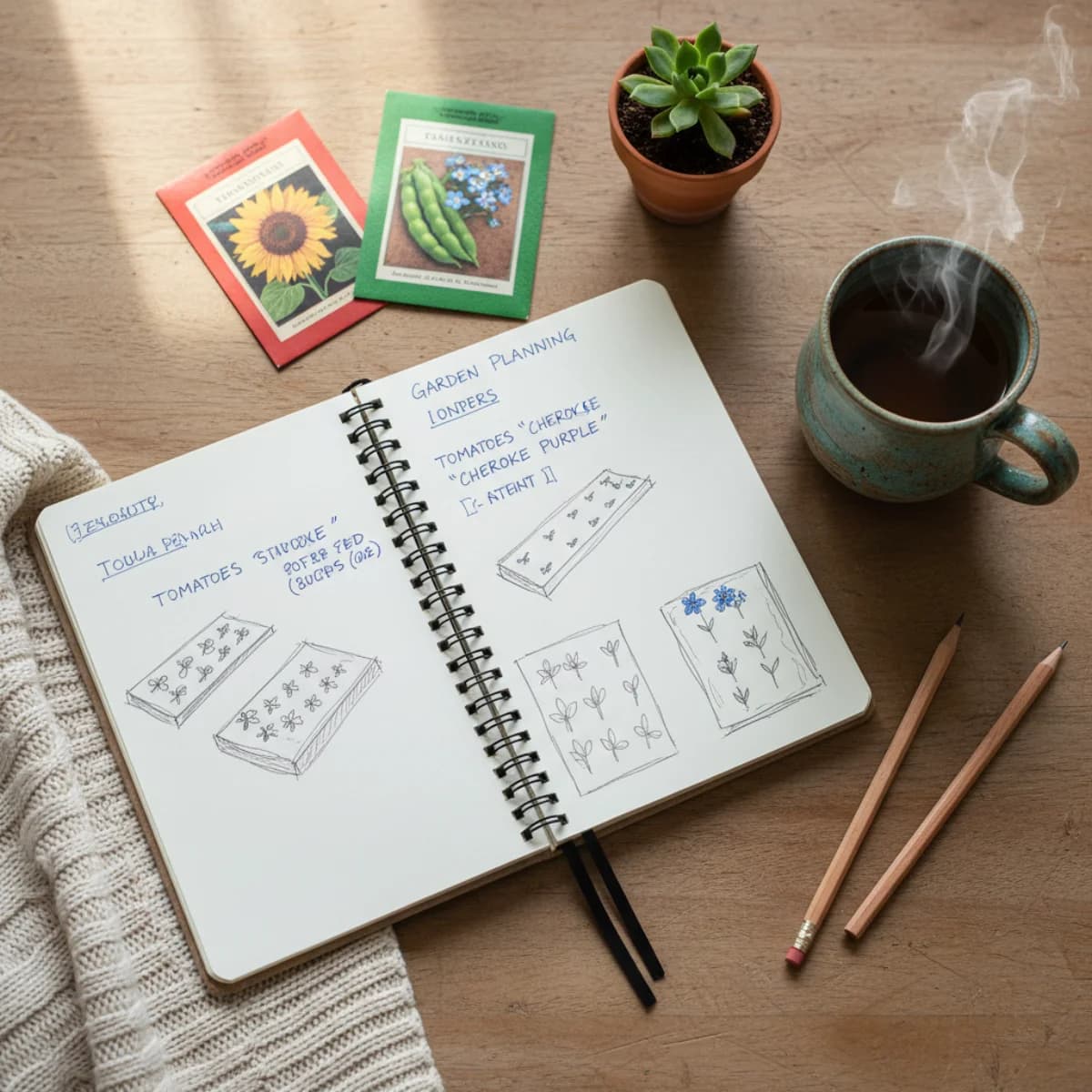
- When do you want tomatoes? Calculate the transplant date, then the seed-starting date.
- When do you want cut flowers? Work back from bloom timing for each variety.
- When do you want peas? Direct sow date from your last frost date.
Then look at the overall schedule and identify where things pile up. Most gardeners have a crunch in April and May; almost nothing in February. Use February to do what February allows—seed starting, planning, ordering, early pruning—rather than waiting and adding to the spring crunch.
Order What You Need Now
Bare-root trees, shrubs, and roses: order by mid-February for best selection. These are available only when dormant and sell out quickly.
Seeds: if you haven’t placed your full order, finish it now. Popular varieties sell out.
Supplies: trays, growing media, fertilizers, new tools. The time to source these is now, not when you’re actually trying to use them.
Lumber or materials for any structures you’re building. If you’re building raised beds in March, order the lumber now.
The Investment That Pays Off All Season
Gardeners who do this work in February—honest review, specific goals, real design, organized planting schedule—consistently have better experiences through the growing season than those who wing it.
Not because they execute perfectly. But because they have a direction. When you know what you’re trying to accomplish, every decision in the garden is easier. When you don’t, every decision requires starting from scratch.
Take the next few weeks seriously. They’re more valuable than they look.
Sources & Further Reading
- Planning a Vegetable Garden — National Gardening Association (Garden.org)
- Planting the vegetable garden — University of Minnesota Extension
- Maximizing Your Vegetable Garden — Penn State Extension