How to Use AI to Design Your Dream Garden This January
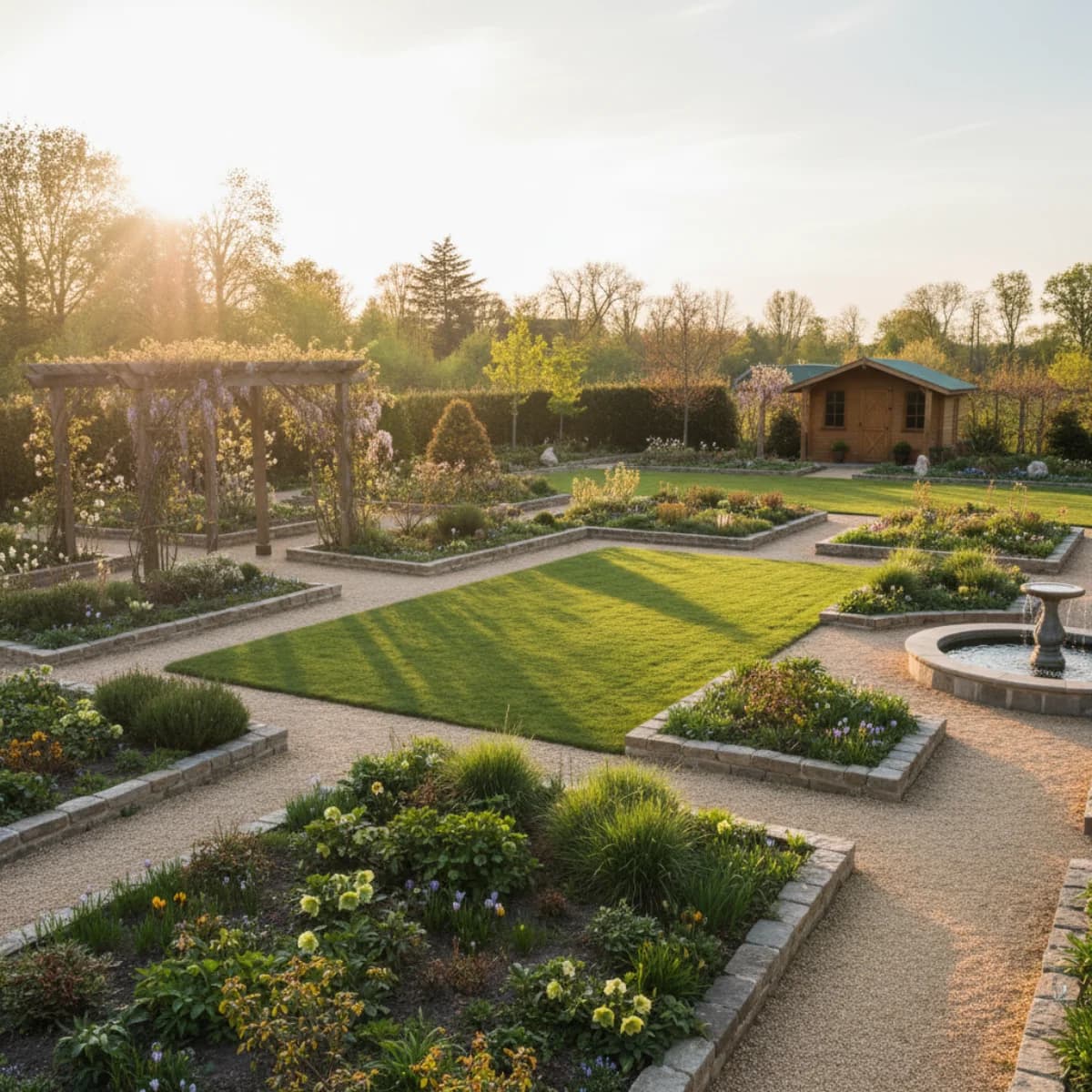
January is one of the most strategic months in the gardening year. Nothing is in the ground yet, no decisions are irreversible, and you have the mental space to think about your outdoor space with fresh eyes. It’s also the month when enthusiasm outruns information—when you’re most likely to commit to big changes that might not work in practice.
This is exactly where AI garden design tools prove their worth: helping you visualize ideas before you invest time, money, and back muscles into something. If you want to try the workflow as you read, start with Gardenly’s AI garden design page and come back to this planning checklist after your first preview.
The Traditional Planning Problem
Before digital tools existed, garden planning meant sketching on graph paper, studying plant encyclopedias, and hoping your mental image matched reality. Even skilled designers made expensive mistakes—plants that looked right in the catalog but wrong in the space, color combinations that clashed at scale, beds that were impractical to maintain.
Most homeowners did less planning than that. They bought plants at the garden center, put them more or less where they seemed to fit, and hoped. Some of this worked out beautifully. Much of it didn’t.
The core problem is that gardens are three-dimensional, seasonal, and dynamic—and our brains struggle to hold all those variables at once while standing in a muddy bed in March.
What AI Changes
AI garden design tools work by letting you upload a photo of your actual outdoor space and see it transformed with different planting styles, layouts, and plant combinations—instantly and at no cost except a few minutes of your time.
This changes the planning process fundamentally. Instead of imagining, you’re seeing. Instead of committing to one direction, you can explore several in an afternoon. Instead of discovering that your “Mediterranean border” reads as dusty and beige in your actual garden light, you find out before you’ve spent anything.
The technology isn’t perfect—no AI fully understands plant size at maturity, soil conditions, or the way a specific garden space behaves over seasons. But for the visualization step—“does this design feel right?”—it’s remarkably effective.
Where to Start: Define What You Actually Want
The most common mistake in garden planning is jumping straight to plants before you’ve settled on a purpose and style. AI tools work best when you come to them with a clear brief.
Before you generate a single design, write down:
The use case: Is this space primarily for sitting and entertaining? For growing food? For wildlife? For cutting flowers? For looking at from inside the house? These have very different design implications.
The style: Formal and clipped, or wild and relaxed? Cottage garden chaos, or Japanese minimalism? Modern gravel and grasses, or lush English borders? You don’t need to be perfectly specific, but having a general direction saves you from going in circles. If you are genuinely unsure, our garden style quiz matches your personality to a garden design aesthetic in about two minutes.
The constraints: Sun exposure, soil type, drainage, privacy requirements, deer pressure, maintenance budget (time and money). Any design needs to work within these realities.
The problems you’re trying to solve: Ugly view to screen, awkward sloped area, bare section under a big tree, overwhelming lawn that’s expensive to maintain—knowing what you’re trying to fix helps a lot.
The Design Exploration Process
With a photo of your space and a clear brief, the AI exploration process looks something like this:
Generate broadly first: Try a few different style directions—one formal, one naturalistic, one cottage-style—to see which general direction resonates with your space and your gut reaction.
Zoom in on what works: When a direction feels right, start refining. Adjust the plant palette, the structure, the color emphasis. This iterative process catches mistakes early.
Stress test the design: Ask yourself: what does this look like in winter when everything dies back? What does it look like in year 3 when plants are at mature size? What happens in a drought year? The AI won’t answer these questions, but the visualization prompts you to ask them.
Consider maintenance honestly: A design that looks gorgeous in a generated image but requires three hours a week to maintain isn’t the right design for most people. Think about what you’re willing to do before you commit to high-maintenance plantings.
Practical Combinations: AI Plus Traditional Research
AI visualization is a starting point, not an endpoint. The most effective planning process combines AI design exploration with traditional research:
Use AI to settle on style and structure: What’s the layout? What’s the dominant plant palette? What’s the visual rhythm?
Use plant reference books or trusted websites to validate that your chosen plants will actually work in your conditions: right hardiness zone, right light level, right soil type, appropriate mature size.
Use specialist nursery catalogs to find the specific cultivars most suited to your climate and available from growers near you.
Visit local gardens (public gardens, neighbors’ yards, garden centers with good display areas) to see plants in real conditions at real scale.
The AI does the visualization quickly. The research grounds it in reality.
January-Specific Planning Tasks
If you’re planning garden changes for this year, January is the right time to:
Commit to your design direction: Decide what you’re doing—not just “maybe”—so you can order the right plants at the right time.
Identify what you need to buy: Make a plant list with quantities from your design, then research sources. Specialty perennials, bare-root shrubs, and unusual trees often sell out early.
Identify what you need to build: New raised beds, trellises, seating areas, or paths need to be sourced and constructed before planting time. Get quotes or materials lined up now.
Create a planting timeline: When do plants need to go in? Bare-root roses and trees in February-March, hardy perennials in April, tender annuals after frost.
One Honest Note
AI generates beautiful images, not reality. The transformation it shows is a direction, not a guarantee. Plants grow in unpredictable ways. Your soil might not cooperate. A neighbor’s new fence might change the light situation.
The goal of January planning isn’t to pin down every detail—it’s to make better decisions than you’d make in the moment, standing in the mud in April with a car full of impulse-purchased plants and no real plan.
Gardenly is built for exactly this kind of exploratory planning. Upload a photo of your outdoor space, select a style direction, and see what your garden could look like. It won’t make every decision for you, but it will make the decisions you do make much more informed.
January is long. Use it.
Sources & Further Reading
- Planning a Vegetable Garden — National Gardening Association (Garden.org)
- Maximizing Your Vegetable Garden — Penn State Extension
- Landscape design and plant selection — University of Minnesota Extension