Shade Garden Plants That Thrive Without Full Sun
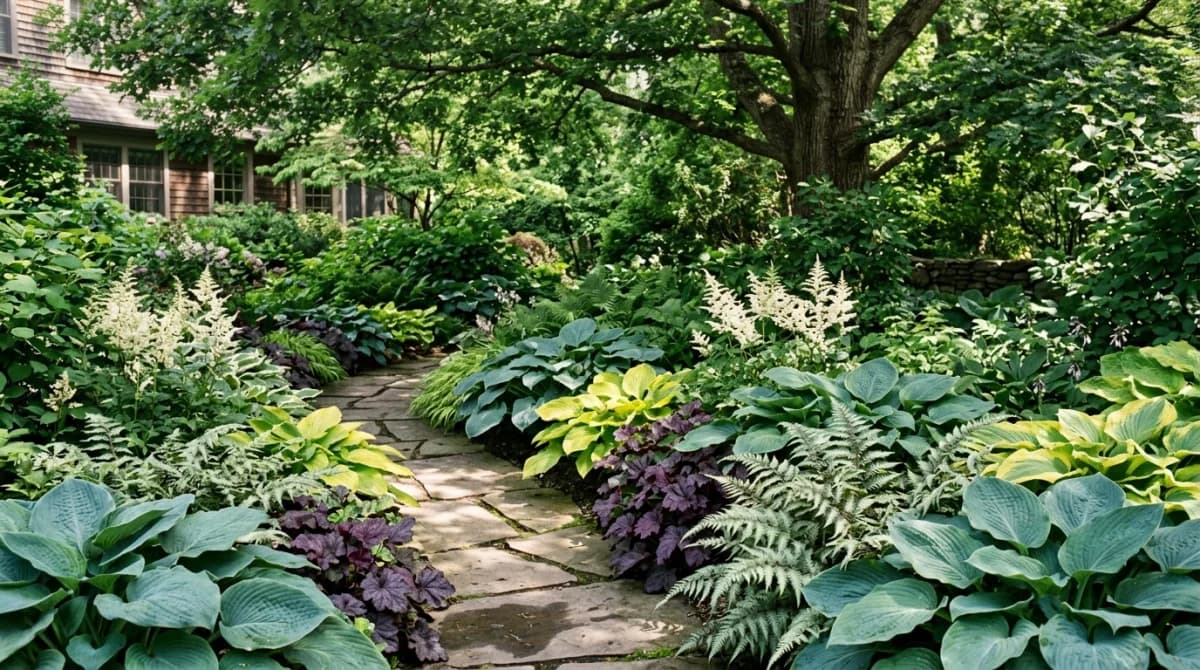
Most gardeners treat shade as a problem. The area under the big oak tree? “Nothing grows there.” The north side of the house? “Too dark for anything.” The narrow passage between the house and the fence? “A lost cause.”
These are some of the most beautiful potential garden spaces in your yard. Shade gardens have a quality that sunny borders rarely achieve: a sense of coolness, calm, and layered texture that makes you want to slow down and look closely. The plants may not scream with neon blooms, but they compensate with extraordinary foliage, subtle flowers, and a lush density that full-sun gardens can only dream of.
The key is understanding that shade is not one thing. Different types of shade call for different plants, and once you match the right plant to the right shade, the results are remarkably low-maintenance.
Understanding Shade Types
Not all shade is created equal. The type of shade determines which plants will thrive.
Partial Shade (3 to 6 Hours of Direct Sun)
The easiest shade condition to garden in. Morning sun with afternoon shade is ideal: the plants get enough light for flowering without the stress of hot afternoon sun. Many sun-loving plants actually perform better in partial shade in hot climates.
This is the shade you find on the east side of a building, under high-canopied trees that allow dappled light through, or in areas that only get shade for part of the day.
Full Shade (Less Than 3 Hours of Direct Sun)
Steady, consistent shade like the north side of a house or under dense evergreen trees. Reflected light and ambient brightness still matter. Full shade next to a white wall is brighter than full shade in a dark courtyard.
Fewer plants flower well in full shade, so design emphasis shifts to foliage texture, shape, and color.
Dappled Shade
Light filtered through a high canopy of deciduous trees. This is the natural condition of a woodland floor, and it supports the widest range of shade plants. The shifting patches of sun and shadow throughout the day give plants enough light to thrive without heat stress.
Dry Shade (The Hard One)
Shade under mature trees with shallow, competitive root systems (maples, beeches) that also drain the soil of moisture. This is the most challenging shade condition because plants must cope with low light and low moisture simultaneously while competing with tree roots for both.
Fewer plants tolerate dry shade, but the ones that do are tough and valuable.
The Best Plants for Shade
The Foliage Stars
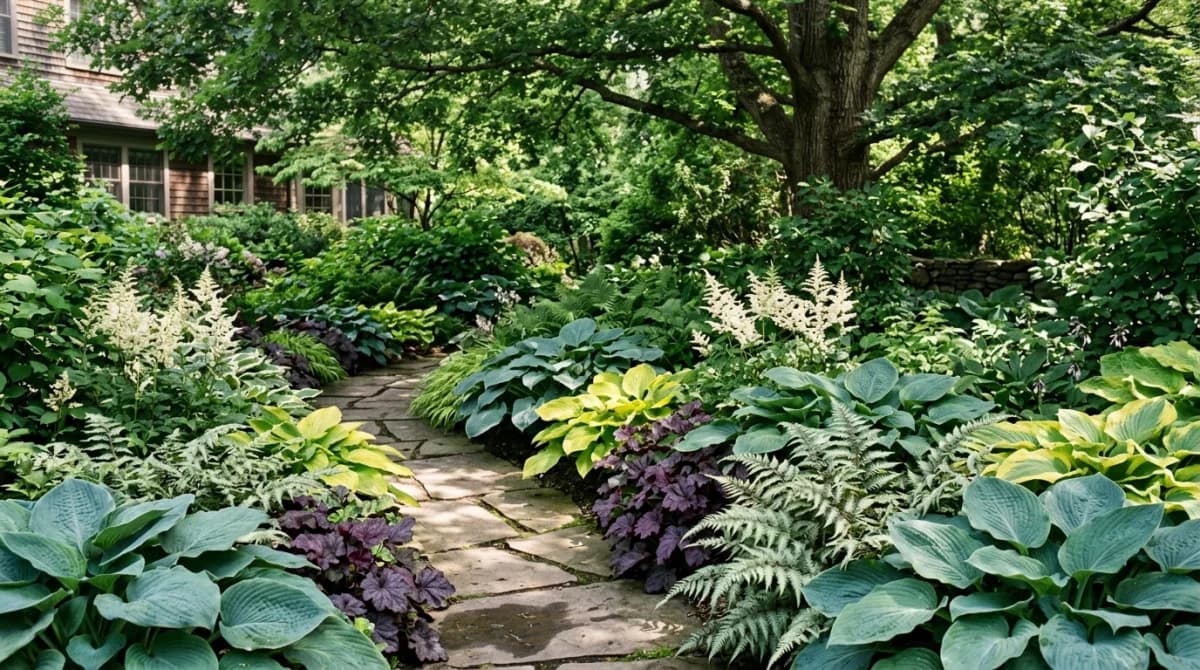
Hostas. The foundation of shade gardening. Hundreds of varieties from 6-inch miniatures to 4-foot giants, in shades of blue, green, gold, and variegated. They’re tough, long-lived, and provide bold texture that nothing else matches. Slugs are the main enemy, so use iron phosphate bait or choose thick-leaved varieties that resist slug damage.
Ferns. Ferns bring a texture to the shade garden that no flowering plant can replicate. Japanese painted fern (silvery-purple, 18 inches), lady fern (graceful, 2 to 3 feet), and Christmas fern (evergreen, 2 feet) are excellent choices. They need consistently moist soil and look best in groups.
Heuchera (Coral Bells). Evergreen or semi-evergreen mounding plants with foliage in extraordinary colors: black, purple, lime green, orange, silver. Tiny flowers on airy stems in spring. They’re compact, versatile, and come in enough colors to create an entire garden palette.
Brunnera (Siberian Buget). Heart-shaped leaves with striking silver variegation (variety ‘Jack Frost’). Forget-me-not-like blue flowers in spring. A beautiful ground cover for partial to full shade.
Ligularia. Bold, large-leaved plants with striking yellow flower spikes. ‘The Rocket’ sends up dramatic 4-foot black stems topped with yellow flowers. Needs moist soil. They wilt dramatically in dry conditions but recover overnight.
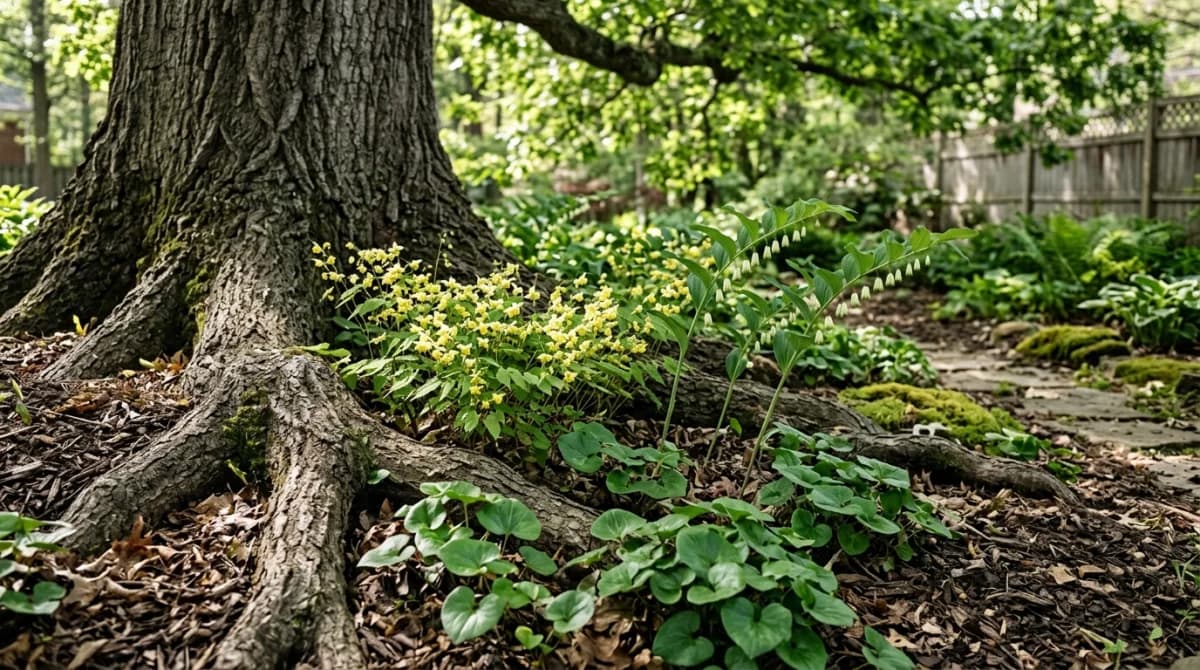
Dry Shade Survivors
These plants tolerate the most challenging shade condition: dry soil under competitive tree roots.
Epimedium (Barrenwort). Dainty but incredibly tough. Delicate flowers in spring, heart-shaped foliage, and the ability to grow in bone-dry shade under maples. Cut back old foliage in late winter to see the flowers.
Solomon’s seal (Polygonatum). Graceful arching stems with dangling white bell flowers. Spreads gradually to form elegant colonies. One of the most beautiful plants for woodland gardens.
Wild ginger (Asarum). Low, glossy evergreen ground cover that colonizes dry shade slowly but steadily. The “flowers” hide at ground level under the leaves (botanically interesting, not showy).
Hellebores (Lenten Rose). Evergreen, February-blooming perennials that thrive in dry shade under deciduous trees. They bloom before the tree canopy leafs out, then tolerate the dry shade of summer. Available in whites, pinks, purples, greens, and dramatic near-blacks.
Liriope (Lilyturf). Grass-like evergreen ground cover with purple flower spikes. Tolerates deep shade, dry soil, and neglect. Almost unkillable.
Pachysandra. Classic evergreen ground cover for shade. Spreads by runners to form a dense carpet. Not exciting but incredibly reliable and effective where nothing else will grow.
Flowering in Shade
Shade gardens can bloom. These plants put on a show without full sun:
Astilbe. Feathery plume flowers in whites, pinks, reds, and purples above ferny foliage. Needs moist soil. The dried flower stalks provide winter interest.
Bleeding heart (Dicentra). Heart-shaped flowers dangling from arching stems in spring. Old-fashioned bleeding heart (D. spectabilis) goes dormant by midsummer. Fringed bleeding heart (D. eximea) blooms all season and keeps its foliage.
Japanese anemone. Fall-blooming windflowers with elegant single or double blooms in white and pink. They bloom when the rest of the shade garden has finished, extending interest into October.
Tiarella (Foamflower). Native woodland plant with foamy white flower spikes in spring and interesting lobed foliage, often with dark markings. Excellent ground cover.
Hydrangea. Most hydrangeas perform well in partial shade. Bigleaf hydrangeas (mopheads and lacecaps) actually prefer afternoon shade in hot climates. They’re among the few shade plants that provide big, bold summer color.
Design Principles for Shade
Texture Over Color
In shade, the design game is texture. The difference between the bold, round leaves of a hosta and the fine, lacy fronds of a fern creates visual interest that’s as compelling as any flower display. Combine plants with contrasting leaf shapes: big and small, round and linear, smooth and jagged.
Brighten With Light-Colored Foliage
Gold, chartreuse, and silver-variegated plants glow in shade. They catch ambient light and make dark areas feel brighter. A gold hosta, a chartreuse heuchera, or a silver brunnera in a dark corner has more visual impact than any flower.
White flowers also shine in shade, visible in low light when colored flowers disappear. White astilbe, white bleeding heart, and white hydrangeas all seem to luminize in shade.
Layer Heights
Create depth by planting in three layers:
- Ground layer (under 12 inches): ground covers like pachysandra, epimedium, wild ginger
- Middle layer (12 to 36 inches): hostas, heuchera, ferns, astilbe
- Upper layer (3 to 6 feet): hydrangeas, ligularia, Japanese anemone, Solomon’s seal
This layering mimics the natural woodland structure and makes even small shade gardens feel rich and full.
Add a Path
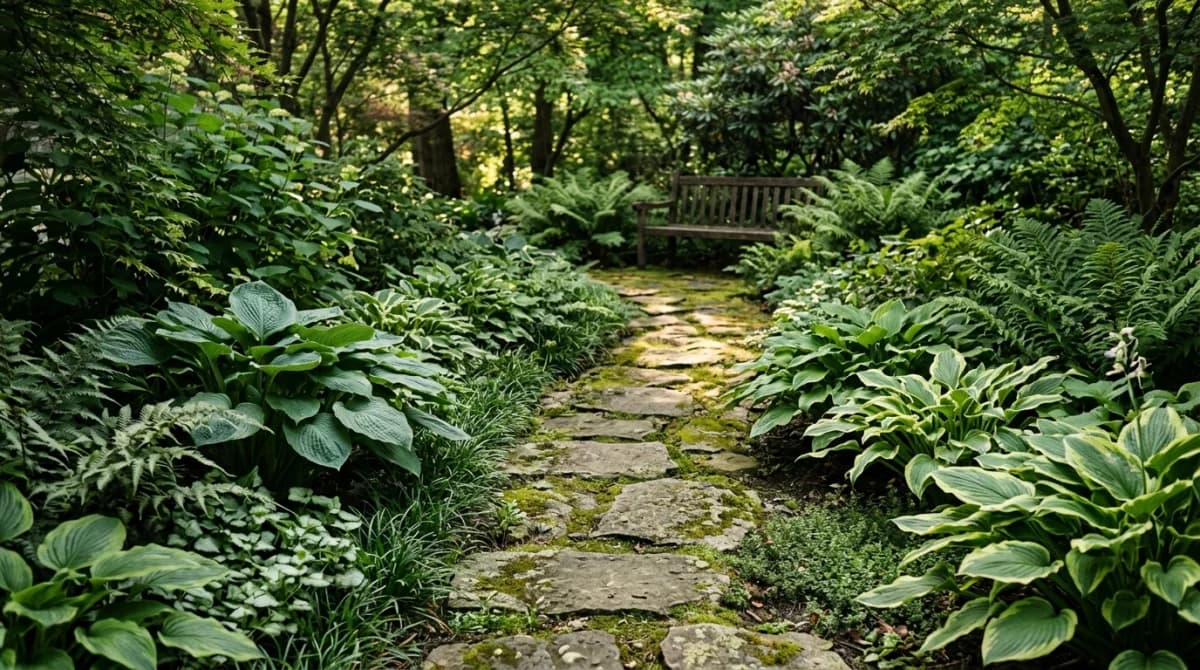
A stepping stone path through a shade garden transforms it from something you look at to something you experience. Set flat stones in ground cover, let moss grow between them, and suddenly you have a destination worth walking to.
Include a Focal Point
A simple bench, a large pot, a stone lantern, or a birdbath gives the shade garden a center of gravity. Without one, shade plantings can feel like undifferentiated green: pleasant but not memorable.
Maintaining a Shade Garden
Shade gardens are among the lowest-maintenance garden types once established.
Spring cleanup: Remove dead foliage from hostas and hellebores. Cut back old fern fronds if they look ratty (or leave them, as they feed the soil as they decompose). Cut epimedium foliage to the ground in late winter to reveal the flowers.
Mulch: Apply 1 to 2 inches of shredded leaves or fine bark annually. Shade gardens don’t need as much mulch as sunny beds because the canopy reduces moisture loss.
Water: Most shade plants need less water than sun plants. Check soil moisture during dry spells, especially under trees that compete for water.
Divide: Hostas, astilbe, and ferns may need dividing every three to five years when they get overcrowded. Divide in early spring when new growth is just emerging.
A well-designed shade garden is the easiest garden to maintain and one of the most rewarding to experience. If you’re rethinking those dark corners, tools like Gardenly can help you plan how different shade plants will work together before you start planting.
Stop thinking of shade as a limitation. Start thinking of it as the best reason to create something beautiful.