How to Plan a Cut Flower Garden That Blooms from Spring to Frost
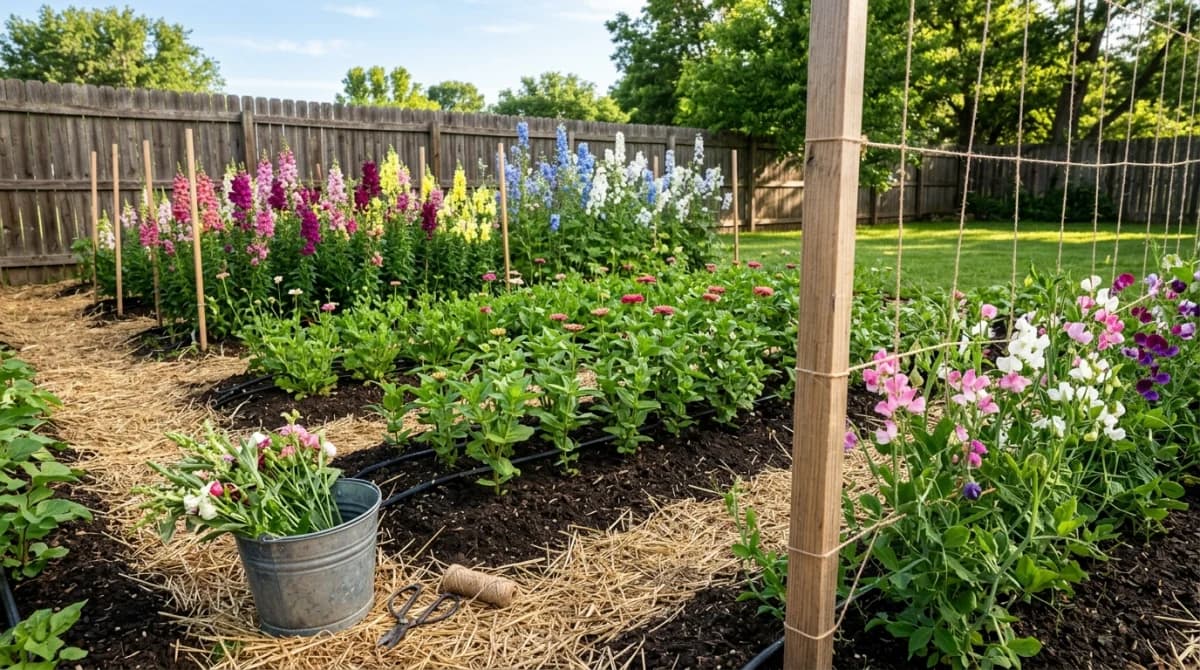
A single dahlia plant can produce over a hundred stems in a season. A ten-foot row of zinnias will keep your kitchen table in flowers from July to frost. And a handful of tulip bulbs planted last fall is already pushing up green tips right now. If you want to stop buying grocery store bouquets and start growing your own, late March is the perfect time to plan your cutting garden.
The key is layering: bulbs for spring, annuals for summer, and late perennials for fall. Get the timing right and you will never have a week without something to cut.
Choosing Your Site
Cut flowers need full sun — at least six to eight hours of direct light. A south-facing bed along a fence or garage wall is ideal because the structure provides wind protection and a warm microclimate that extends your season on both ends.
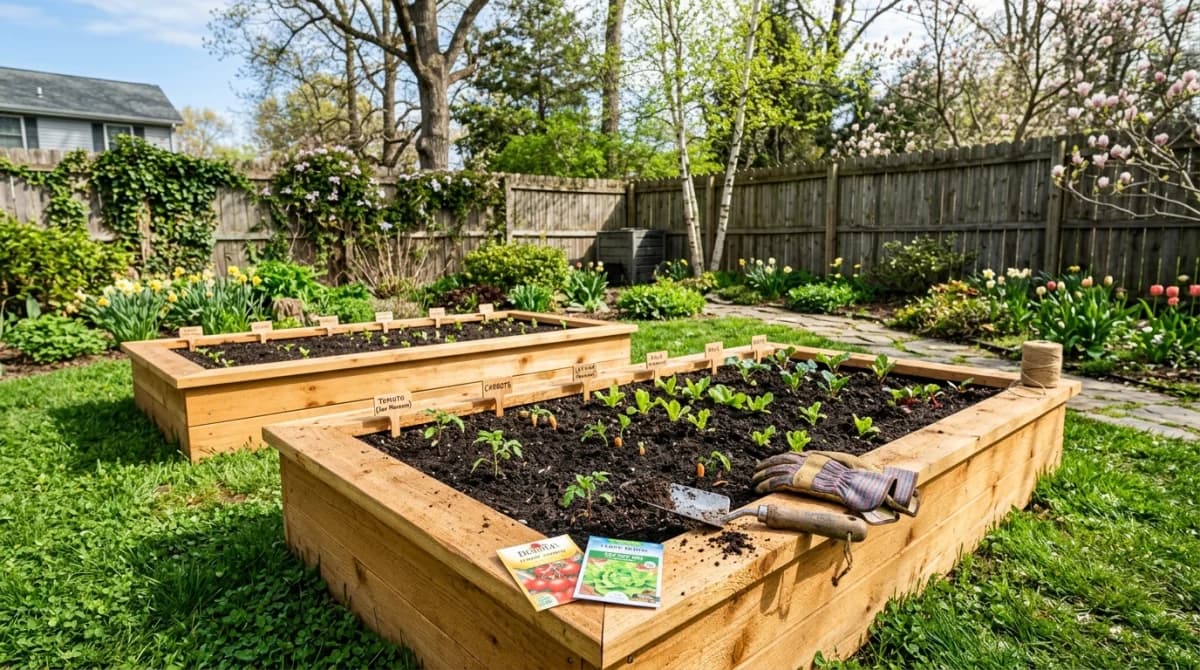
Soil should drain well. If you are working with heavy clay, build raised rows or mound your beds 6 to 8 inches high. Mix in 3 to 4 inches of compost before planting. Cut flowers are heavy feeders, and rich organic matter makes the difference between leggy stems and the thick, long-lasting cuts you see at farmers markets.
Dedicate the space. A cutting garden does not need to look pretty from the street — it is a working garden. Rows spaced 12 to 18 inches apart are more efficient than ornamental borders. Think of it like a vegetable garden, but for flowers.
The Spring Layer: Bulbs and Cool-Season Annuals
If you planted tulips, ranunculus, or anemones last fall, they are your first wave. Varieties bred for cutting — like tulip ‘La Belle Epoque’, ranunculus ‘Amandine’ series, or anemone ‘Galilee’ — produce taller stems and last longer in the vase.
For those who missed the fall planting window, cool-season annuals fill the gap. Start these from seed indoors now or direct sow outdoors in early April:
- Sweet peas (‘Spencer’ mix or ‘Mammoth’ series) — soak seeds overnight before sowing, provide a trellis
- Larkspur (Consolida ajacis) — direct sow, hates transplanting, needs cold to germinate
- Snapdragons (‘Madame Butterfly’ or ‘Chantilly’ series) — start indoors 8 weeks before last frost
- Iceland poppies (Papaver nudicaule) — delicate but stunning, best sown in fall or very early spring
These cool-season flowers thrive in the 40 to 65 degree range and will bloom from late April through June, right before your summer annuals take over.
The Summer Layer: Warm-Season Annuals
This is the backbone of your cutting garden. These flowers go in after your last frost date and produce continuously through summer if you keep cutting them:
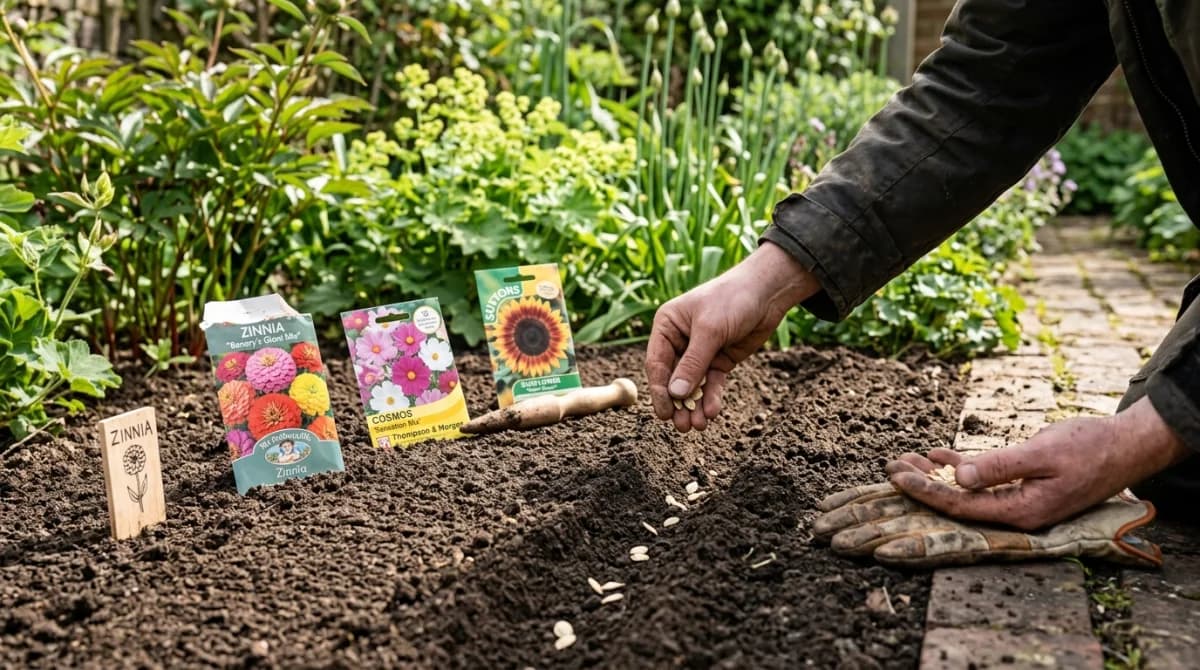
- Zinnias (‘Benary’s Giant’, ‘Queen Lime’, ‘Zinderella’) — direct sow after last frost, the easiest and most productive cut flower for beginners
- Cosmos (‘Double Click’, ‘Cupcakes’) — tall, airy, and prolific; pinch seedlings at 12 inches for bushier plants
- Sunflowers (‘ProCut’ series for single-stem, ‘Sunfinity’ for branching) — succession sow every 2 weeks for continuous harvest
- Celosia (‘Chief’ series, ‘Sunday’ series) — heat lovers that thrive when everything else wilts in August
- Amaranthus (‘Hot Biscuits’, ‘Coral Fountain’) — dramatic trailing forms for arrangement focal points
Start zinnia and cosmos seeds indoors in early April, or wait and direct sow after your last frost. Either way works. Sunflowers almost always do better direct sown.
The Late Season Layer: Dahlias and Perennials
Dahlias are the crown jewel of any cutting garden. A single tuber planted in mid-May can produce stems from August through the first hard frost. For cutting, choose dinner-plate types (‘Cafe au Lait’, ‘Breakout’) or ball dahlias (‘Wizard of Oz’, ‘Jomanda’) with stems long enough to arrange.
Start tubers in pots indoors now — late March — and they will be ready to transplant in 6 to 8 weeks. Pot them in moist potting mix with the eye facing up, and keep them warm (60 to 70 degrees). Do not overwater before sprouts appear.
For perennial structure that returns every year, add:
- Peonies — plant bare roots in fall, but established plants deliver the most luxurious spring cuts
- Echinacea (‘Cheyenne Spirit’) — reliable midsummer color that dries beautifully too
- Rudbeckia (‘Goldsturm’) — late summer through fall workhorses
- Sedum (‘Autumn Joy’) — the last thing blooming in October, great for textured arrangements
Succession Planting: The Secret to Nonstop Blooms
Professional flower farmers never plant everything at once. They sow in waves. You should too.
For zinnias and sunflowers, sow a new batch every two to three weeks from last frost through mid-July. Each sowing gives you about four weeks of cutting. Three to four successions will carry you from July through September without a gap.
For cosmos and celosia, two sowings — one in April (indoors) and one in late May (direct sow) — are enough to cover the whole summer.
Mark your calendar now. Set reminders for each sowing date. It takes five minutes to drop seeds in the ground, but the payoff is weeks of fresh flowers.
Designing Your Layout
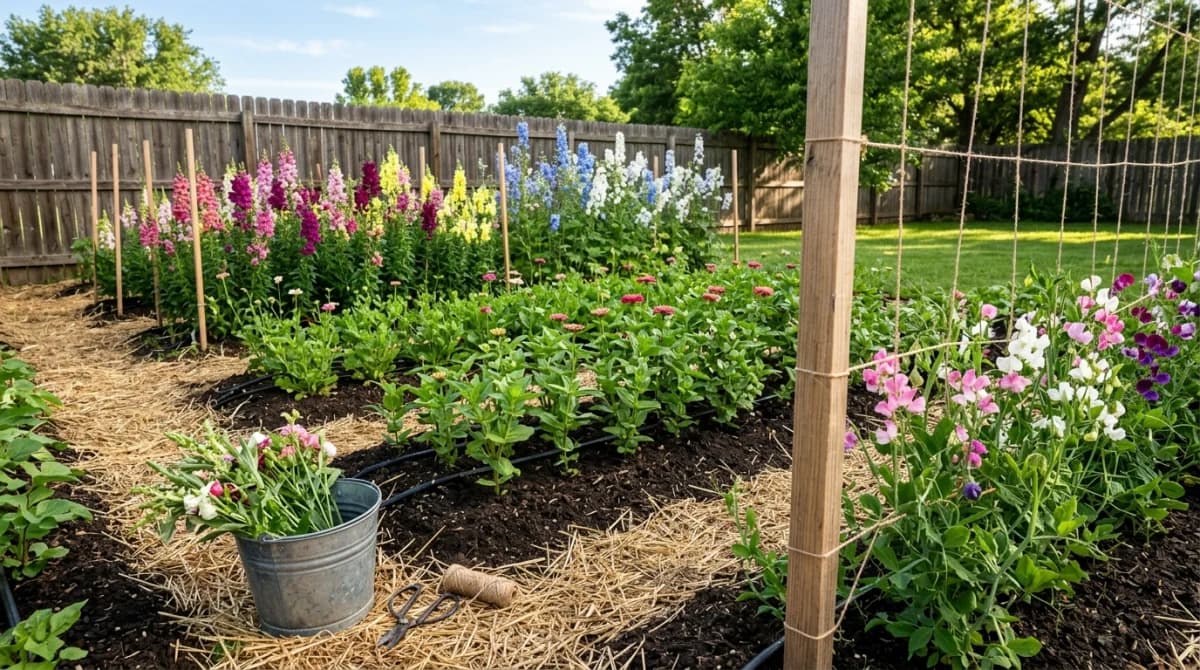
A 4-by-16-foot bed is enough space to grow a serious amount of cut flowers. Arrange plants in rows by height: tallest (sunflowers, cosmos, amaranthus) on the north side, medium (zinnias, dahlias, celosia) in the center, and shortest (snapdragons, sweet peas on low supports) on the south side.
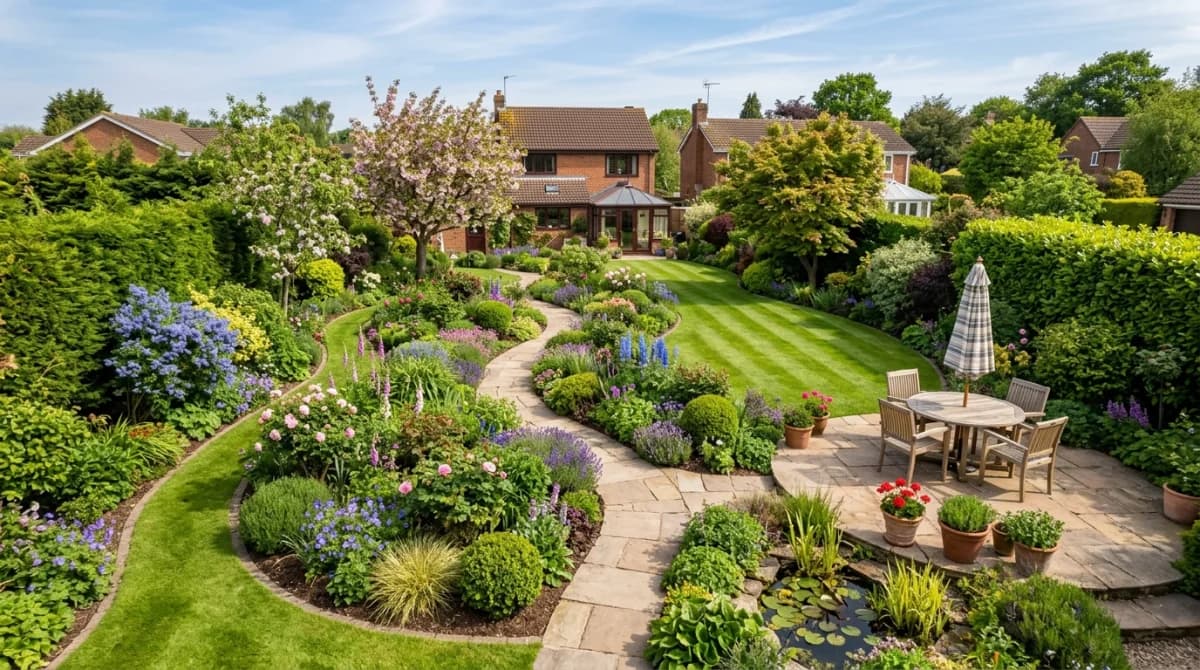
If you are designing a new garden space and want to see how a cutting garden fits into your overall yard, Gardenly can help you visualize the layout before you start digging.
Harvesting for the Longest Vase Life
Cut in the early morning or late evening when stems are fully hydrated. Use sharp, clean snips and cut into a bucket of cool water immediately. Strip all foliage that would sit below the waterline.
For most flowers, harvest when buds are just beginning to open — not fully blown. Zinnias are the exception: cut them only when petals feel firm and the stem passes the “wiggle test” (grab the stem 8 inches below the bloom; if it bends, it is too young).
Change vase water every two days. A properly harvested zinnia will last 7 to 10 days. Dahlias give you 4 to 5 days. Sweet peas are fleeting at 3 to 4 days, but their fragrance makes every hour worth it.
Get Started This Weekend
You do not need a huge budget or years of experience. A packet of zinnia seeds costs a few dollars and will produce dozens of bouquets. Add a row of cosmos and a few dahlia tubers and you have a cutting garden that rivals anything at the farmers market.
The best time to plan is right now, while the ground is thawing and the seed catalogs are still in stock. Sketch your layout, order your seeds, and get those dahlia tubers potted up this weekend. By midsummer, you will wonder why you waited so long.