Planning a Shade Garden That Actually Looks Beautiful
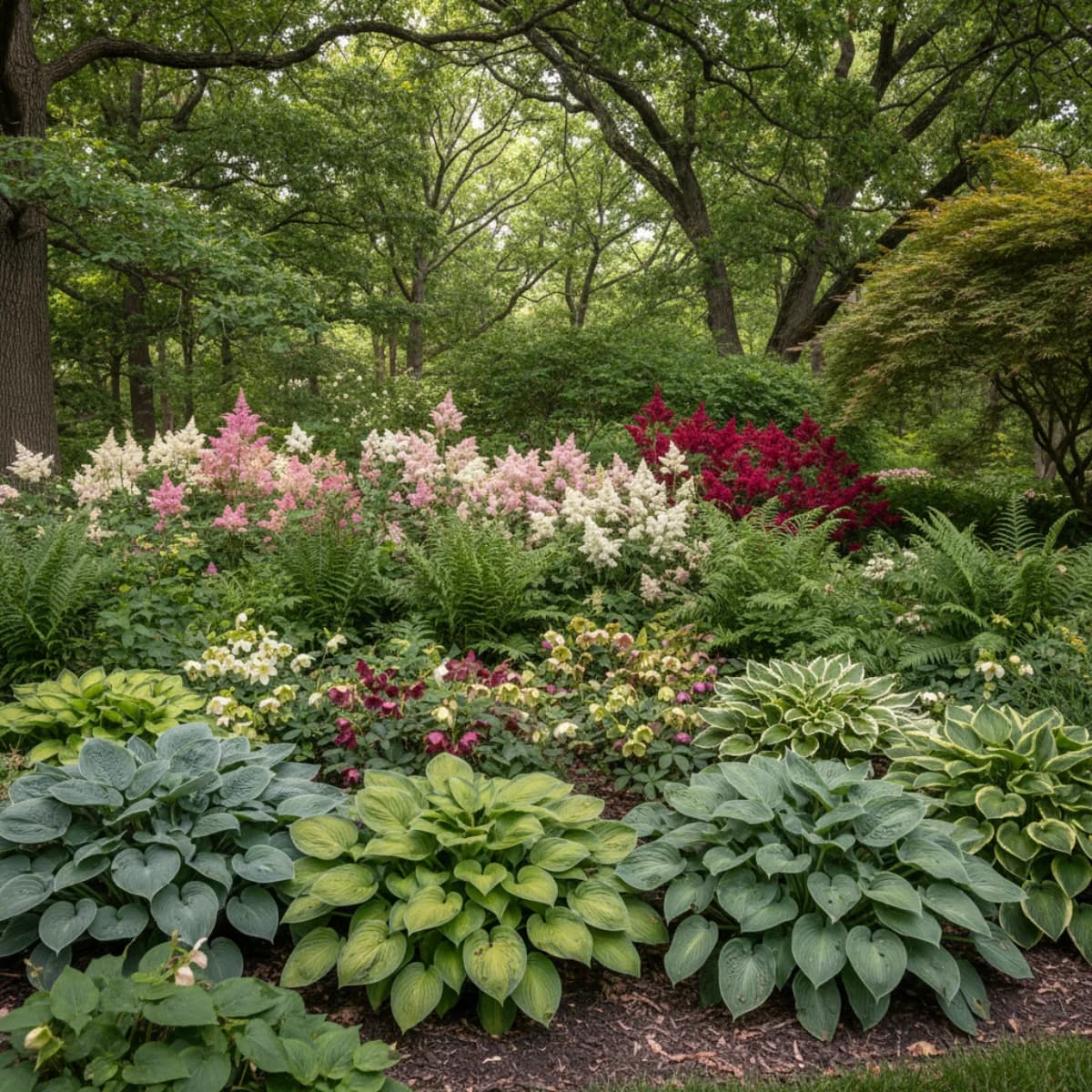
Shade is one of the most common garden challenges and one of the most misunderstood. Many gardeners approach a shaded bed as a problem to work around—grudgingly planting whatever will survive—rather than an opportunity to design something intentionally.
Shaded gardens can be extraordinarily beautiful. Think of the Japanese aesthetic of dappled light on ferns and mossy ground covers, or the classic English woodland garden with layers of hellebores, trilliums, and Solomon’s seal under the shifting canopy of mature deciduous trees. These are deliberate, designed spaces that work with shade rather than against it.
Planning a shade garden in January gives you time to source the right plants—many specialist shade plants are only available from specialist nurseries—and to think clearly about design before the season begins.
Understanding Your Shade
Not all shade is equal, and different shade conditions suit different plants.
Light shade (dappled shade): Filtered sunlight through a light tree canopy or from a structure that blocks direct sun for part of the day. The widest range of shade plants thrives here.
Partial shade: 2-4 hours of direct sun per day, either morning or late afternoon. Many plants marketed as “shade” plants actually prefer this—enough sun for reasonable flowering without the stress of full sun.
Full shade: No direct sunlight, but ambient light. North-facing beds, areas under dense evergreen canopy, spaces between buildings. Fewer options, but still excellent plants that genuinely thrive here.
Deep shade: Minimal ambient light. Difficult even for shade-tolerant plants. Best covered with a resilient ground cover (ivy, pachysandra, vinca) rather than a designed planting.
The biggest mistake in shade gardening is assuming that deeper shade requires more shade-tolerant plants. In truth, very deep shade has very few plant options, and struggling to grow flowering plants in near-darkness leads to disappointment. Assess your shade honestly.
Also assess the source of shade:
- Deciduous tree shade: Changes through the year—bare in winter and early spring (allowing spring bulbs and early perennials to benefit from full sun before canopy emerges), dappled in summer
- Building or fence shade: Consistent year-round; often dry shade near a wall
- Evergreen tree shade: Dense and consistent; often associated with dry, acidic soil
Dry shade—particularly under large evergreen trees or against a wall—is the most challenging combination. The lack of both light and moisture is difficult. The plants that succeed here are tough, specialist choices.
Layered Planting for Shade
The best shade gardens are layered—different plants occupying different heights and filling the space from canopy to ground level.
The Canopy Layer
In most residential shade gardens, the canopy is already provided by an existing tree. Work with it rather than against it. If you’re establishing a shade garden from scratch, consider:
Small trees for garden-scale shade: Amelanchier (serviceberry), Cornus (dogwood species), Hamamelis (witch hazel), Cercidiphyllum (katsura), or filtered-light small maples.
The Shrub Layer
Medium-height shrubs that tolerate or prefer shade:
Hydrangea quercifolia (oakleaf hydrangea): Excellent for shade; large white flower heads, extraordinary fall color, peeling bark for winter interest.
Fothergilla: Native shrub with bottlebrush white flowers in spring (and before the leaves emerge—visible and dramatic) and exceptional fall color in orange, red, and yellow.
Viburnum acerifolium: Native viburnum for dense shade; white flowers, excellent wildlife value.
Sarcococca (sweet box): Evergreen, shade-tolerant, with small but extraordinarily fragrant white flowers in late winter. Excellent for dark corners.
Mahonia: Bold, architectural, evergreen. Yellow flower clusters in winter and early spring; blue berries for birds.
The Perennial Layer
This is where most of the design interest lies in shade gardens:
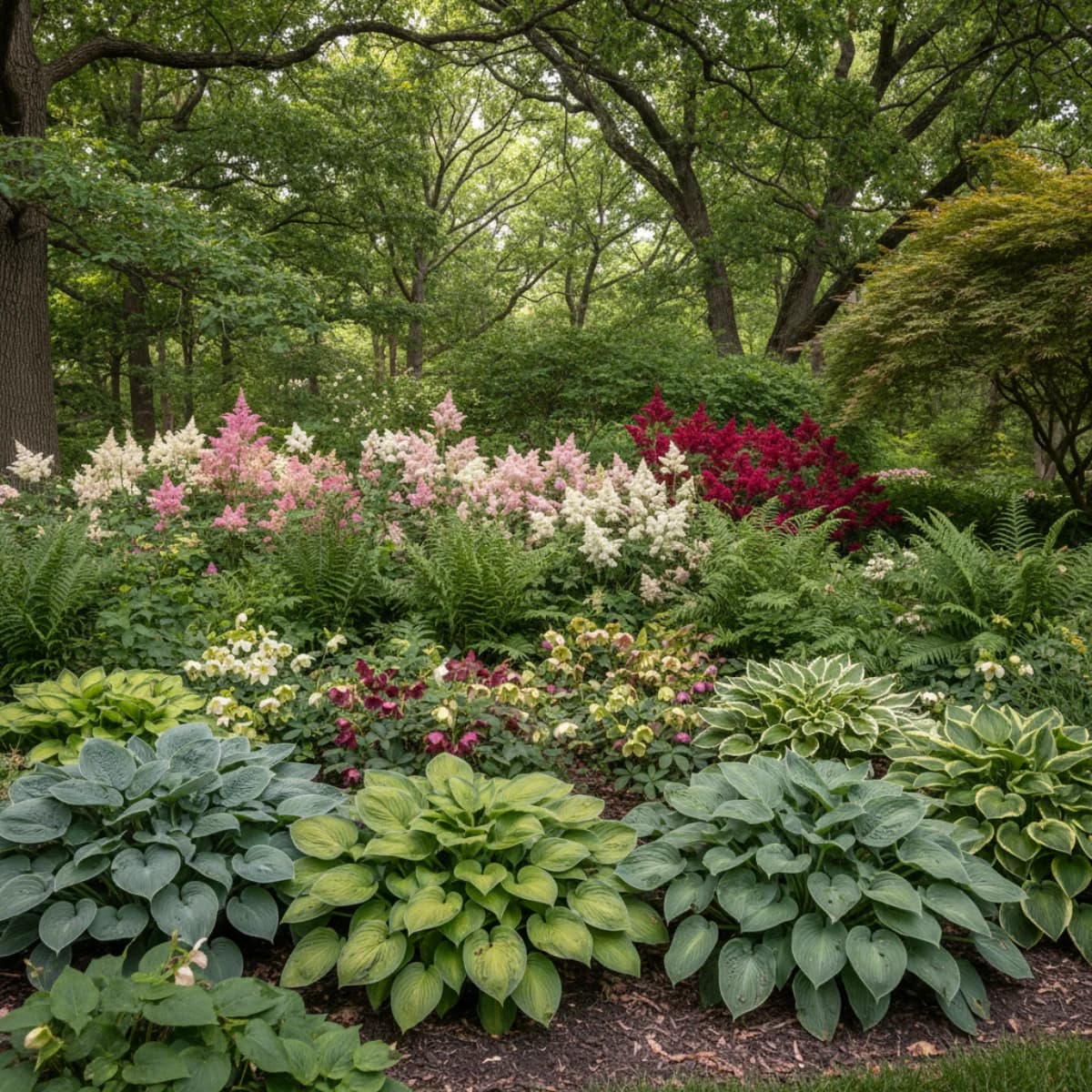
Hostas: The anchor plant of shade gardens. Available in an enormous range of sizes (from 4-inch miniatures to 4-foot giants), textures (smooth, corrugated, puckered), and colors (blue-green, yellow-green, solid white, and every variegation). Modern varieties are exceptional; specialist hosta nurseries offer hundreds of named cultivars. Slugs are the main pest.
Ferns: Extraordinary diversity—from the delicate maidenhair fern to the bold, sculptural ostrich fern. Evergreen wood ferns (Dryopteris) add winter interest; the autumn fern (D. erythrosora) has coppery new fronds. Native ferns are excellent choices.
Astilbe: For moist shade (doesn’t tolerate dry conditions). Feathery plume flowers in white, pink, red, and purple; attractive seed heads into fall. One of the few shade plants with significant flower interest.
Hellebores: Perhaps the most valuable shade perennial: evergreen foliage, flowers from January through March or April, incredibly long-lived. Mix species and varieties for a multi-month display.
Epimedium: The most underused shade ground cover. Evergreen or semi-evergreen, completely drought-tolerant once established, with delicate flowers in spring. Excellent under trees where almost nothing else will grow.
Pulmonaria: Silver-spotted leaves and early spring flowers in blue, pink, or white. The spotted varieties brighten dark corners and provide consistent interest.
Solomon’s seal (Polygonatum): Elegant arching stems with pendant white flowers; architectural value throughout the growing season.
Tiarella (foam flower): Native ground cover with maple-like foliage and fluffy white flower spikes in spring. Good for moist, dappled shade.
The Ground Layer
Shade gardens benefit from a cohesive ground layer that unifies the composition:
- Native gingers (Asarum): Evergreen, glossy, spreads slowly under trees
- Liriope and Ophiopogon (lilyturf and mondo grass): Grass-like, evergreen ground covers for lighter shade
- Native ground covers (Pachysandra procumbens, wild ginger, green-and-gold): More interesting alternatives to the overused Japanese pachysandra
Design Principles for Shade
Contrast textures: In a garden with limited color variation, texture carries the design. Mix broad, bold leaves (hostas, ligularia) with fine, feathery textures (ferns, astilbe) and linear forms (liriope, Solomon’s seal).
Use variegation strategically: Variegated plants—hostas with cream edges, pulmonaria with silver spots, Brunnera with white-splashed leaves—brighten dark spots and create the illusion of light.
Embrace the seasonal shift: Deciduous shade gardens are dynamic. Spring is often the most colorful season—bulbs, early perennials, and the chartreuse of emerging foliage before the canopy closes. Plan for this.
Don’t overcrowd: Shade plants are generally slower-growing than sun plants. Give them space to develop. The garden will look sparse for the first year or two; after that, it fills in beautifully.
Use January to map your shade conditions honestly, select plants appropriate to your specific situation, and order from specialist nurseries. The shade garden is one of the most rewarding design challenges in horticulture—and Gardenly is useful for visualizing how a planted shade area might look when fully established.
Sources & Further Reading
- Gardening in the shade — University of Minnesota Extension
- Growing hostas in Minnesota — University of Minnesota Extension
- Ornamental grasses for shady sites — University of Minnesota Extension