Plant a Salsa Garden the First Week of May for Pico de Gallo from July to October
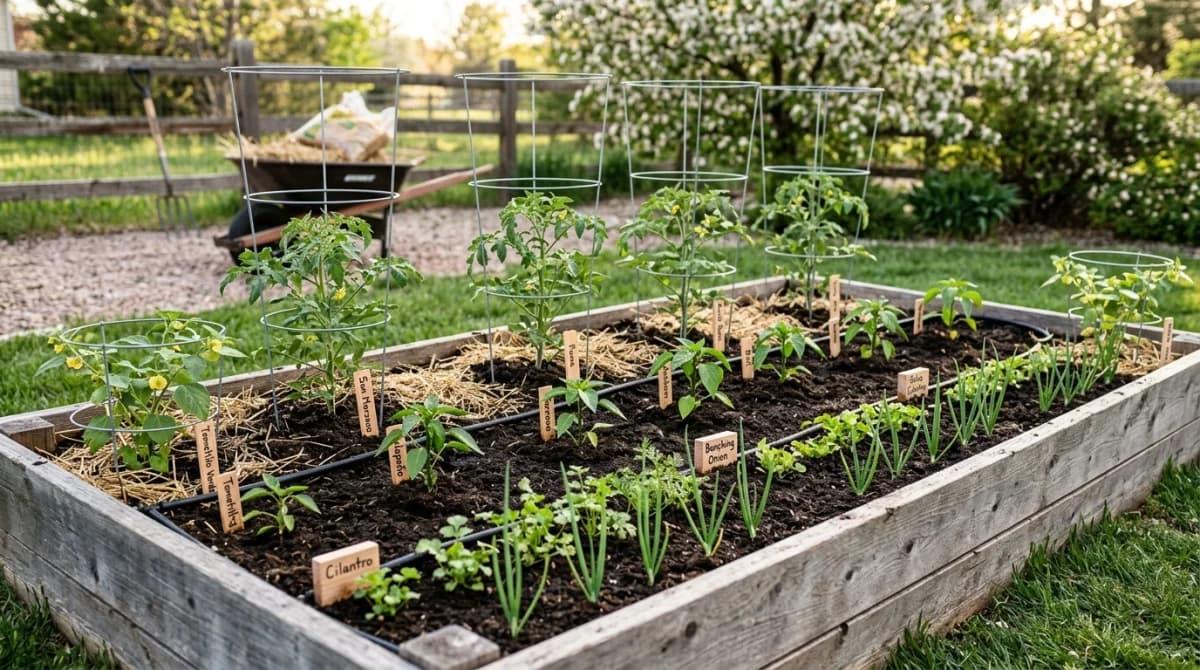
A salsa garden is the easiest themed bed to plan because every plant in it wants the same things. Full sun, eight hours minimum. Deep, well-drained soil with plenty of compost worked in. Steady moisture, never soggy. Warm soil at the roots. Once you accept that, the design problem reduces to fitting the right number of each plant into a single bed, in the right relative positions, so they support each other instead of fighting for light.
The first week of May, in most temperate climates, is the right window. The soil has warmed past 15 °C (60 °F) at four inches deep — the threshold below which tomatoes and peppers sit and sulk no matter how much sun they get. Last frost is past or about to be. The young transplants at the garden center are still small enough to set in without disturbing established roots. And every week of growth from now until the longest day translates almost directly into July and August yield.
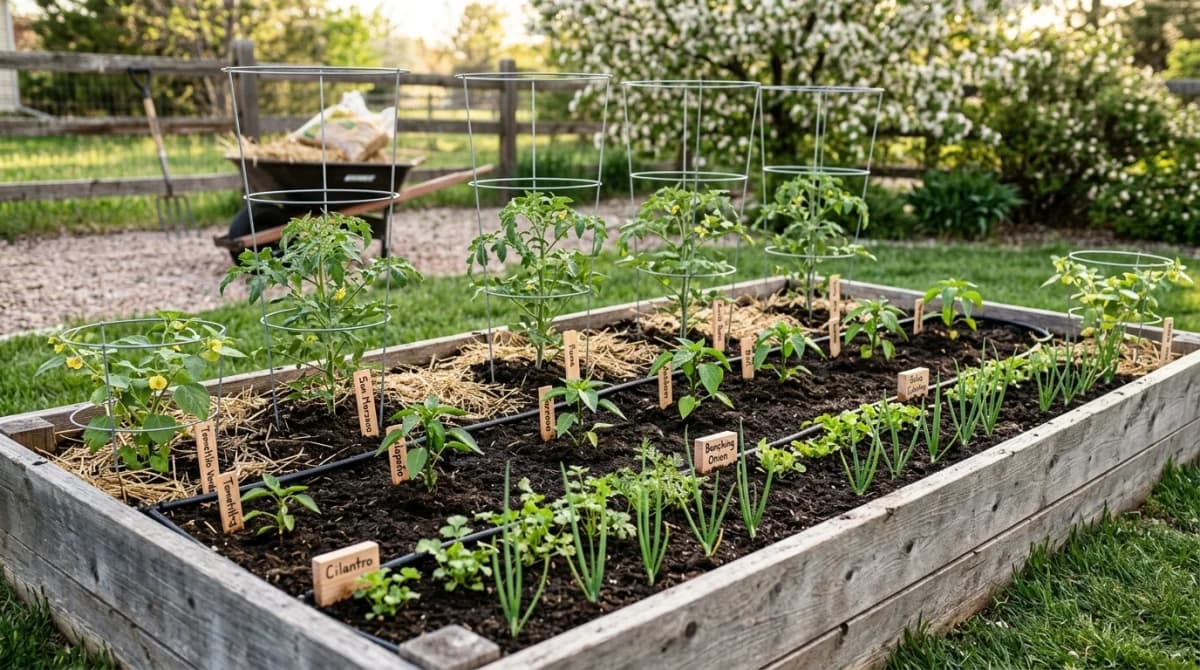
A single 4-by-8-foot raised bed, planted as described below, will reliably keep a household of two or three in fresh pico de gallo from mid-July through October, plus enough roasted salsa to put up six to eight pints for winter. A 4-by-12 doubles that. Anything smaller than 3-by-6 and you start having to choose between fresh and preserved.
The Plant List, in Proportions That Actually Work
The mistake in most salsa-garden articles is suggesting one of each plant. One tomato, one jalapeño, one cilantro, one onion. That gives you a bowl of salsa once. The proportions below are based on what a salsa actually contains by volume — tomatoes are most of it — and on the fact that some of these crops produce continuously while others give one harvest.
For a 4-by-8 bed, plant:
- Three Roma or San Marzano paste tomatoes. These are the salsa workhorses. Less juice, more flesh, lower seed-to-pulp ratio. ‘San Marzano’, ‘Amish Paste’, ‘Opalka’, and ‘Roma VF’ are all reliable. Indeterminate varieties keep producing through frost; determinate varieties give you a single big flush in late July, which is better if your goal is canning.
- One slicing tomato for fresh use. ‘Big Beef’, ‘Cherokee Purple’, ‘Brandywine’. Adds sweetness and complexity to fresh pico that the paste tomatoes alone can’t carry.
- Two tomatillo plants. Tomatillos are self-incompatible. A single plant will flower beautifully and set almost no fruit. Two plants set heavily. ‘Toma Verde’ for traditional green salsa, ‘Purple’ for sweeter fresh use, ‘Pineapple’ if you want a husk cherry-like fresh-eating variety on the side.
- Three to four hot peppers. Two jalapeño plants (‘Mucho Nacho’ or ‘Early Jalapeño’) and one or two serranos for heat range. Skip habaneros unless you really use them — one plant produces more than most households need.
- Two sweet peppers. Adds body to cooked salsas without adding heat. ‘Carmen’, ‘Jimmy Nardello’, or any of the Italian frying types. ‘Lipstick’ is the most reliable in cooler summers.
- One row of bunching onions. A 4-foot row of ‘Evergreen Hardy’ or ‘Tokyo Long White’ starts harvestable in six weeks and keeps producing all summer if you cut rather than pull. Real bulb onions take five months and a fall planting; bunching onions are the right call for a salsa bed.
- A wide front strip of cilantro. Treat cilantro like lettuce: sow short rows every two weeks. One spring sowing alone bolts in the first heat wave and you spend July without it. Plan for at least four successions across the season.
Garlic should already be in the ground from last fall. If it isn’t, buy it at the farmer’s market and write a note in your calendar to plant cloves in mid-October for next year.
Layout: Tall at the Back, Cilantro at the Front, Tomatillos at the Ends
The plants in a salsa bed are dramatically different heights at maturity. Indeterminate tomatoes hit 6 feet. Tomatillos sprawl to 4 feet wide. Jalapeños top out around 3 feet. Cilantro is six inches. Putting them in the wrong order shades out the short crops and turns July into a problem.
For a bed running east to west, with the long sides facing north and south, plant in rows from north to south:
North edge (back): The four tomatoes, each 24 inches apart, in heavy cages or staked. They’ll be the tallest layer all season and shouldn’t shade anything to their south, because there is nothing to their south yet — only the rest of the bed running away from them toward the sun.
Middle: The three or four hot peppers and two sweet peppers in a staggered double row, 18 inches apart in each direction. Peppers love the radiant heat that comes off neighboring tomato plants and don’t mind a little afternoon dappling.
Ends: One tomatillo plant at each short end of the bed, caged or staked separately. They sprawl, so giving them a corner means they cascade outward instead of into the peppers. Two tomatillos at opposite ends pollinate each other across the bed without competing for ground space.
Front (south edge): A 12-inch-wide strip the full length of the bed for cilantro and bunching onions. Cilantro alternated with onions in 12-inch blocks, with one or two blocks left empty for the next succession sowing in three weeks.
For a bed running north to south, swap rows for columns and put the tomatoes on whichever end is farther from your main viewing angle — usually the far end as you walk up to the bed.
The Cilantro Problem and How to Solve It
Cilantro is the only plant in this lineup that doesn’t want what the others want. It bolts in heat. The first warm week in June, a spring-sown bed of cilantro goes from leafy to a tower of white flowers in about ten days. Most home gardeners discover this once and then write off cilantro as impossible.
The fix is succession sowing and bolt-resistant varieties. Sow a short row — three feet, single-density — every two weeks from early May through late August. Use ‘Calypso’, ‘Santo’, or ‘Slow Bolt’, all of which delay bolting by two to three weeks compared with generic seed. By rotating sowings, you always have a row that’s about three weeks old (the leafy harvest stage) while last month’s row is bolting. When a row bolts, let some of it go to seed — those are coriander, also useful, and the volunteers come up reliably in fall and the following spring.
A second trick: cilantro tolerates more shade than most herbs. Sowing the high-summer successions on the east or north side of a tomato cage, where they get morning sun and afternoon shade, can buy you another week before bolt. In zones with hot summers (USDA 7+), planning that summer shade in advance is the difference between two months of cilantro and four.
Watering, Mulching, and the Two Things That Cause Most Salsa Bed Failures
The two most common failures of a salsa bed are blossom end rot on the tomatoes and split, hollow tomatillos. Both come from inconsistent watering.
A salsa bed wants one deep soaking per week — about an inch of water — in cool weather, and two soakings per week, of the same depth, once daytime highs settle into the 30 °C / 85 °F range. Drip lines or soaker hoses on a timer take this off your plate entirely and pay for themselves the first time you go on vacation in July. A 4-by-8 bed needs roughly 25 feet of drip line at quarter-inch tubing, on a half-hour run twice a week.
Two inches of straw or shredded-leaf mulch over the entire bed surface, applied about two weeks after transplant when the soil has fully warmed, holds moisture, suppresses weeds, and keeps soil splash off the lower leaves. Soil splash is the main vector for early blight and septoria leaf spot, the two diseases that take down a tomato bed in August. Mulch is cheaper than fungicide and works better.
The mulch also matters for the peppers, which are surprisingly shallow-rooted and dry out faster than their leaves let on. A pepper that wilts mildly in the afternoon and recovers overnight is fine. A pepper that wilts in the morning is already in trouble.
Companion Plants Worth Squeezing In
A salsa bed has room for a few companions if you want them, all of which earn their keep:
- Basil along the front edge near the slicing tomato. Same growing conditions, classic flavor pairing, and basil flowers attract pollinators that help the tomatillos.
- Marigolds at the corners. The smell of French marigold (‘Tagetes patula’) deters some pests, and pulling out spent marigolds in fall leaves behind soil that’s measurably less hospitable to root-knot nematodes.
- Garlic chives as a permanent edging plant. Perennial, attractive, repels aphids modestly, and the flowers are pretty much the prettiest part of the bed in late summer.
Skip mint. It will eat the bed in a single season. If you want mint for mojitos, plant it in a pot somewhere else.
When to Harvest, and the Six-Week Rule
The first usable salsa happens about ten weeks after transplant, which puts mid-July as the realistic start in most climates. Roma tomatoes ripen first; tomatillos and slicing tomatoes follow within a week. Jalapeños are usable green from late June onward, but the heat develops over time, so the late-July fruit is hotter than the June fruit from the same plant.
A useful rule: a salsa bed planted the first week of May produces fresh salsa for about sixteen weeks, from mid-July to late October in zones 5–7, and through November in zones 8 and warmer. The plants slow down as nights cool, but tomatillos, in particular, keep going right up to first hard frost.
If you’re trying to figure out where a 4-by-8 salsa bed actually fits into your yard — sun all day, easy access from the kitchen, room for the drip line and the mulch pile — Gardenly can sketch the bed into your existing layout alongside the rest of the planting before anything goes in the ground.
A Note on Cinco de Mayo Timing
Planting a salsa garden on Cinco de Mayo is a coincidence that happens to be agronomically correct in most of the United States. The first week of May is when soil temperatures cross the threshold that tomatoes and peppers actually want, in roughly the southern half of New England, the Mid-Atlantic, the Midwest, the Pacific Northwest, and most of the West. North of that — northern New England, the upper Midwest, the Mountain West — wait another week or two for soil to warm, even if the air feels right. South of that, especially in zones 8 and warmer, you’re already a month late, which is fine; tomatoes and peppers planted in early April produce earlier and stop sooner.
The plants do not care what the date is. They care about soil temperature, frost risk, and how much summer is left. Get those three right and the bed does most of the work for you.
Sources
- University of Minnesota Extension — Growing Tomatoes in Home Gardens
- Cornell Cooperative Extension — Tomatillo and Husk Cherry
- Texas A&M AgriLife Extension — Peppers in the Home Garden
- North Carolina State Extension — Cilantro/Coriander