How to Design a Rain Garden for Wet or Poorly Drained Spots
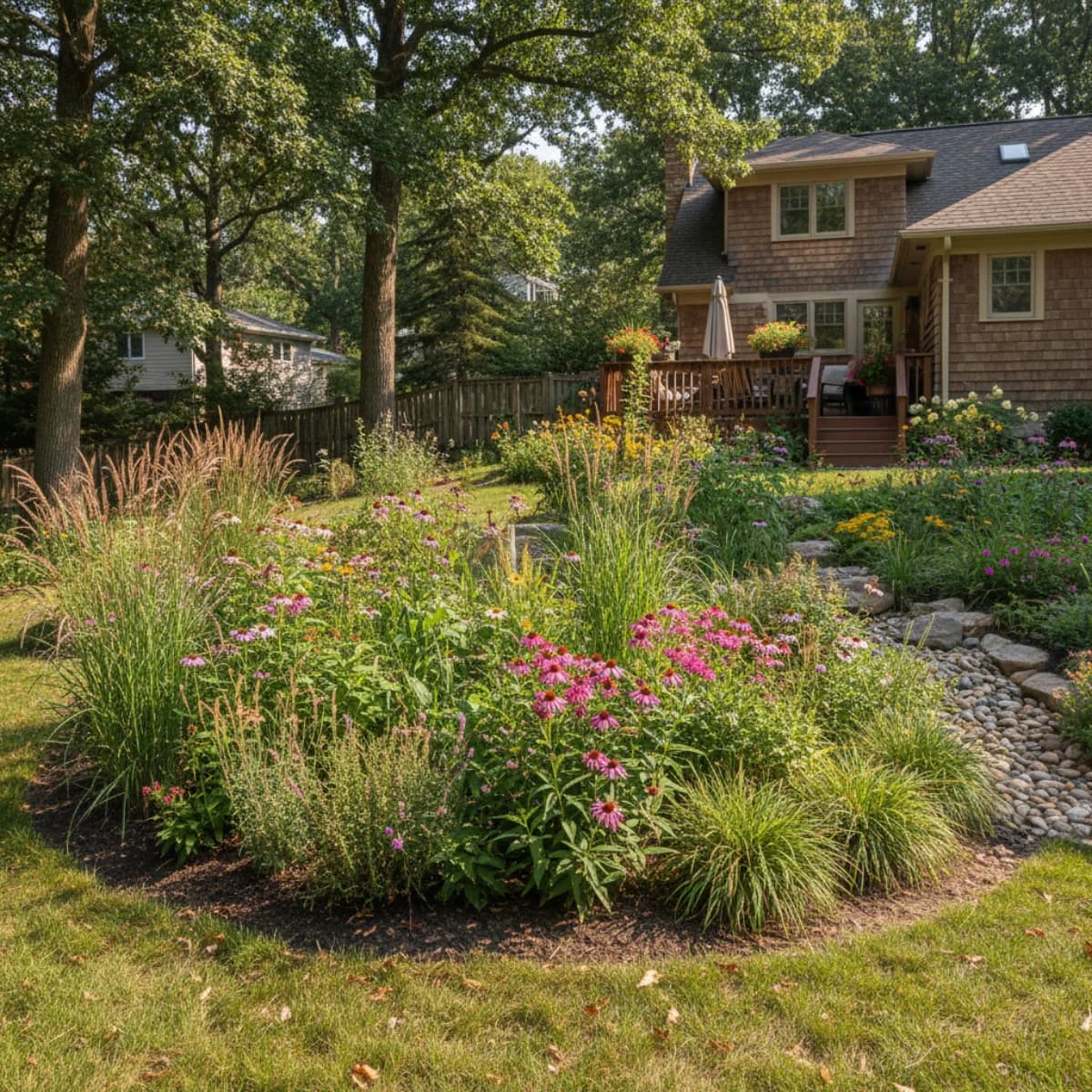
Most gardeners treat low spots as problems to solve. A corner that pools after rain, a slope that channels runoff into a soggy mess, a yard that drains into a neighbor’s property or the street—these situations frustrate landscaping efforts and limit plant options.
A rain garden reframes this entirely. Instead of trying to drain a wet spot away, you design a garden that captures that water, holds it temporarily, and lets it infiltrate into the soil naturally. The result is a beautiful, functional, wildlife-supportive planting that uses a problem to create an asset.
What a Rain Garden Is (and Isn’t)
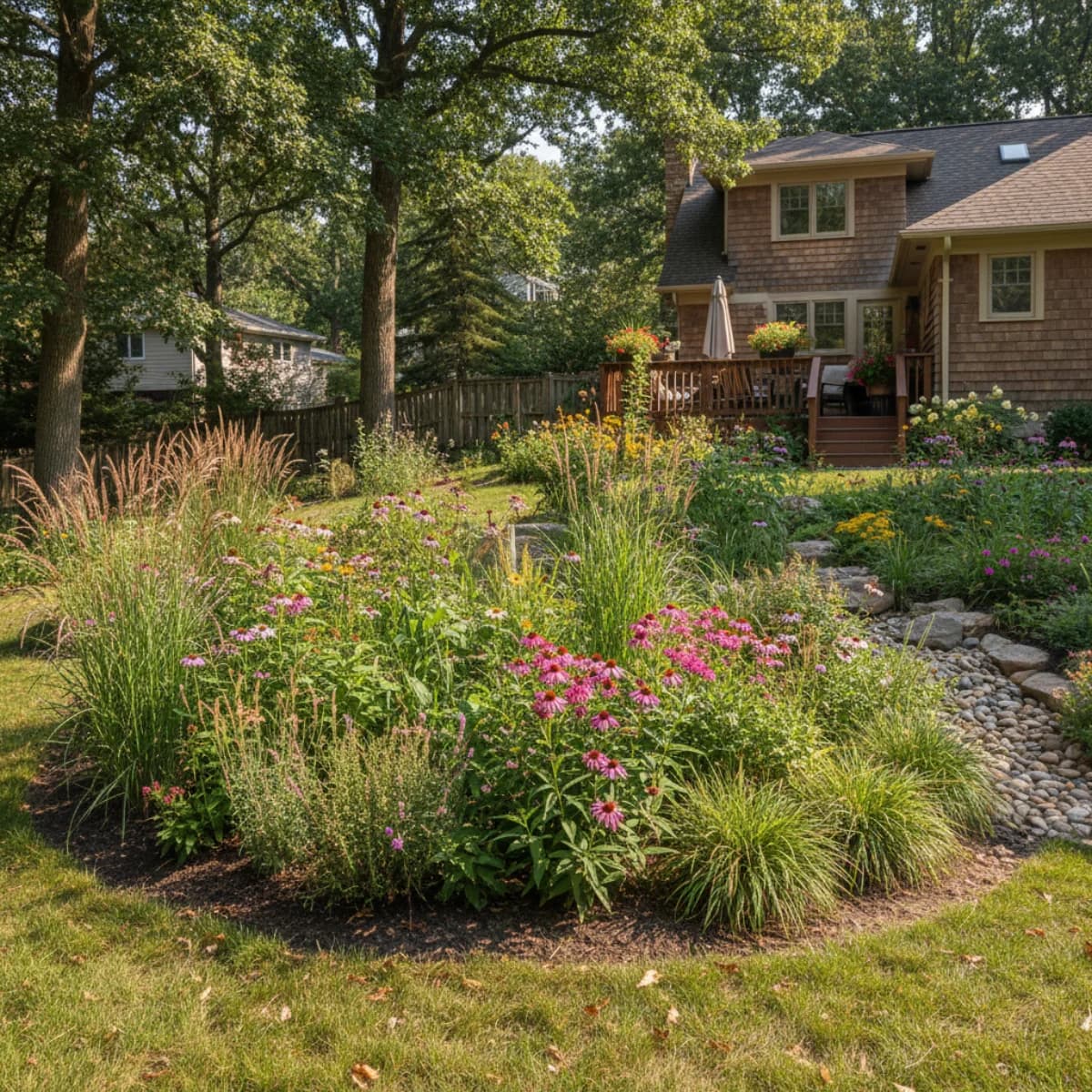
A rain garden is a shallow, planted depression that captures stormwater runoff—from a roof downspout, a lawn, a driveway, or any impervious surface—and allows it to soak into the ground over 24-72 hours.
A rain garden is not a pond or a bog garden. A properly designed rain garden drains completely between rain events—typically within a day or two. Plants must tolerate both periodic flooding and extended dry periods, which is why native plants adapted to the local climate are usually the best choice.
Rain gardens reduce:
- Runoff entering storm drains (which contributes to flooding and water pollution downstream)
- Waterlogging in the rest of the garden
- Erosion from concentrated water flow
They increase:
- Groundwater recharge
- Wildlife habitat and pollinator support
- Visual interest in areas that were previously unusable
Sizing and Siting
Location
The ideal rain garden site is:
- Downhill from a water source: Positioned to naturally receive runoff from a roof, driveway, lawn, or other surface
- Away from foundations: At least 10 feet from any building foundation to prevent water infiltration issues
- Away from septic systems: At least 50 feet from any septic components
- On reasonably flat or gently sloped ground: Not on a steep slope (water moves through too quickly)
- Not over buried utilities: Call before you dig
Size
A rain garden needs to be large enough to absorb the water it receives. Undersized rain gardens overflow during significant rain events.
A rough rule of thumb: the rain garden should be about 20-30% of the area it’s collecting from. A 500 square foot lawn area draining into a rain garden needs a garden of roughly 100-150 square feet.
If you’re capturing roof runoff, calculate the roof area draining to one downspout (typically 200-600 square feet per downspout) and size the rain garden accordingly.
Depth
A rain garden depression of 4-8 inches is typically adequate. Deeper gardens hold more water but may stay wet longer and require more earthmoving. The berm (raised edge) on the downhill side should be 6-18 inches high to retain water and direct overflow when the garden is full.
Soil Preparation
The key to a rain garden that drains within 24-48 hours is well-draining soil in the depression. Standard clay soils may be too slow-draining for this purpose.
Test drainage: Dig a hole 12 inches deep, fill with water, and measure how much drops per hour. You want at least 0.5 inches per hour. Clay soils often drain at 0.1-0.2 inches per hour, which is insufficient.
If native soil drains too slowly:
- Excavate the depression area to 18-24 inches and replace with a rain garden mix: roughly 50-60% sand (coarse, not fine beach sand), 20-30% organic matter (compost), 20-30% topsoil. This mix drains well but retains some moisture for plants.
- Alternatively, choose a site with naturally better drainage.
The Berm
The berm on the downhill side of the rain garden is what makes the system work—it holds water in the depression while it infiltrates. Build the berm with excavated soil and compact it firmly. Plant the berm with deep-rooted, stabilizing plants.
The berm should include an overflow channel or low point to direct excess water safely when the garden is completely full during extreme rain events.
Plant Selection
Plants for rain gardens must handle two extremes: periodic flooding (sometimes several inches of standing water for 24-48 hours) and extended dry periods between rain events. This combination rules out most garden plants and makes natives the obvious choice.
Inner Zone (Most Flooding, Longest Wet Periods)
Plants for the bottom and lower sides of the depression:
- Blue flag iris (Iris virginica/versicolor): Beautiful native iris for wet to seasonally flooded conditions
- Cardinal flower (Lobelia cardinalis): Stunning red spikes; tolerates flooding and loves moisture
- Swamp milkweed (Asclepias incarnata): Essential monarch habitat; excellent wet soil tolerance
- Buttonbush (Cephalanthus occidentalis): Native shrub with unusual spherical flowers; thrives in saturated soil
- Cattail (Typha): Good for very wet areas; can spread aggressively, so monitor
Middle Zone (Moderate Wet/Dry Fluctuation)
Plants for the sides of the depression:
- Native sedges (Carex spp.): Many native sedges are adapted to variable moisture; excellent for texture and year-round interest
- Switchgrass (Panicum virgatum): Adaptable native grass; beautiful seed heads and fall color
- Coneflowers (Echinacea purpurea): More moisture-tolerant than often assumed; excellent pollinator plant
- Joe Pye weed (Eutrochium purpureum): Tall, late-season native; handles variable moisture well
- Black-eyed Susan (Rudbeckia hirta): Tolerant of variable conditions; extremely valuable for pollinators
Outer Zone and Berm (Drier Conditions)
- Blazing star (Liatris spicata): Drought-tolerant once established; excellent late-season pollinator plant
- Native asters (Symphyotrichum): Fall bloom; adaptable to most moisture conditions
- Little bluestem grass (Schizachyrium scoparium): Beautiful warm-season grass with orange fall color; drought-tolerant
January Planning Work
To have a rain garden planted this spring:
-
Identify your site and water source: Where does runoff collect? Where does water flow? A rain after the next storm will show you exactly where water moves.
-
Calculate size: Measure the drainage area and use the 20-30% rule to determine garden size.
-
Test soil drainage: Use the percolation test described above to determine whether you need to amend the soil.
-
Select plants: Research native plants appropriate for your region. State and regional native plant societies often publish rain garden plant lists for specific climates.
-
Order plants: Many native plants are best sourced from regional native plant nurseries; order early for spring availability.
Rain gardens require more planning than a typical planting project, but the result—a garden feature that actively manages stormwater, supports native plants and pollinators, and looks genuinely beautiful—is worth the effort.
Sources & Further Reading
- Building a Rain Garden — University of Minnesota Extension
- Rain Gardens — University of Maryland Extension
- Rain Gardens — the Plants — Penn State Extension
- Home Rain Gardens Treat Stormwater and Reduce Flooding — Oregon State University Extension