Why January Is the Time to Start Onions and Leeks from Seed
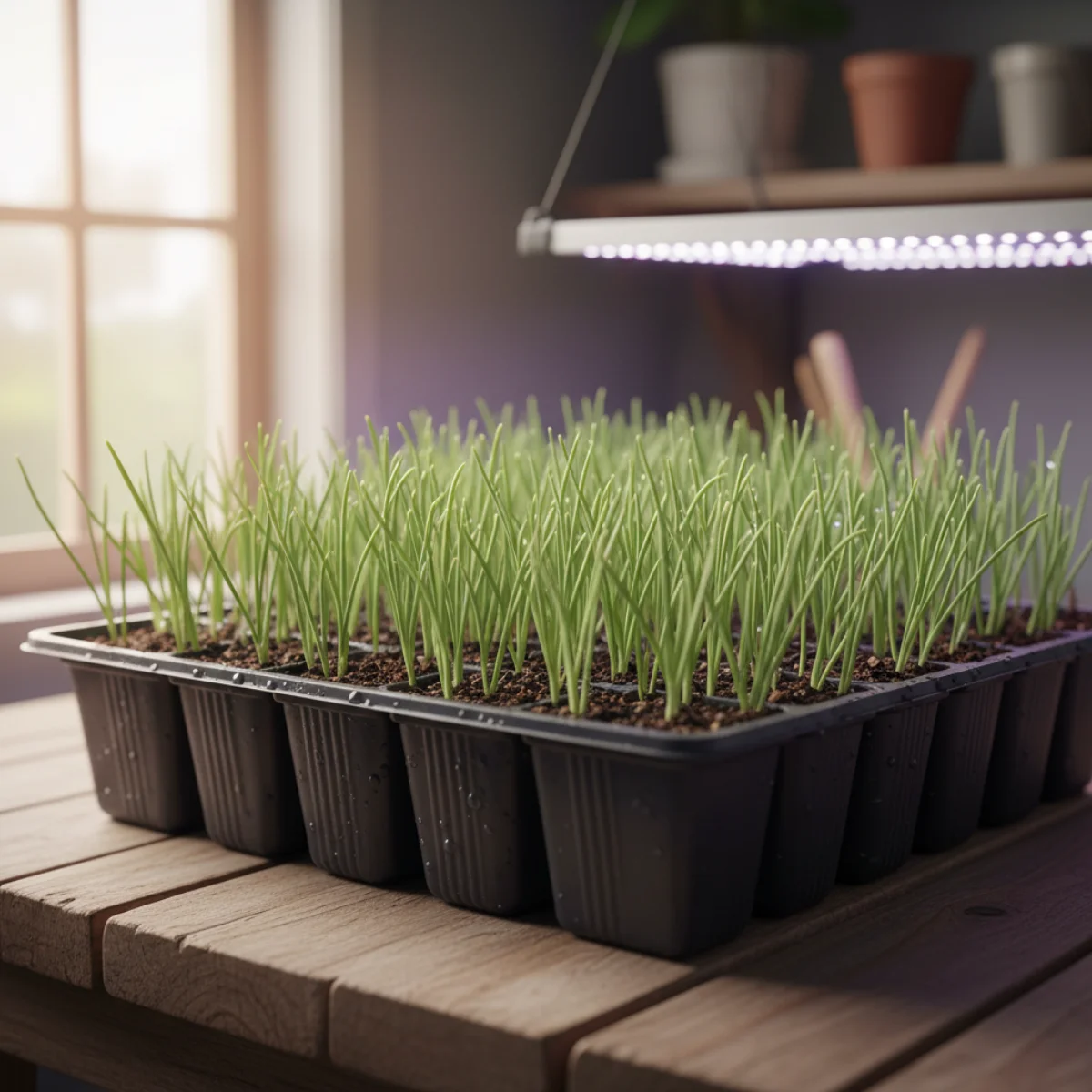
Most vegetables can be started indoors any time from January through April, depending on your last frost date and the crop’s specific timing. Onions and leeks are different. They need 10-12 weeks from sowing to transplant-ready size, and they should be transplanted in early to mid spring—well before the last frost date, because both are hardy and actually benefit from cool weather.
Work backward from a mid-April transplant date and you land in late January. Work backward from an early April date and you’re at early January. This is why onion and leek seedlings are always the first things under the grow lights in a well-run seed-starting operation.
Why Grow from Seed?
Onion sets (small dry bulbs) are widely available and faster to plant, but they come with limitations:
Variety restriction: Sets are usually available in only a handful of varieties—most often yellow storage onions. Growing from seed opens up the full catalog: candy onions, red varieties, torpedo onions, Spanish sweets, and unusual heirlooms not available as sets.
Day-length adaptation: Onions form bulbs in response to day length, and different varieties are adapted to different latitudes. Long-day onions (for the northern US and Canada) need 14-16 hours of daylight to bulb up. Intermediate and short-day onions are suited to southern regions. When you buy sets, you’re often getting whatever bulbed up successfully for a commercial grower, which may or may not match your latitude. Seeds give you control over variety selection.
Cost: A packet of 300 onion seeds costs $3-5. Sets for the same number of plants cost significantly more.
Leeks aren’t available as sets: If you want leeks, seed is the only option.
What You Need
Seeds: Order from a specialist seed supplier. For long-day onions (most of the northern US): ‘Ailsa Craig’ (exceptional size), ‘Patterson’ (excellent storage), ‘Candy’ (sweet, medium storage), ‘Red Wethersfield’ (red type).
For leeks: ‘King Richard’ (fast, thin-legged, for summer eating), ‘Giant Musselburgh’ (fat shanks, excellent for fall and winter), ‘Bulgarian Giant’ (large frames, winter-hardy).
Containers: Standard cell trays work, but for onions, many gardeners use open-bottom trays or simple flat-bottomed seed trays rather than cell packs—onions are transplanted as bare-root bundles rather than individual cells, so the extra density is fine.
Seed-starting mix: Moist but not wet. Fill trays to within half an inch of the top.
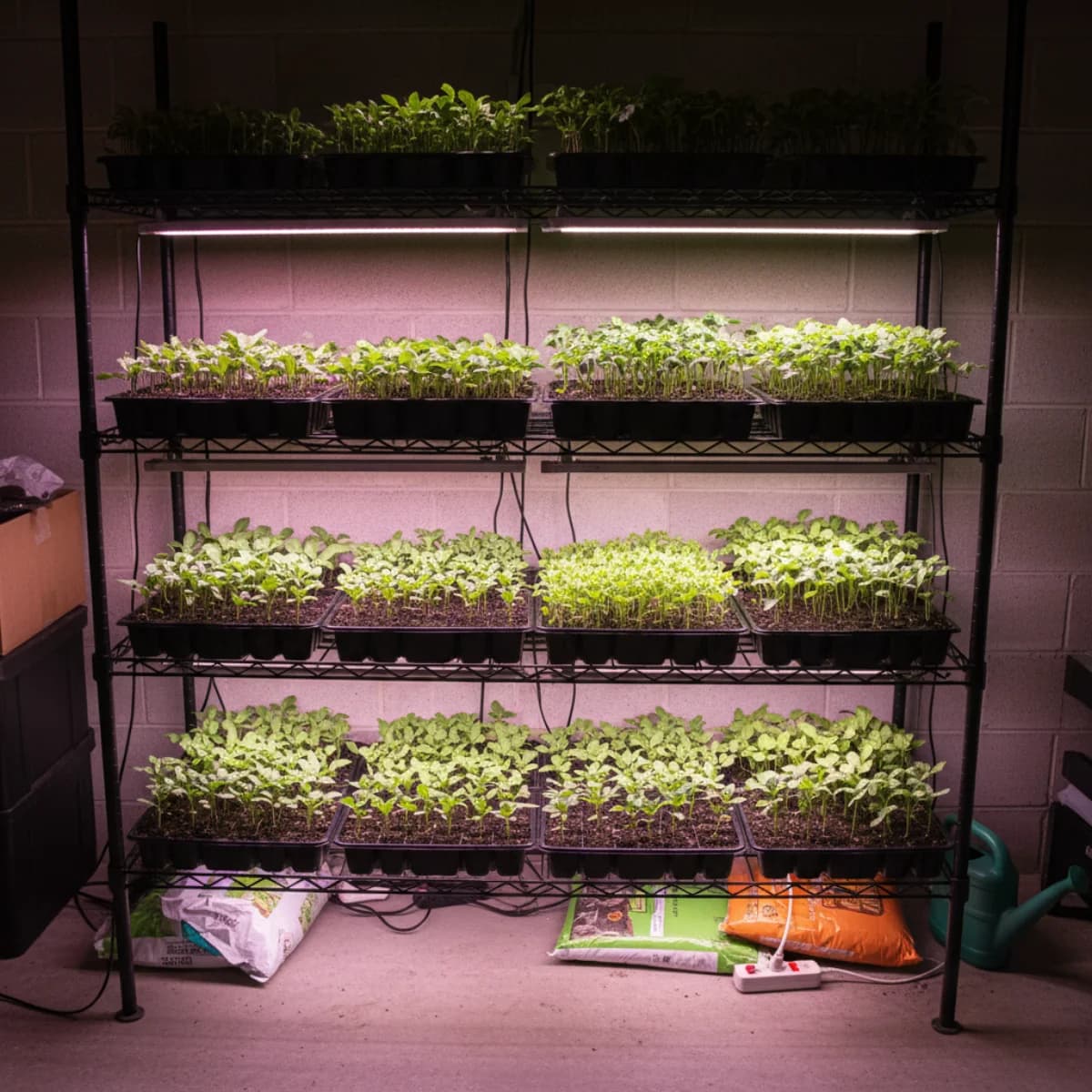
Grow lights: Essential. See our grow lights guide for setup advice.
A heat mat: Speeds germination. Onion seeds germinate best at 65-75°F soil temperature.
Sowing Technique
Onion and leek seeds are small and flat. They don’t need to be placed precisely—dense sowing and later thinning or just transplanting the bundle is fine.
For cells or divided sections: sow 4-6 seeds per cell, not more. The resulting seedlings will be thinned to 2-3 per cell or transplanted as a cluster.
For open flat trays: sow fairly densely—about ½ inch apart in rows. The resulting mass of seedlings can be divided at transplant time.
Sow at a depth of ¼ inch. Cover lightly with a fine layer of vermiculite or seed-starting mix.
Water gently (a misting bottle prevents washing seeds around) and place on a heat mat under grow lights.
Germination and Early Care
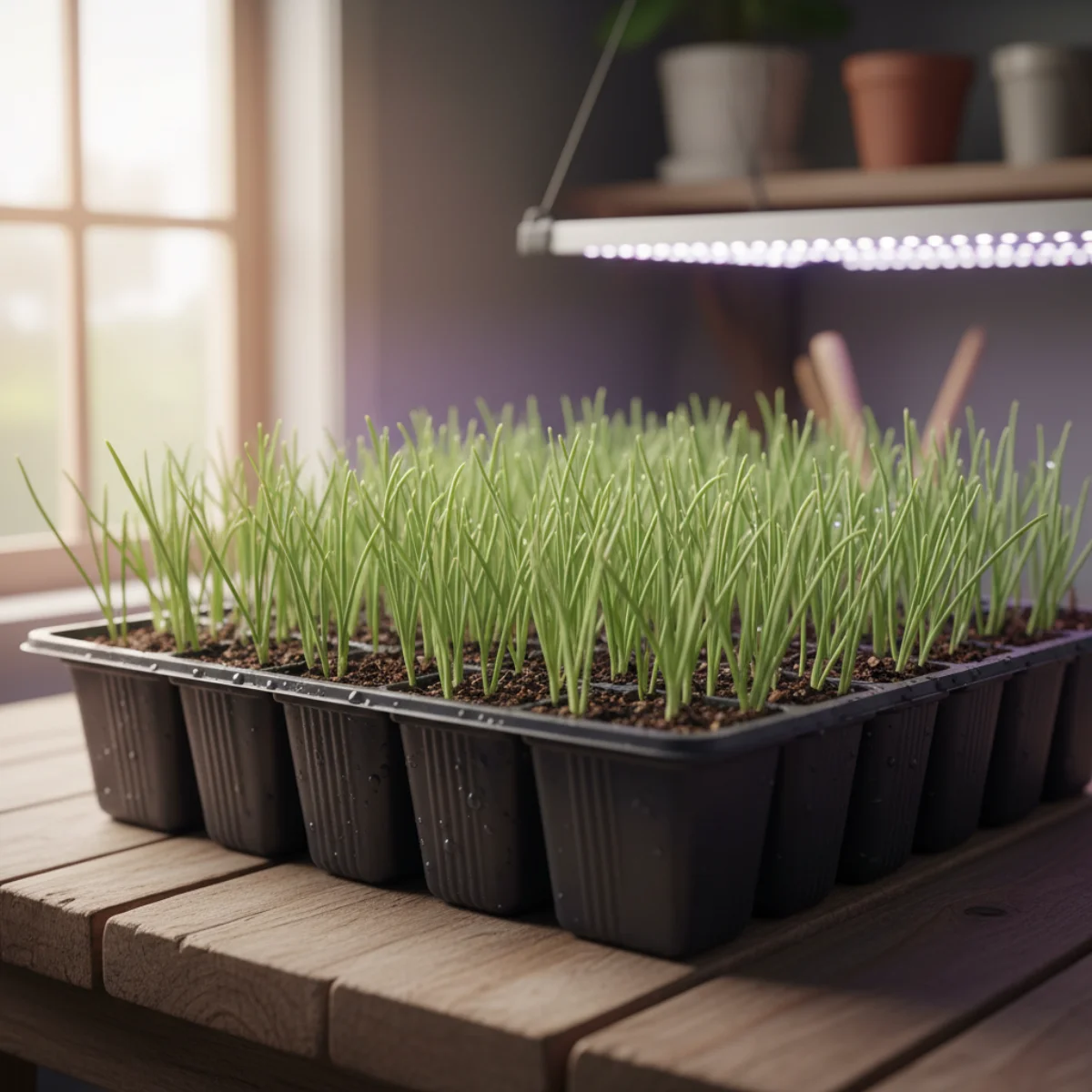
Germination takes 7-14 days at optimal temperatures. The seedlings emerge as tiny arches, then straighten into thin, stiff grass-like shoots. They’re unmistakably onion-like from the start.
Once seedlings emerge:
- Remove from heat mat (they no longer need it)
- Keep lights 2-4 inches above the seedling tops
- Water from below when possible (bottom-watering prevents damping off)
- Allow the top of the soil to dry slightly between waterings—onion seedlings are prone to damping off in persistently wet conditions
Trimming
When seedlings reach 4-5 inches tall, they often flop over from their own weight. Trim them back to 2-3 inches with clean scissors. This encourages thicker, sturdier growth and doesn’t harm the plants. Repeat as needed. The trimmed tops can be used like chives.
This seems counterintuitive—cutting seedlings that are trying to grow—but it consistently produces stockier, more transplant-ready plants.
Fertilizing
Once seedlings develop their second “leaf” (the first true leaf looks like the cotyledon; the second is slightly different), begin feeding with a diluted balanced liquid fertilizer at half strength. Weekly fertilizing keeps growth going.
Leeks vs. Onions: Key Differences
Leeks are grown almost identically to onions but with one difference in transplanting technique: leeks develop white shanks through blanching—excluding light from the lower stem.
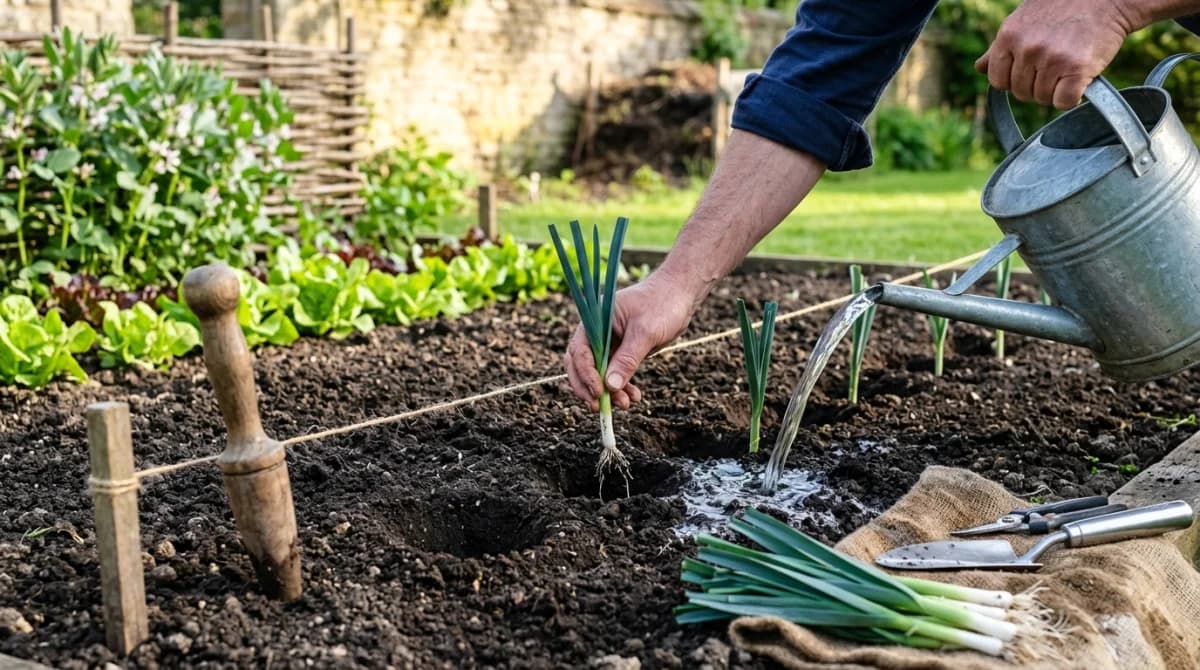
To blanch leeks, transplant them into deep holes (6-8 inches) rather than shallow ones. Drop the seedling into the hole, don’t backfill—just water in. Soil slowly falls in over the season, and rain fills the hole. The shank stays white and tender from being underground.
This “drop in a hole” technique is old-fashioned but extremely effective.
Transplanting
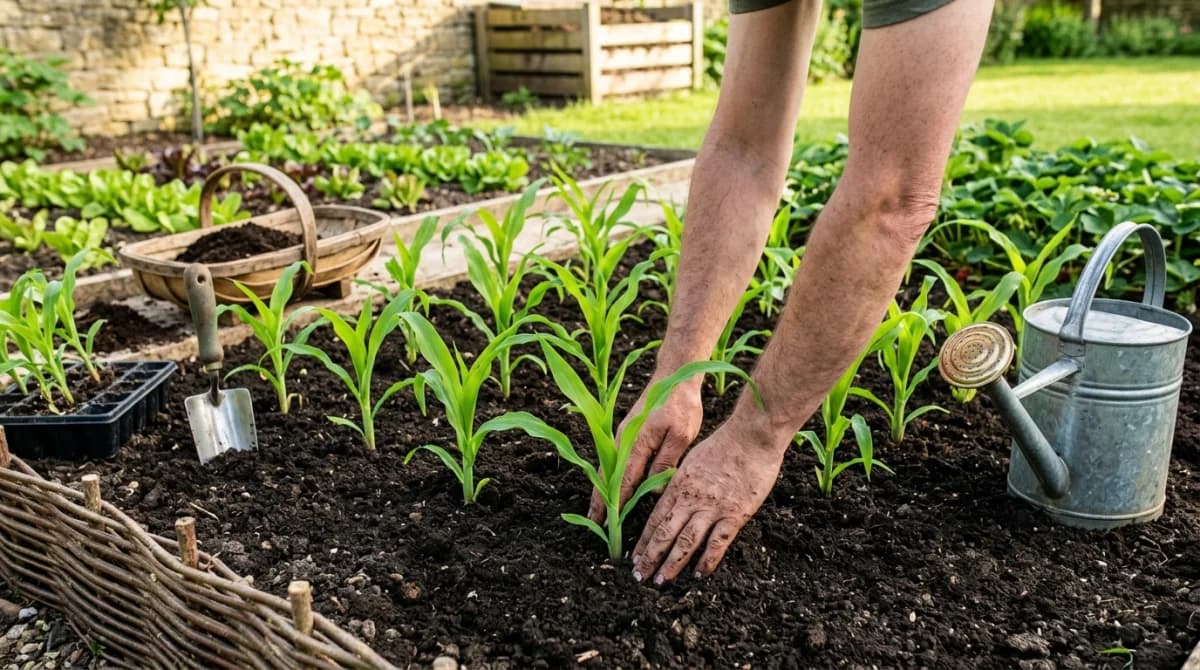
By the time you’re ready to transplant—typically late March through mid-April in most of the northern US—your onion and leek seedlings will be 8-12 inches tall and pencil-thick. They look robust compared to the tiny shoots you started in January.
Onions can be transplanted into the garden 4-6 weeks before your last frost date—they’re hardy to frost. Leeks are even hardier and can go out earlier.
Don’t worry about transplant shock with alliums. They bounce back quickly and resume growth without much drama.
What to Expect
Onions planted from January-started seed produce full-size bulbs in summer (typically July-August for most northern latitudes). Leeks develop their full size by late summer and into fall; winter-hardy varieties hold in the ground and can be harvested through winter in milder climates.
The variety options available from seed, combined with the cost savings and timing flexibility, make January the obvious time to start. Get them going now.
Sources & Further Reading
- Growing Onions in Home Gardens — University of Minnesota Extension
- Growing Leeks in Home Gardens — University of Minnesota Extension
- Leeks — University of Wisconsin Horticulture Extension