Sow Your Biennials This Week — Foxgloves, Wallflowers and Sweet Williams for Next Year’s Garden
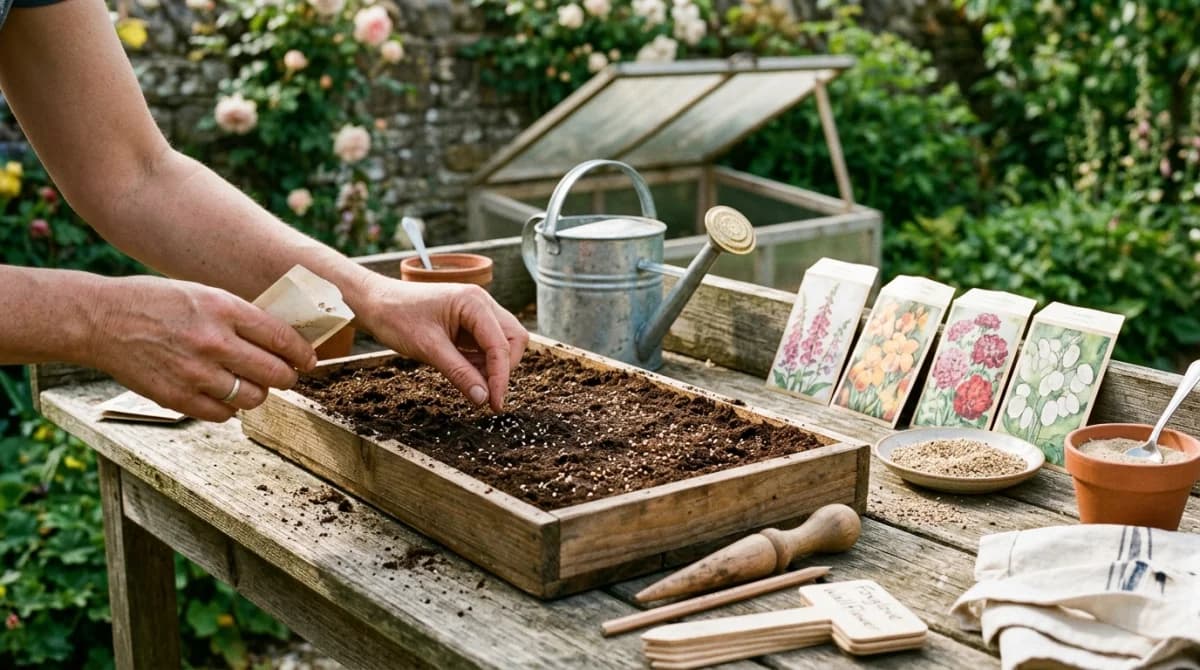
There is a strange little discipline in the gardening year that most beginners miss entirely, and it is the one that separates a garden that looks the same every May from a garden that gets quietly, year after year, more beautiful. It is the sowing of biennials. The plants you sow this week — foxgloves, wallflowers, sweet williams, honesty, forget-me-nots, Canterbury bells — will do almost nothing visible for the rest of this year. They will make a tuft of leaves by autumn and sit through winter as a low green rosette. And then, next April and May, they will rocket up and flower in a way that no spring-sown annual can match.
Late May into early June is the window. The soil is warm, germination is fast and easy, and the young plants have the whole long summer ahead of them to build the strong rooted rosette they need to flower well the following spring. Miss the window and sow in August and the plants are too small to flower properly; remember the window and you have, for the price of a few seed packets and a tray of compost, next spring’s display already in motion.
What a Biennial Actually Is
A biennial is a plant that lives for two years. In the first year it grows leaves and roots. In the second year it flowers, sets seed, and dies. This is fundamentally different from an annual, which does all of that in a single season, and from a perennial, which comes back year after year. The two-year cycle is the whole point: it lets the plant put a full season into building reserves before it flowers, which is why a properly grown biennial flowers on a scale a single-season plant can rarely match. A first-year foxglove is a flat green rosette the size of a dinner plate. A second-year foxglove is a five-foot spire carrying fifty bells.
The catch — and the reason most gardeners forget biennials exist — is that you have to think a year ahead. Sowing in late May for flowers next May is the kind of long-game planning that runs against every instinct of the spring garden, where the temptation is to sow what will flower this summer. But ten minutes of sowing now is worth a season’s worth of bedding plants next April.
The Classic Biennials to Sow Now
A handful of plants are the backbone of the biennial sowing in late May, and between them they cover every part of a cottage or country-style spring garden.
Foxgloves (Digitalis purpurea) are the queens of the early-summer border, throwing tall spires of speckled bells in shades of pink, cream, apricot and white. The seed is dust-fine and should be sown on the surface, not buried — they need light to germinate. The named strains, like ‘Sutton’s Apricot’ or the ‘Camelot’ series, are worth seeking out for their colour range. Foxgloves often self-seed gently afterwards, so a single sowing can quietly maintain itself for years.
Wallflowers (Erysimum cheiri) are the scent of an English April — that warm, clovey, honey perfume that floats out of a sunny corner before anything else is really going. Old strains like ‘Blood Red’, ‘Cloth of Gold’ and ‘Persian Carpet’ are still the best. Sow now in a seed bed or tray, prick out into rows in the vegetable patch over summer, and lift and plant out in the autumn where you want them to flower. They are tough, hardy, and at their absolute best with tulips planted through them.
Sweet williams (Dianthus barbatus) flower in early summer in dense, clove-scented heads of pink, red, white and bicolour. They are one of the easiest biennials to grow and make superb cut flowers, lasting a week or more in a vase. Sow now, grow on, and they will flower from late May next year for a long six-week run.
Honesty (Lunaria annua) is the purple-flowered cottage plant whose real reward comes after the flowers, when the seedpods ripen into silvery, paper-thin discs that catch the light in autumn and persist for months as cut material. Sow once and you will, in the best way, never need to sow it again — it gently self-seeds itself into every corner that suits it.
Canterbury bells (Campanula medium) carry big, open, upturned bells in blue, pink and white on stems two to three feet tall, and have a slightly old-fashioned charm that suits a country border. Forget-me-nots (Myosotis sylvatica) sown now make the cloud of pale blue that floats around tulips next April. Iceland poppies (Papaver nudicaule) are often grown as biennials in cooler gardens and give one of the longest cut-flower seasons of anything in spring.
How to Sow
Biennials are forgiving and they want very little. The most important rule is simply not to overdo any single step.
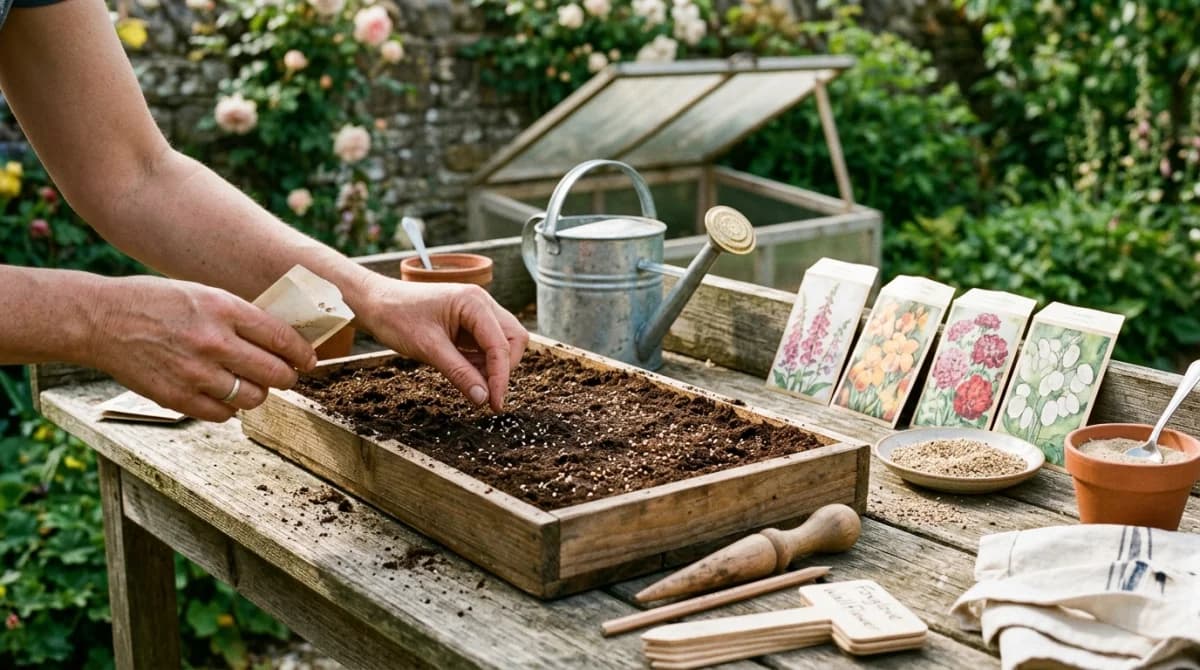
Fill a half-sized seed tray, or a few small pots, with fine general-purpose seed or multi-purpose compost, and tamp it level. Water from below by standing the tray in a shallow dish for a few minutes, then lift it out and let it drain, so the surface is uniformly moist before you sow. This matters: tiny seed scattered onto dry compost and then watered from above usually washes itself into clumps, while seed sown onto already-damp compost stays exactly where you put it.
Scatter the seed thinly across the surface. For dust-fine seed like foxgloves, mix a pinch of seed with a teaspoon of dry sharp sand or fine vermiculite, which lets you see what you are sowing and spread it evenly. For larger seed like sweet williams or wallflowers, you can space the seeds roughly half an inch apart. Cover the seed with the finest possible scatter of vermiculite or sieved compost — just enough to settle it — except for foxgloves, which want nothing on top at all because they need light to germinate.
Stand the tray somewhere bright but out of harsh midday sun — a cold frame with the lid propped, a shelf in a porch, a sheltered spot outside against a north-facing wall — and keep the compost reliably damp by misting or watering gently from below. At this time of year, with warm soil temperatures, most biennials germinate in seven to fourteen days. You are looking for a uniform fuzz of green across the surface of the tray.
What to Do Next
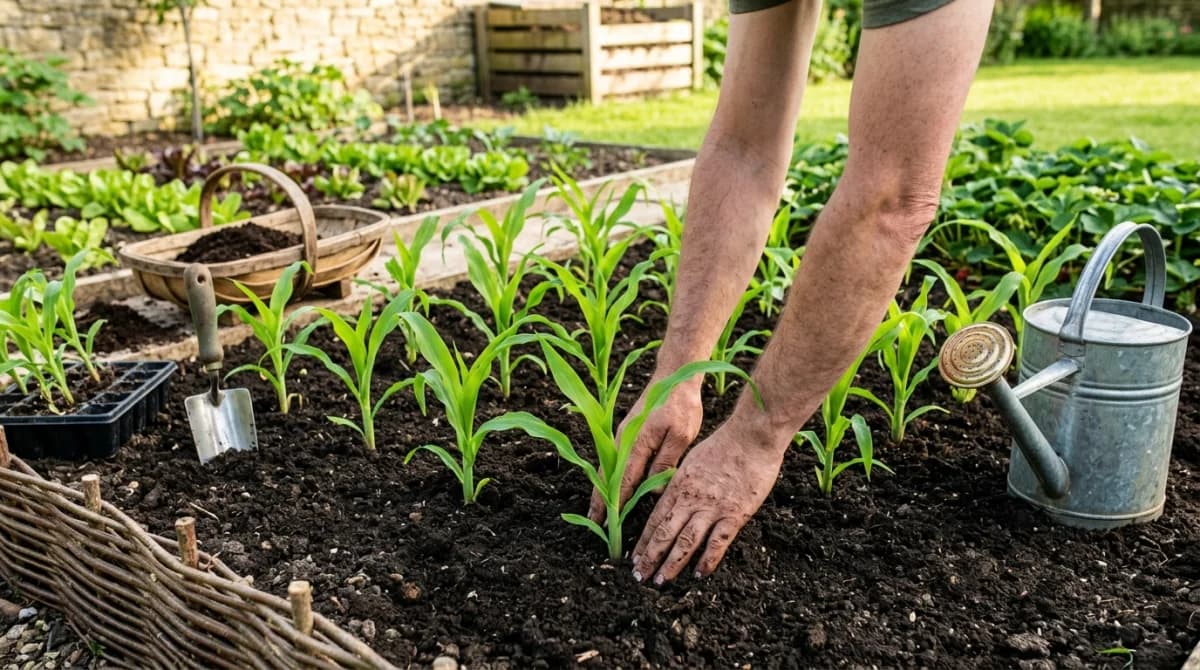
Once the seedlings have one or two true leaves — the second pair of leaves, which look like miniature versions of the adult plant — they are ready to prick out. Lift each seedling gently by a leaf (never by the stem), and transplant it into its own small pot or into a nursery row outdoors, spaced four or five inches apart.
The summer job is then no more than keeping the young plants watered, weeded and free of slugs while they build a strong leafy rosette. In September or October — once they have grown into sturdy small plants the size of your palm — lift them and plant them out into their final flowering positions, working a little compost into the planting hole. Wallflowers in particular love being planted in autumn around tulip bulbs, so the two come up together next April in a single layered display.
A handful of biennials, like forget-me-nots, can simply be scattered where they are to flower and gently thinned in autumn, but most do better with the proper prick-out-and-plant-out routine.
Why the Long Game Is Worth It
The reason serious cottage gardens look so effortless, year after year, is almost always biennials. The roses and the lavender carry the structure, but the spring colour — the foxgloves rising through them, the wallflowers under the tulips, the honesty glinting against the back fence, the forget-me-nots foaming around everything — is biennial work, set in motion the previous May. None of it can be bought, in any meaningful quantity, in spring. A tray of pot-grown foxgloves from a garden centre next April costs more than a whole packet of seed and gives you three plants where a packet sown now gives you fifty.
There is also a quieter pleasure in it. The biennial sowing is one of the few moments in the gardening year when you are working purely for the future. The seed you press into the compost this afternoon is for a person who will walk into the garden next May and find it transformed. That person is, of course, you — but it is a version of you who has had a whole year to forget about it, which makes the surprise, when it comes, genuinely lovely.
If you are working out where the foxgloves and wallflowers should go — which borders need a vertical accent next spring, where the cloud of forget-me-nots would catch the morning light, how to mix biennials in among the perennials you already have — Gardenly can render your borders in full late-spring flower from a photo of the space, so you can see where the colour will sit before you commit a tray of seedlings to a particular bed. Useful for the kind of slow, layered planting where the picture only really resolves a year later.
Sources
- Royal Horticultural Society — Biennials: An Introduction
- Royal Horticultural Society — Foxgloves: Growing Guide
- Royal Horticultural Society — Wallflowers: Growing Guide
- Sarah Raven — How to Grow Biennials from Seed