Spring-Flowering Trees for Small Gardens: Picking the Right One for Your Space
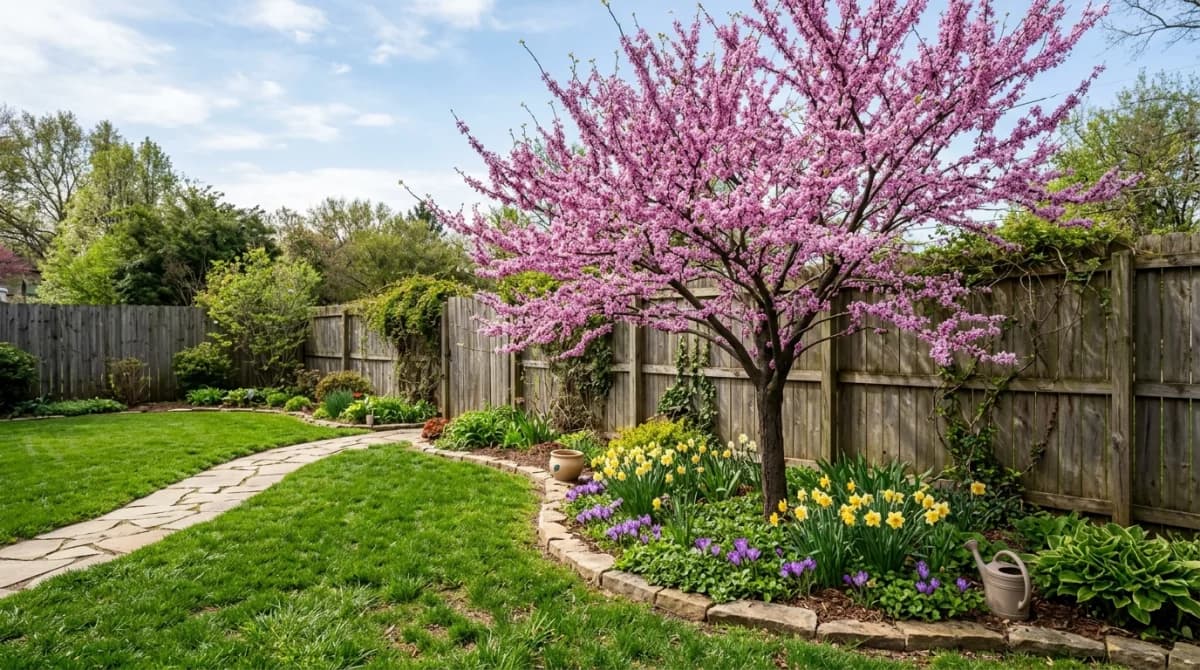
A flowering tree in full spring bloom can turn even the smallest yard into something worth stopping to look at. The problem is that most tree lists include species that grow 40 feet wide, which is fine if you have acreage but a disaster if your entire backyard is 30 feet across.
The good news: there are dozens of genuinely compact trees that bloom spectacularly in spring, offer fall color or interesting bark in winter, and top out at 15 to 25 feet. Choosing the right one comes down to your climate zone, available space, and the look you want.
What Makes a Tree “Small Garden Friendly”
Size alone does not tell the full story. A 20-foot tree with aggressive surface roots or heavy shade can cause more problems than a larger tree with a polite root system and dappled canopy.
Look for these traits:
- Mature height under 25 feet with a proportional spread
- Non-invasive root systems that will not buckle patios or crowd foundations
- Light, filtered canopy so you can still grow perennials and ground covers beneath
- Multi-season interest — bloom alone lasts two weeks, so pick trees that also offer good fall color, fruit, bark texture, or architectural form
The Best Spring-Flowering Trees for Tight Spaces
Eastern Redbud (Cercis canadensis)
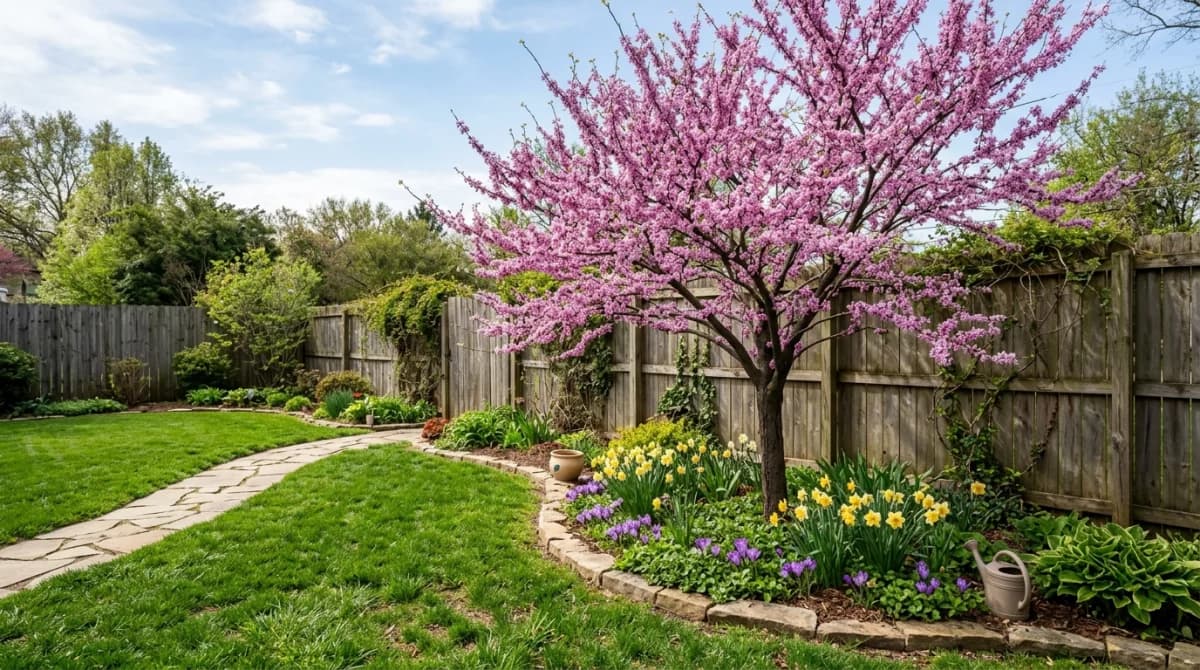
Zones 4-9. Mature size: 20-30 feet tall, 25-35 feet wide. This is one of the most versatile small trees for residential gardens. Magenta-pink flowers appear directly on the branches in early spring before the heart-shaped leaves emerge, creating a striking silhouette. The cultivar ‘Forest Pansy’ adds dark purple foliage through summer, while ‘The Rising Sun’ offers apricot-to-gold new growth. Fall color is a warm yellow.
Plant in full sun to part shade. Redbuds tolerate a wide range of soils but resent standing water. Give them room — the spread is wider than most people expect.
Japanese Stewartia (Stewartia pseudocamellia)
Zones 5-8. Mature size: 12-25 feet tall, 8-15 feet wide. If you could only plant one tree in a small garden, many arborists would suggest this one. White camellia-like flowers open in midsummer (technically not spring, but worth mentioning for its year-round payoff), fall color ranges from orange to deep red, and the exfoliating bark creates a patchwork of cream, gray, and cinnamon that looks stunning in winter.
Stewartia prefers acidic, well-drained soil and afternoon shade in hot climates. It is slow-growing, which is actually an advantage in a small space.
Serviceberry (Amelanchier × grandiflora)
Zones 4-9. Mature size: 15-25 feet tall, 15-20 feet wide. Serviceberry checks every box. White flowers in early spring, edible blueberry-like fruit in June, outstanding orange-red fall color, and smooth gray bark for winter interest. ‘Autumn Brilliance’ and ‘Princess Diana’ are widely available cultivars that perform well in residential settings.
This tree is native to North America, supports pollinators, and feeds birds. It grows in sun or part shade and handles most soil types.
Star Magnolia (Magnolia stellata)
Zones 4-8. Mature size: 15-20 feet tall, 10-15 feet wide. Star magnolia is one of the earliest trees to bloom, opening fragrant white star-shaped flowers in late winter to early spring. The compact, rounded form fits tight spaces well. ‘Royal Star’ blooms slightly later than the species, which helps it dodge late frosts in colder zones.
Plant in a spot sheltered from north winds — early blooms are vulnerable to hard freezes. Full sun, moist well-drained soil, and a layer of mulch over the roots are all it asks for.
Flowering Dogwood (Cornus florida and Cornus kousa)
Zones 5-8. Mature size: 15-25 feet tall, 15-25 feet wide. The native flowering dogwood (C. florida) with its white or pink bracts is a classic, but it is susceptible to anthracnose in humid regions. Kousa dogwood (C. kousa) blooms about a month later with pointed white bracts and is far more disease-resistant. Hybrids like Cornus ‘Venus’ and the Stellar series combine the best traits of both.
Dogwoods prefer the understory edge — morning sun with afternoon shade mimics their natural woodland habitat.
Crabapple (Malus cultivars)
Zones 4-8. Mature size: 8-25 feet depending on cultivar. Modern disease-resistant crabapples are a far cry from the scabby, messy trees of the past. ‘Prairifire’ offers deep pink flowers and purple-tinged foliage. ‘Sugar Tyme’ has pale pink buds opening to white. ‘Royal Raindrops’ adds cutleaf foliage for textural interest.
Choose cultivars with persistent small fruit (under half an inch) to avoid the mess of larger-fruited types. These small fruits feed birds through winter and do not create a slippery sidewalk hazard.
Placement and Design Considerations
Where to Plant
The most common mistake in small gardens is centering the tree in the middle of the yard. This splits the space awkwardly and makes the garden feel smaller. Instead:
- Plant off-center, roughly one-third of the way across the garden, to create a sense of depth
- Use corners — a tree in a back corner draws the eye and makes the space feel larger
- Frame a view — position the tree so it is visible from a key window or seating area
- Consider the shadow — track where the shade will fall at midday in summer and make sure it does not kill a sunny border you depend on
Underplanting
Small trees with light canopies allow you to garden beneath them. Good companions include:
- Spring bulbs: Daffodils, scilla, and crocus bloom before the tree leafs out
- Shade perennials: Hostas, heuchera, and ferns fill in once the canopy develops
- Ground covers: Creeping phlox, sweet woodruff, or native sedges carpet the root zone
- Small shrubs: Hydrangea quercifolia or rhododendrons add a second layer of structure
Planting Tips for Spring
Late March through April is an excellent window for planting container-grown and balled-and-burlapped trees. The soil is workable, rain is frequent, and trees have the entire growing season to establish before winter.
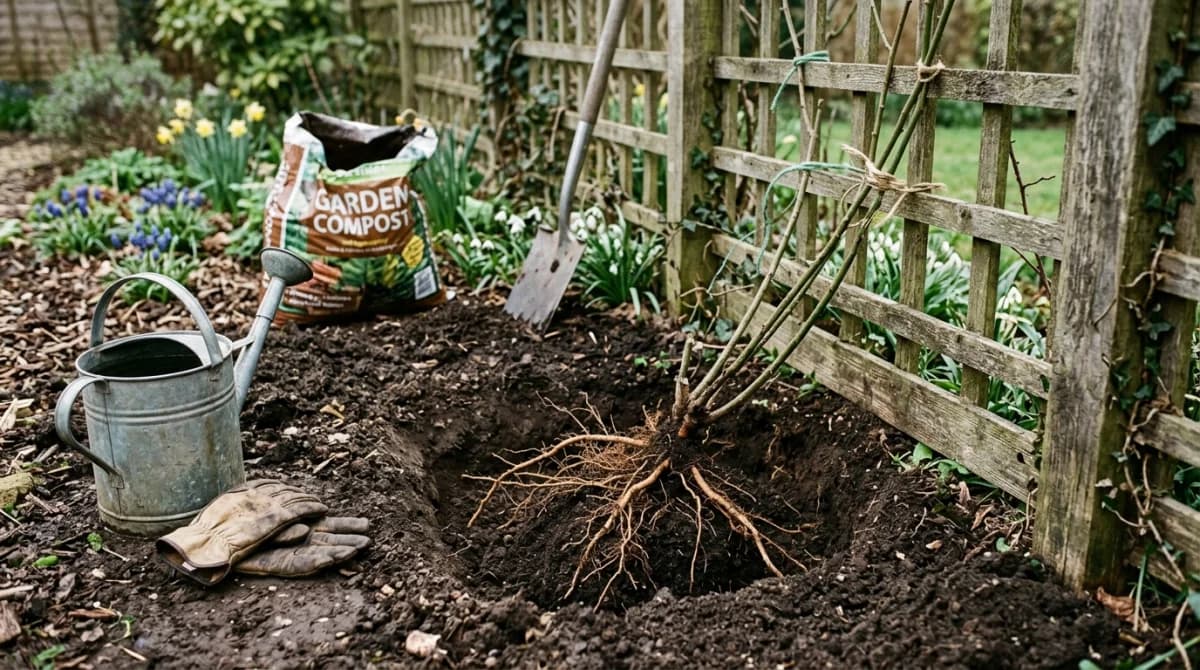
Dig the hole twice as wide as the root ball but no deeper. The root flare — where the trunk widens at the base — should sit at or slightly above soil level. Planting too deep is the single most common cause of tree decline. Mulch with 2 to 3 inches of wood chips, keeping it several inches away from the trunk.
Water deeply once a week through the first growing season. A slow trickle from a hose for 20 minutes is more effective than brief daily watering.
Choosing the Right Tree for Your Situation
| Tree | Best For | Bloom Time | Fall Color | Growth Rate |
|---|---|---|---|---|
| Eastern Redbud | Zones 4-9, wide spaces | Early spring | Yellow | Medium |
| Stewartia | Year-round interest | Summer | Orange-red | Slow |
| Serviceberry | Wildlife gardens | Early spring | Orange-red | Medium |
| Star Magnolia | Very small yards | Late winter | Yellow-bronze | Slow |
| Dogwood | Woodland edges | Mid-spring | Red-purple | Medium |
| Crabapple | Cold climates | Mid-spring | Variable | Medium |
If your space is under 15 feet wide, focus on star magnolia, columnar crabapple cultivars, or a multi-stem serviceberry trained to an upright form. For slightly more room, redbud and kousa dogwood give the most dramatic spring show.
Plan Before You Plant
A tree is a decades-long commitment. Before you grab the first pretty thing at the nursery, consider how it fits your overall garden layout. Think about sight lines from your windows, how the mature canopy will interact with existing beds, and whether the root zone will compete with nearby plantings.
Tools like Gardenly can help you visualize how a new tree will look in your actual space before you commit to a spot — which beats the old method of standing in the yard holding a broomstick at arm’s length and squinting.
Pick the right tree for your space, plant it well, and in a few springs you will have the kind of garden that makes neighbors slow down on their walk.