Spring Garden Cleanup: What to Do First (and What to Leave Alone)
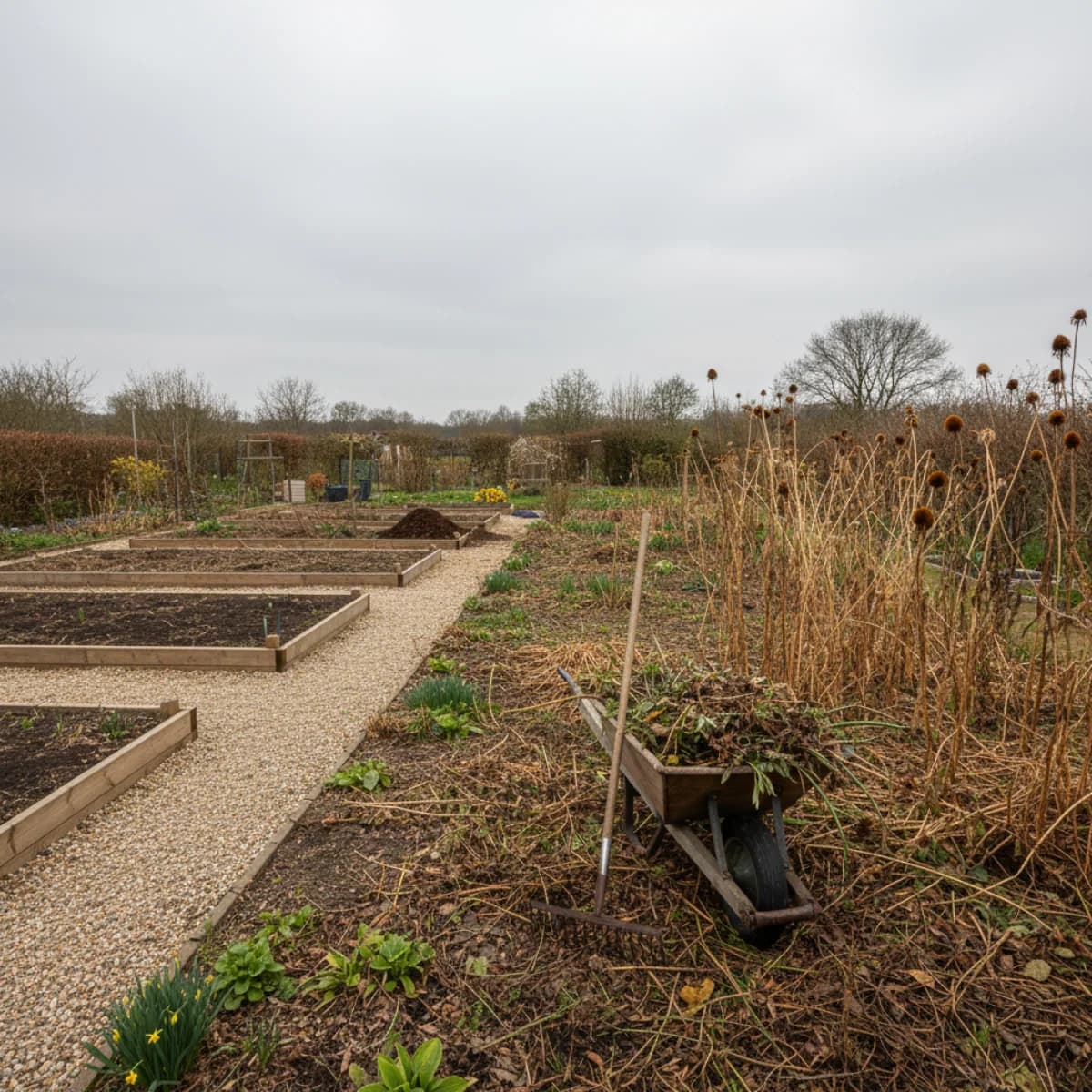
The first warm day of late February triggers something primal in gardeners. You step outside, feel the sun on your face, and immediately want to rake, cut, pull, and tidy everything in sight. The garden looks rough after months of winter, and the temptation to clean it all up in one aggressive weekend is powerful.
Resist it. Or at least, be strategic about it.
Spring cleanup done too early or too aggressively strips away the very things your garden needs to thrive. Beneficial insects are still sheltering in hollow stems. The soil is still fragile from freeze-thaw cycles. And many of those “dead” perennials are already pushing new growth just below the surface.
The best spring cleanup isn’t a single weekend blitz. It’s a phased approach that works with the season, not against it.
Phase One: The Structural Assessment (Right Now)
Before you touch a rake, walk your entire garden with fresh eyes. Winter reveals things that summer hides.
Check hardscaping first. Look for frost-heaved pavers, cracked edging, loose fence posts, and sagging gates. These structural problems are easier to fix now than in April when the beds around them are full of emerging growth.
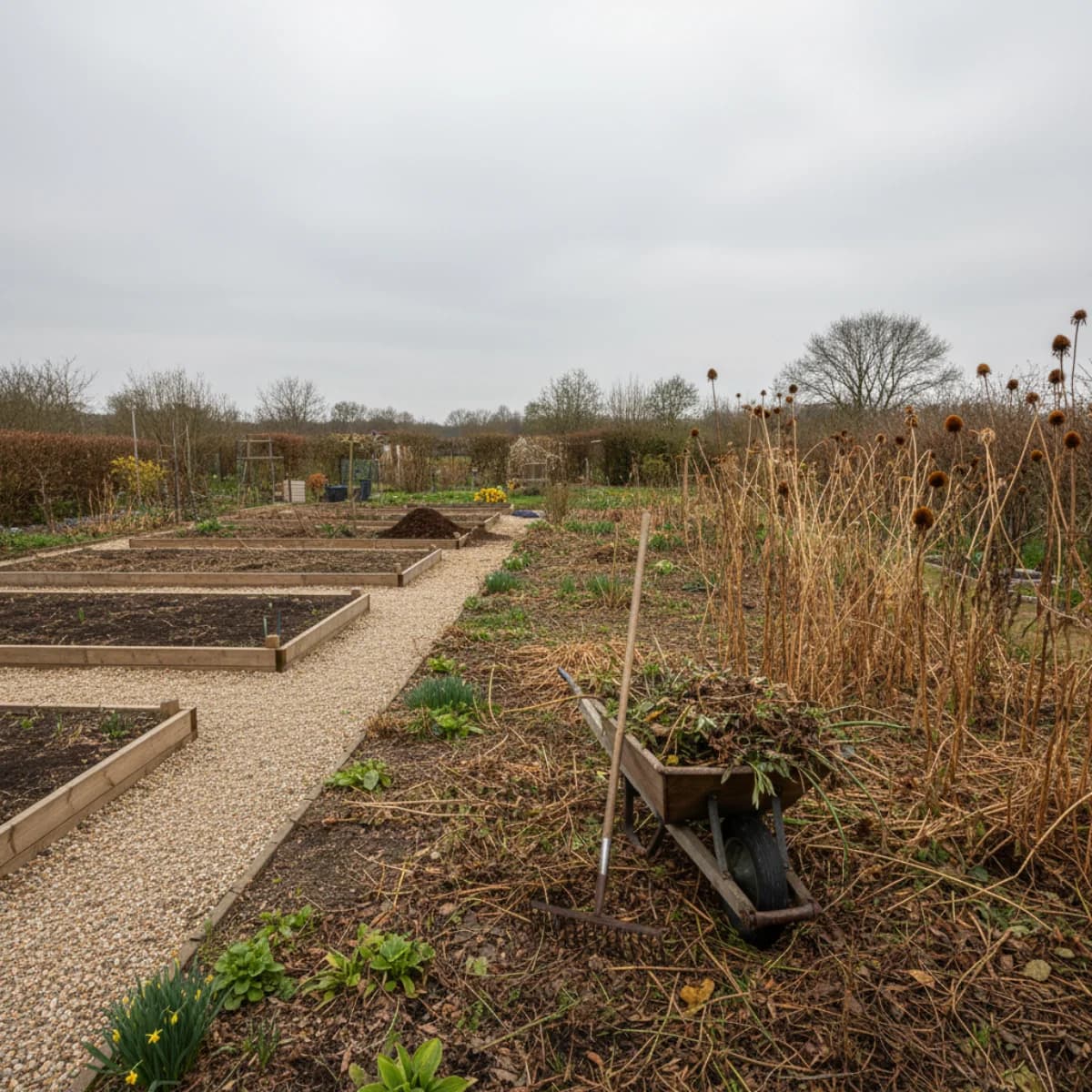
Inspect raised beds. Wood rots, screws loosen, and soil settles over winter. Press on the sides of wooden beds to check for soft spots. Top up soil levels—most beds lose an inch or two of height each year as organic matter breaks down.
Survey trees and shrubs. Look up. Winter storms break branches that may be hanging precariously. Remove any damaged, crossing, or obviously dead branches. If you see a large limb that’s partially broken but still attached, call a certified arborist—that’s not a DIY job.
Note drainage problems. Where does water pool after a rain? Where is the soil staying soggy? These patterns are obvious now but invisible in summer. Mark problem spots and plan to address them before planting.
Phase Two: The Careful Clean (When Temps Stay Above 50°F)
This is where most gardeners go wrong. The key word is “careful.”
What to Clean Up Now
Fallen leaves on paths and patios. Leaves on hard surfaces serve no purpose. Rake them off walkways, driveways, and sitting areas. Add them to the compost pile or use them as mulch.
Vegetable bed debris. If you didn’t clean up your vegetable garden last fall (no judgment), now is the time. Pull any remaining crop stalks, old tomato cages, and rotting plant material. Vegetable debris doesn’t provide the same wildlife habitat value as perennial stems and can harbor diseases like blight.
Broken or collapsed plant supports. Trellises, stakes, and cages that have fallen over should be removed, cleaned, and stored until they’re needed again in a few weeks.
Annual weeds. Chickweed, henbit, and hairy bittercress are already growing. Pull them now, before they flower and set seed. Every weed you remove in February saves you hundreds in June.
What to Leave Alone (For Now)
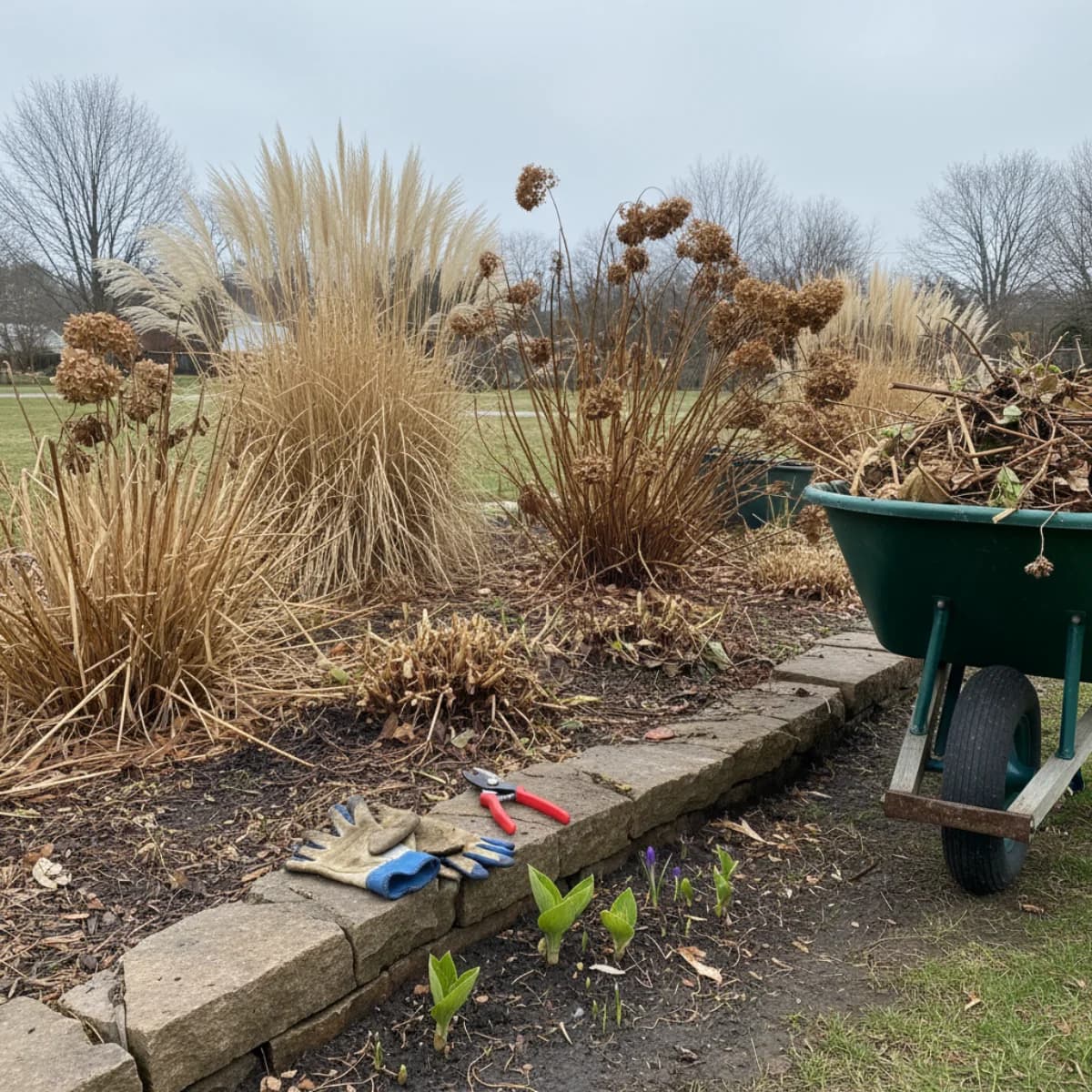
Perennial stems and seed heads. That messy-looking stand of dead echinacea stems? It’s full of native bee larvae that won’t emerge until temperatures consistently reach the mid-50s. Leave standing perennial material until you see 4-6 inches of new growth at the base.
Leaf litter in beds. A light layer of leaves in your planting beds is free mulch. It’s suppressing weeds, insulating roots, and slowly feeding the soil as it breaks down. Don’t rake beds bare unless the leaf layer is thick enough to smother emerging plants.
Ornamental grasses. The dead foliage of ornamental grasses provided winter interest and is currently sheltering overwintering insects. Cut them back in early to mid-March, but not yet.
Mulch. Don’t remove old mulch. Don’t add new mulch yet either. Wait until the soil has warmed a bit—adding fresh mulch too early keeps the soil cold and delays root growth and soil biology activity.
Phase Three: The Soil Wake-Up (March)
Once the worst of the freeze-thaw cycles are past and the soil is no longer muddy, it’s time to think below ground.
Test your soil. If you haven’t done a soil test in the past two years, now is the time. Spring amendments need time to integrate before planting. A basic pH and nutrient test costs under $20 at most extension offices and tells you exactly what your soil needs—eliminating guesswork and wasted money on unnecessary amendments.
Top-dress, don’t dig. Spread an inch of finished compost on the surface of your beds. Let the earthworms and rain do the work of incorporating it. Double-digging and heavy tilling destroy soil structure, kill beneficial organisms, and bring weed seeds to the surface.
Address compaction. If you walked on beds over winter (we’ve all done it), use a broadfork to gently aerate the soil without inverting it. Push the tines in, lean back, and move on. No turning, no flipping.
Phase Four: The Transition (Mid-March to Early April)
This is when the real cleanup happens—and by now, the timing is right.
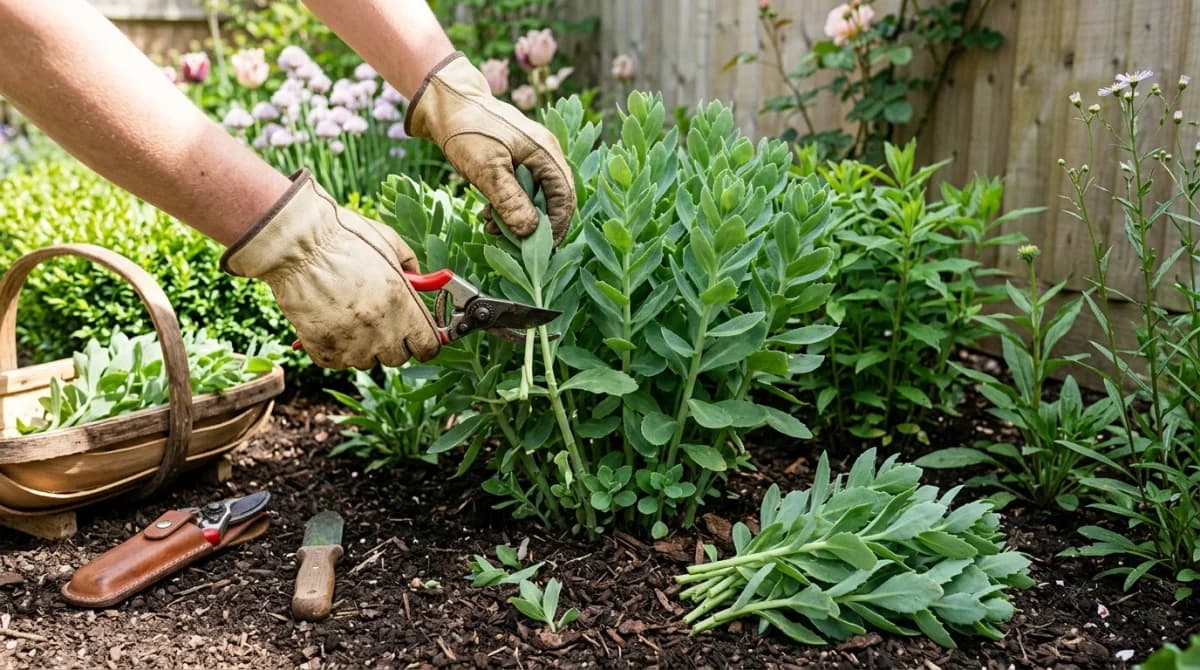
Cut back perennials. Once you see several inches of new green growth, cut last year’s stems down to just above the new shoots. Not before. The new growth tells you the plant is awake and ready.
Cut ornamental grasses. Use hedge shears or a string trimmer to cut grasses back to 4-6 inches. Do this before new green blades start emerging, or you’ll end up with a mix of dead and live material that looks messy all season.
Edge your beds. Nothing makes a garden look more polished than crisp edges. Use a half-moon edger to redefine the line between beds and lawn. This is also the time to reclaim any lawn creep into your planting areas.
Rake lightly. Now you can gently rake remaining leaf debris out of beds, being careful not to damage emerging bulbs and perennials. Work with the bed, not against it.
The Cleanup Checklist
Here’s the sequence in one place:
| When | Task | Why |
|---|---|---|
| Late February | Walk and assess hardscaping, beds, trees | Catch structural problems early |
| Late February | Clean paths, patios, and vegetable beds | Remove disease-harboring debris |
| Late February | Pull winter annual weeds | Prevent seed set |
| Early March | Soil test and top-dress with compost | Feed the soil before planting |
| Early March | Address compaction and drainage | Prepare root zone |
| Mid-March+ | Cut back perennials (when new growth appears) | Protect overwintering insects |
| Mid-March+ | Cut ornamental grasses | Before new growth mingles with old |
| Mid-March+ | Edge beds and rake lightly | Final tidy before planting season |
How to Know You’ve Gone Too Far
A few signs that your cleanup has been too aggressive:
- You can see bare soil everywhere. Exposed soil erodes, dries out, and becomes a weed nursery. Some coverage—mulch, leaves, or living plants—should always be present.
- You removed all standing plant material in February. Those stems were habitat. Next year, leave them until March.
- The beds look “perfect.” A real garden in late winter should look a little rough. If it looks like a magazine photo, you probably removed things that were doing important ecological work.
Planning the Space You Just Revealed
Once the cleanup reveals the bones of your garden, you’ll see it with fresh eyes. That corner bed that felt full last July might look sparse and poorly shaped now. The color combinations you imagined might not work as well as you thought.
This is the perfect moment to rethink your layout. With the garden stripped back, you can see the real proportions, sun exposure, and flow of your space. Gardenly lets you photograph your cleaned-up garden and experiment with new designs before you commit to digging. Try moving that border, adding a new bed, or changing the shape of a path—all from your phone, before you pick up a shovel.
The Patience Payoff
Spring cleanup isn’t glamorous. It doesn’t produce the same dopamine hit as planting a flat of flowers or harvesting your first tomato. But every experienced gardener will tell you the same thing: the quality of your spring cleanup determines the quality of your entire growing season.
A garden with healthy soil, clean edges, and plants that were allowed to wake up on their own schedule will outperform a garden that was rushed into tidiness every single time.
Take it slow. Work in phases. Let the season tell you when it’s ready.
Sources & Further Reading
- Delay Garden Cleanup to Benefit Overwintering Insects — Penn State Extension
- Should I Wait to Clean Up the Garden in Order to Help Conserve Insects? — Oregon State University Extension
- A Messy Winter Garden Preserves Beneficial Insects — Clemson University Home & Garden Information Center