Garden Pest ID: Know What You’re Dealing With First
The first time a gardener sees holes in their leaves, the instinct is to reach for a spray bottle. Something is eating the plants and it needs to die. This instinct is understandable and almost always wrong.
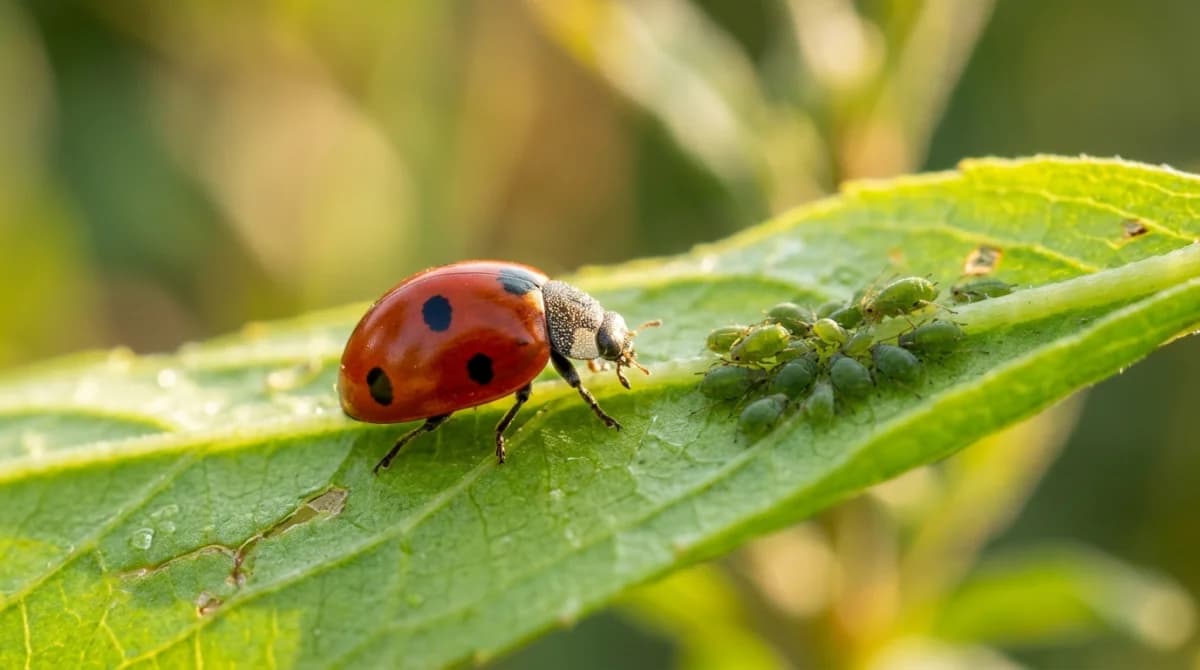
Ninety-five percent of the insects in your garden are either beneficial or neutral. They’re pollinators, predators that eat actual pests, decomposers that build soil, or innocent bystanders that have no interest in your tomatoes. Spraying a broad-spectrum insecticide when you see a few chewed leaves kills everything indiscriminately, including the ladybugs, lacewings, and parasitic wasps that were about to solve your problem for free.
The smarter approach is to identify what’s actually causing the damage, decide whether it warrants action, and choose the most targeted response possible.
The 95% Rule
Your garden is an ecosystem. A healthy garden contains thousands of insect species, and the vast majority are doing useful work. Earthworms aerate the soil. Ground beetles eat slug eggs. Parasitic wasps lay eggs inside aphids. Hoverfly larvae consume hundreds of aphids per day. Spiders catch flying pests in their webs.
When you spray a broad-spectrum insecticide, you reset this ecosystem to zero. The pests come back first (they reproduce faster), and now there are no predators to control them. This is why gardens that get sprayed regularly often have worse pest problems than gardens that are never treated.
The goal is not a pest-free garden. That doesn’t exist in nature and shouldn’t exist in yours. The goal is a garden where pest populations stay below the level that causes meaningful damage, kept in check by a healthy population of natural enemies.
Common Spring Pests and How to Identify Them
Aphids
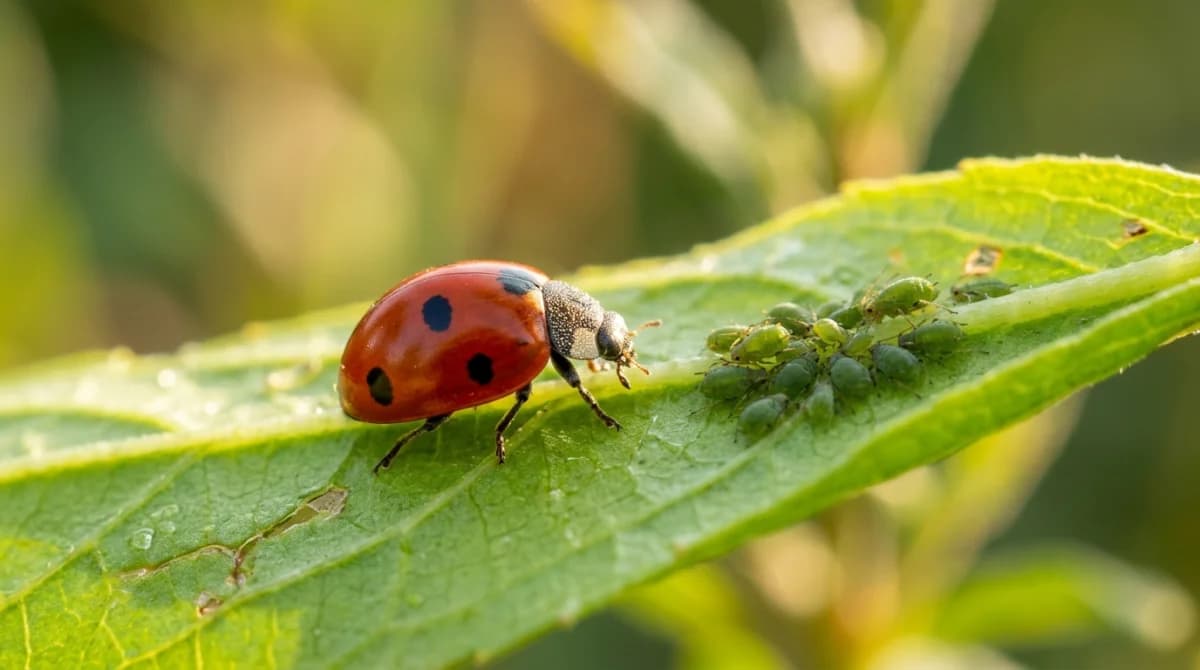
What they look like: Tiny (1 to 3 mm), soft-bodied, pear-shaped insects that cluster on new growth, flower buds, and leaf undersides. Colors range from green and black to pink, orange, and white. They often appear in dense colonies seemingly overnight.
Damage pattern: Curled or distorted new leaves. Sticky residue (honeydew) on leaves below the colony. Black sooty mold growing on the honeydew. Stunted growth on heavily infested plants.
What to do: In most cases, wait. Ladybugs, lacewings, and hoverflies will find the colony within a week or two and consume it. A strong blast of water from a hose knocks aphids off and most can’t climb back. For severe infestations on valuable plants, insecticidal soap (not dish soap) applied directly to the aphids works without harming beneficial insects that aren’t present at the moment of spraying.
Slugs and Snails
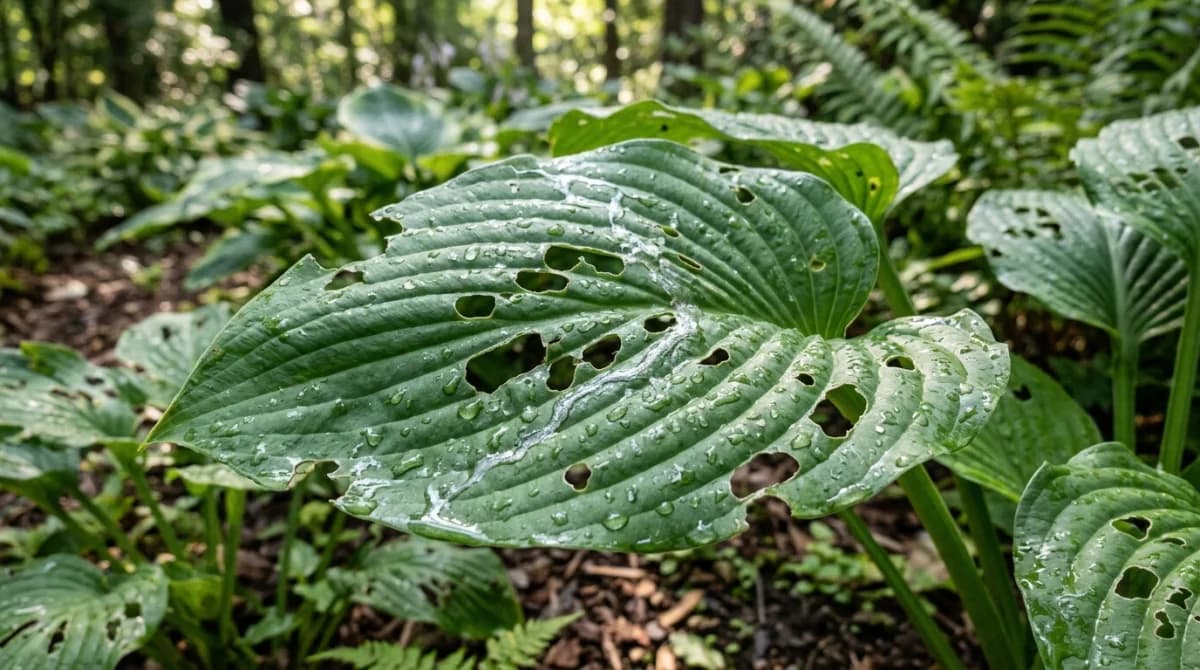
What they look like: You rarely see them because they feed at night. Look for silvery slime trails on plants and soil as evidence.
Damage pattern: Large, irregular holes chewed in leaves, especially on hostas, lettuce, and seedlings. Damage appears overnight. Seedlings may be completely consumed.
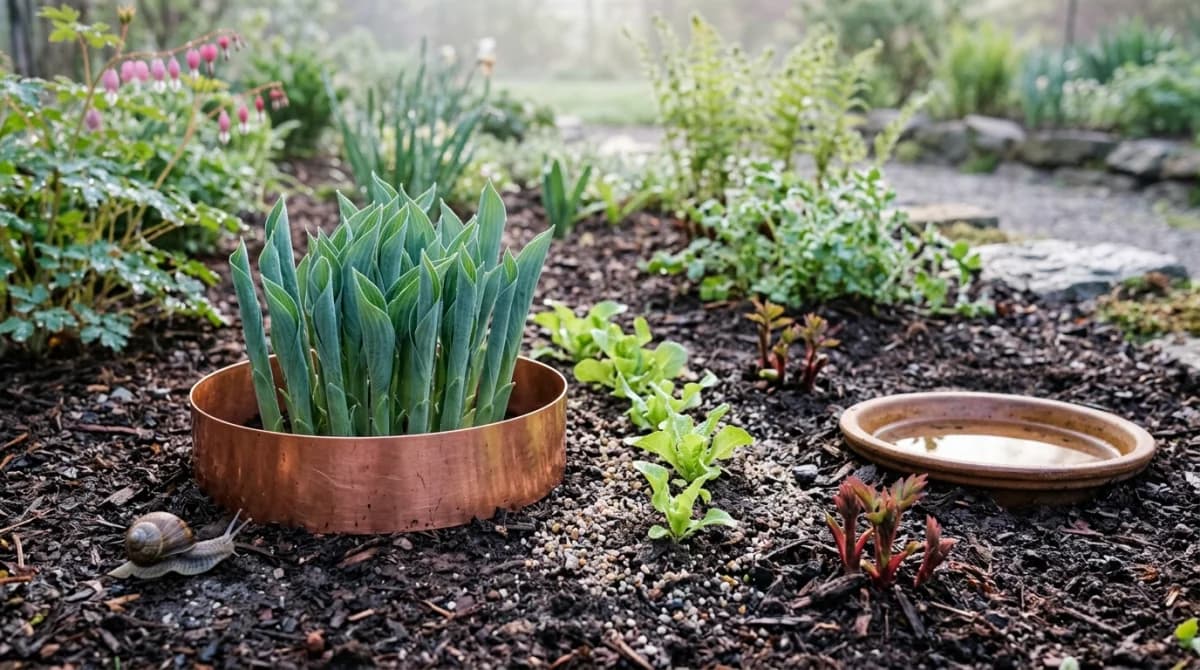
What to do: Go out with a flashlight at 10 PM and you’ll find them. Hand-picking is the most effective control for small gardens. Beer traps (a shallow dish of beer sunk into the soil) drown them. Iron phosphate bait (sold as Sluggo) is safe for pets and wildlife and genuinely effective. Copper tape around raised beds and pots creates a mild electric shock that repels them.
Cutworms
What they look like: Fat, gray-brown caterpillars that curl into a C-shape when disturbed. They hide in the soil surface during the day and feed at night.
Damage pattern: Seedlings cut off cleanly at the soil line, as if someone took scissors to them. The toppled plant lies next to the stub. The culprit is usually in the top inch of soil right next to the cut.
What to do: Collar your transplants. A cardboard toilet paper tube or a strip of newspaper wrapped around the stem and pushed an inch into the soil creates a physical barrier. Dig in the soil around cut seedlings and destroy any cutworms you find.
Flea Beetles
What they look like: Tiny (1 to 3 mm) dark beetles that jump like fleas when disturbed.
Damage pattern: Dozens of tiny round holes in leaves, giving them a “shot-hole” appearance. They attack brassicas, eggplant, and radishes most aggressively. Young seedlings can be killed by heavy infestations.
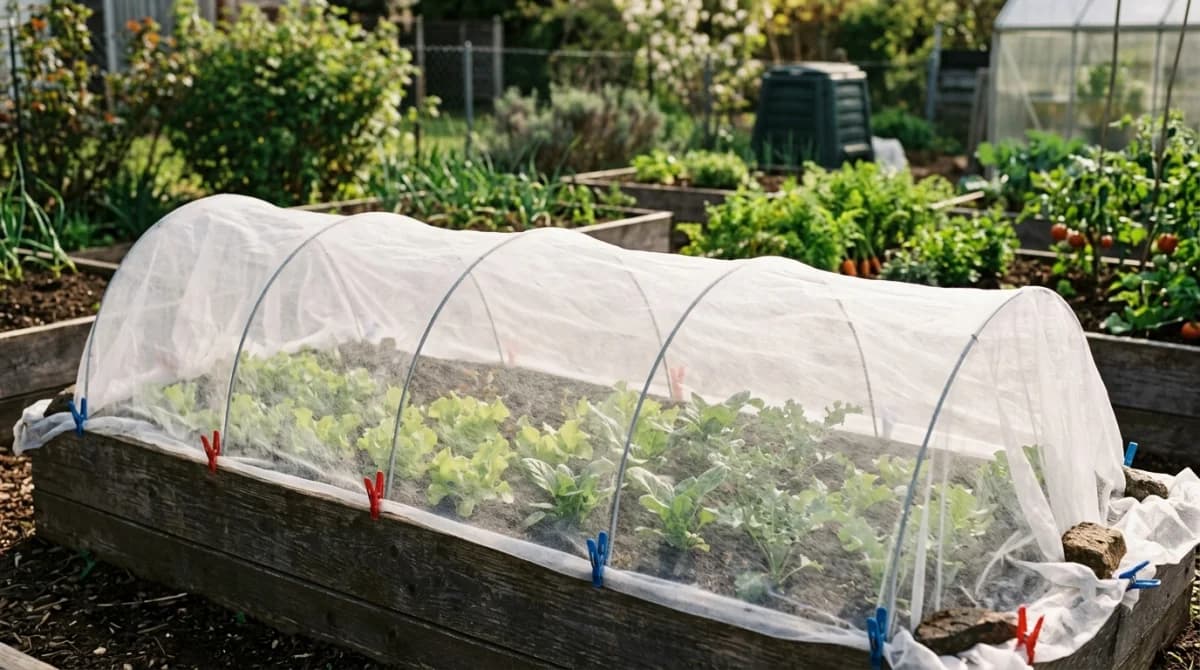
What to do: Floating row cover (lightweight fabric over the plants) is the most effective prevention, as it physically excludes the beetles. For established plants, the damage is usually cosmetic and the plants outgrow it. Planting radishes as a trap crop diverts flea beetles from more valuable crops.
Cabbage Worms and Loopers
What they look like: Green caterpillars on brassica crops (cabbage, broccoli, kale, Brussels sprouts). Cabbage worms are velvety green. Cabbage loopers are lighter green and move with a distinctive “inchworm” motion.
Damage pattern: Large holes in leaves, frass (caterpillar droppings) visible on the leaf surface. Heavy infestations can reduce plants to stems and veins.
What to do: Floating row cover prevents the adult butterflies and moths from laying eggs. BT (Bacillus thuringiensis) is a biological control that specifically kills caterpillars and nothing else. It must be eaten by the caterpillar and is harmless to bees, beneficial insects, and people. Hand-picking works well for small plantings.
Japanese Beetles
What they look like: Metallic green and copper beetles about half an inch long. They feed during the day in groups.
Damage pattern: Skeletonized leaves. The beetles eat the tissue between leaf veins, leaving a lace-like skeleton. They attack roses, grapes, linden trees, and many other ornamentals and food crops.
What to do: Hand-pick into a bucket of soapy water. Japanese beetle traps attract more beetles than they catch; they actually increase the beetle population in your immediate area by drawing them in from surrounding properties. Avoid the traps. Milky spore or beneficial nematodes applied to lawn areas reduce the grub population over time (grubs are the larval stage of Japanese beetles).
The IPM Approach
Integrated Pest Management (IPM) is the professional framework for dealing with garden pests. It works in a clear hierarchy:
1. Tolerate
Most pest damage is cosmetic. A few holes in a leaf don’t affect yield or plant health. Set a threshold: if less than 10 to 20 percent of the foliage is damaged and the plant is otherwise healthy, the answer is to do nothing and let natural predators catch up.
2. Prevent
The best pest control happens before pests arrive:
- Healthy soil makes healthy plants. Well-fed plants resist pests better.
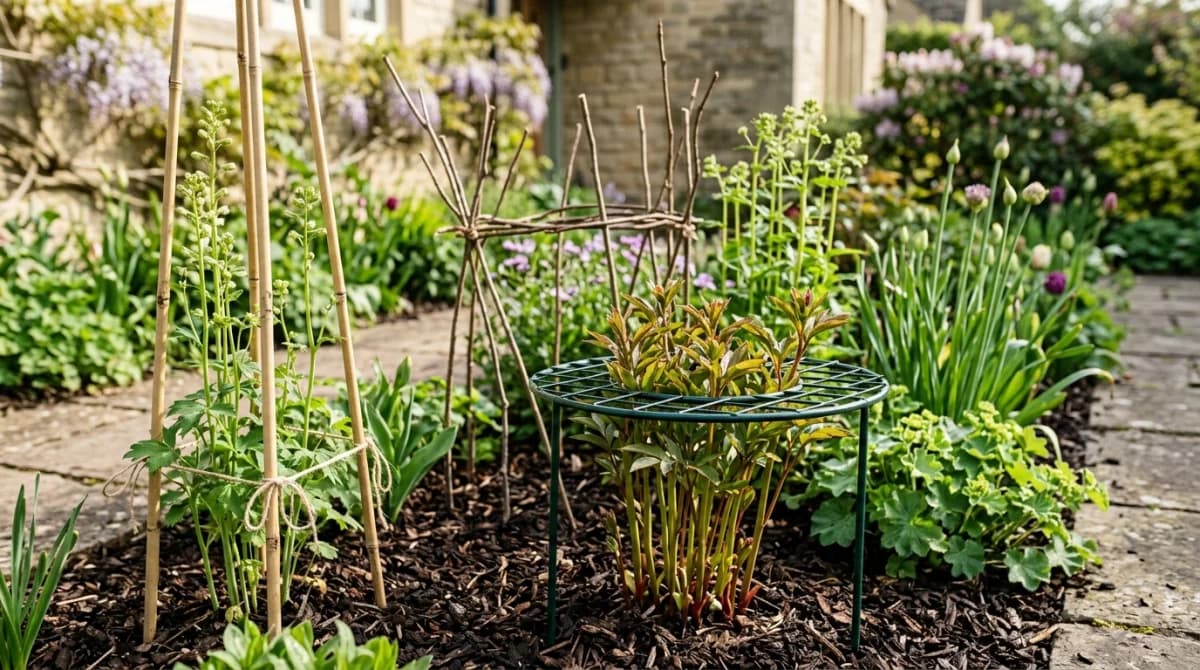
- Proper spacing and air circulation reduce disease pressure.
- Crop rotation breaks pest life cycles.
- Row covers physically exclude flying insects.
- Resistant varieties are bred to resist specific problems.
3. Treat Specifically
If prevention fails and damage exceeds your threshold, choose the most targeted option:
- Hand-picking for caterpillars and beetles
- Water spray for aphids
- BT for caterpillars specifically
- Insecticidal soap for soft-bodied insects on contact
- Iron phosphate for slugs
4. Broad-Spectrum as Last Resort
Reserve broad-spectrum products (even organic ones like pyrethrin, spinosad, and neem) for severe infestations that threaten plant survival. Apply in the evening when pollinators are inactive. Accept that even these targeted applications will kill some beneficial insects.
When to Accept Damage
Not every pest problem needs solving. A garden with some chewed leaves, a few aphids on the roses, and the occasional slug trail is a healthy garden. The presence of pests means the food web is functioning, and the predators are on their way.
Intervene when:
- Seedlings are being destroyed before they can establish
- Damage exceeds 20 to 30 percent of foliage on an important crop
- The pest population is clearly increasing rapidly with no predator response
- The pest carries disease (like cucumber beetles transmitting bacterial wilt)
Otherwise, the best thing you can do is walk through your garden regularly, observe what’s happening, and trust the ecosystem to manage itself. A hands-off approach to pests produces better long-term results than constant intervention, and costs you nothing.