Spring Lawn Care: Overseed, Feed, or Leave It Alone?
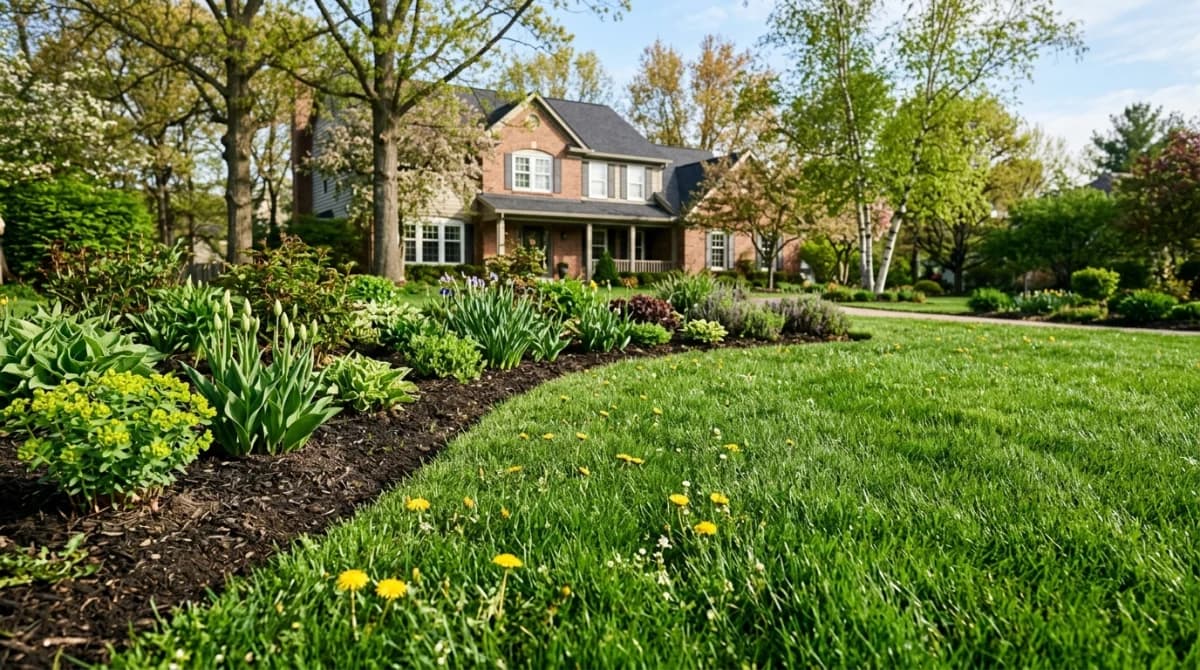
Lawn care has a marketing problem. An entire industry exists to convince you that a healthy lawn requires constant intervention: fertilizing every six weeks, pre-emergent herbicides in March, aerating in April, overseeding in May, and a shelf full of products for problems you may not actually have.
In reality, a decent lawn needs surprisingly little. The grass evolved to grow without your help. The main things you do are mow at the right height, water only when actually necessary, and fix specific problems when they actually appear.
Here is what spring lawn care actually requires, what you can skip, and the one thing most people get wrong.
When to Start
Don’t do anything to your lawn until it’s actively growing. Active growth means consistent green-up, not the first few warm days of spring. In most of the northern US (zones 4–7 with cool-season grass), that’s mid-April through early May. Southern lawns (warm-season grass) may not fully green up until May or June.
The most common spring lawn mistake is acting too early. Working on a dormant or barely awake lawn wastes time, money, and potentially damages the turf.
Mowing: The Most Important Thing You Do
If you only do one lawn care task well, make it mowing.
Mowing Height
Cut high. The standard recommendation for cool-season grass (Kentucky bluegrass, fescue, ryegrass) is 3 to 3.5 inches. For warm-season grass (Bermuda, zoysia), 1.5 to 2.5 inches depending on type.
Tall grass does several things:
- Shades the soil surface, reducing water evaporation and suppressing weed seed germination
- Grows deeper roots, making the lawn more drought-resistant
- Outcompetes weeds by blocking their access to light
- Looks fuller and more lush
The most common mowing mistake is cutting too short. A “clean” close-cut lawn is actually a stressed, shallow-rooted lawn that’s more vulnerable to weeds, drought, and heat damage.
The One-Third Rule
Never remove more than one-third of the grass blade height in a single mowing. Cutting more stresses the plant, turning the tips brown and weakening the root system. If the grass got away from you after a rainy week, raise the mowing height for the first pass and lower it back down gradually over two to three mowings.
Leave the Clippings
Grass clippings left on the lawn decompose within a day or two and return nitrogen to the soil, the equivalent of one full fertilizer application per season. Bagging clippings is literally throwing away free fertilizer.
Clippings do not cause thatch. Thatch is caused by an accumulation of dead roots and stems at the soil surface, not by clippings on top. As long as you’re not removing huge clumps, leave them.
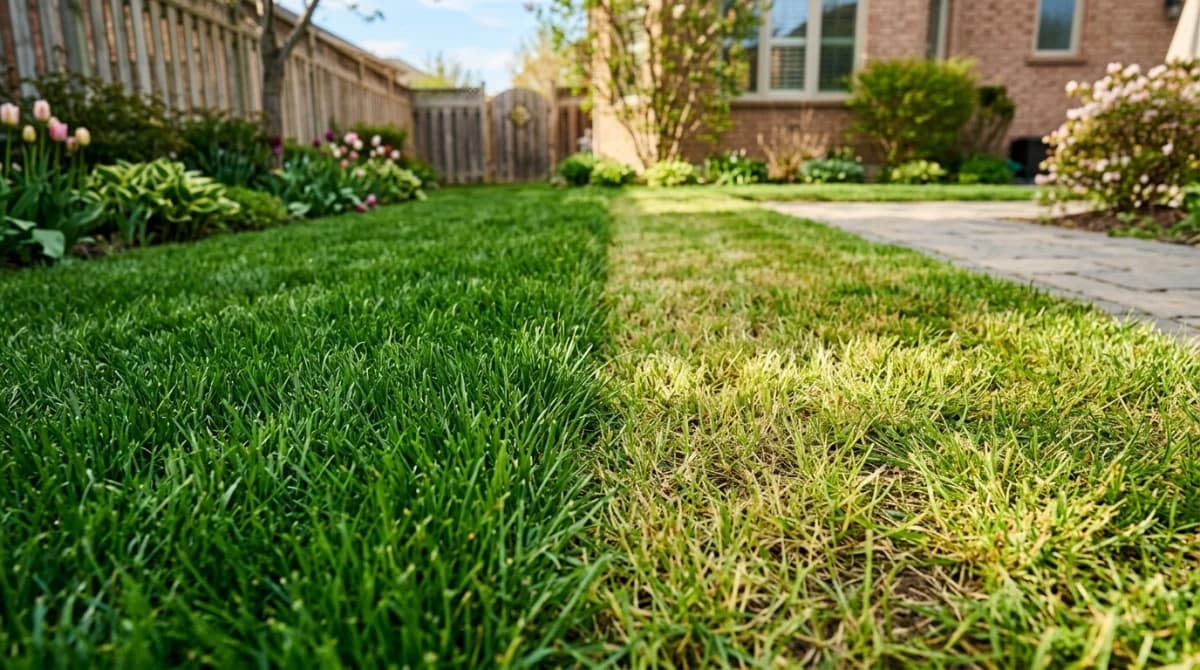
Fertilizing: Less Than You Think
Cool-Season Lawns
The best time to fertilize a cool-season lawn is fall, specifically September through November. This feeds root growth during the most active root-building season and provides nutrients the lawn stores over winter for spring green-up.
Spring fertilizing is optional and often counterproductive. Heavy spring nitrogen pushes rapid top growth (which means more mowing) at the expense of root development. If you fertilize in spring at all, wait until the lawn has been actively growing for three to four weeks and use half the recommended rate.
A lawn that was fertilized well in fall rarely needs spring fertilizer.
Warm-Season Lawns
Warm-season grasses should be fertilized after full green-up, when the lawn is actively growing. Apply the first feeding when the lawn has been green and growing for two to three weeks, typically May or June depending on your area. Feeding too early is wasted because the grass can’t use nutrients while still waking from dormancy.
What Fertilizer to Use
If you fertilize, a slow-release nitrogen source is best. Organic options like corn gluten meal, milorganite, or composted manure release nutrients gradually. A light top-dressing of compost (a quarter inch, raked in) feeds the soil biology, which feeds the grass.
Avoid “weed and feed” products. They apply herbicide everywhere, including areas without weed problems, and the timing that’s right for fertilizer is often wrong for pre-emergent herbicide.
Overseeding: Fall Is Better
Spring overseeding is one of the most commonly attempted and least successful lawn care tasks. Here’s why:
Cool-season grass seed germinates best when soil temperatures are between 50 and 65°F, which matches fall conditions in most areas. Spring provides a brief window of good germination temperatures before summer heat arrives and stresses young seedlings before they’ve established.
Crabgrass pre-emergent, which many gardeners apply in spring, kills all germinating grass, including the desirable seed you just planted. You can’t overseed and apply pre-emergent at the same time.
Summer weeds aggressively outcompete young grass seedlings. A spring-seeded lawn faces immediate weed competition that fall-seeded grass avoids entirely.
If you must overseed in spring (severe bare patches that can’t wait), do it as early as possible, keep the areas consistently moist, and accept that results will be modest compared to a fall seeding.
Weed Management
Pre-Emergent Herbicide
If you choose to use pre-emergent (which prevents crabgrass and other annual weeds from germinating), timing matters more than product choice. Apply when soil temperatures reach 55°F consistently, roughly when forsythia is in full bloom and before the lilacs bloom.
The organic alternative: Corn gluten meal is a natural pre-emergent that also provides nitrogen. It’s less effective than synthetic pre-emergents but works reasonably well with repeated annual applications.
Dandelions and Broadleaf Weeds
A few dandelions are not a lawn emergency. A thick, well-mowed, healthy lawn naturally crowds out most weeds. If specific weeds bother you:
- Hand-pull or spot-spray individual weeds with a targeted broadleaf herbicide rather than blanket-spraying the entire lawn
- Improve the lawn’s health (proper mowing height, fall fertilizing, overseeding thin areas in fall) so grass outcompetes weeds naturally
- Consider whether a few clover patches and dandelions are actually a problem worth solving; both support pollinators
Aeration
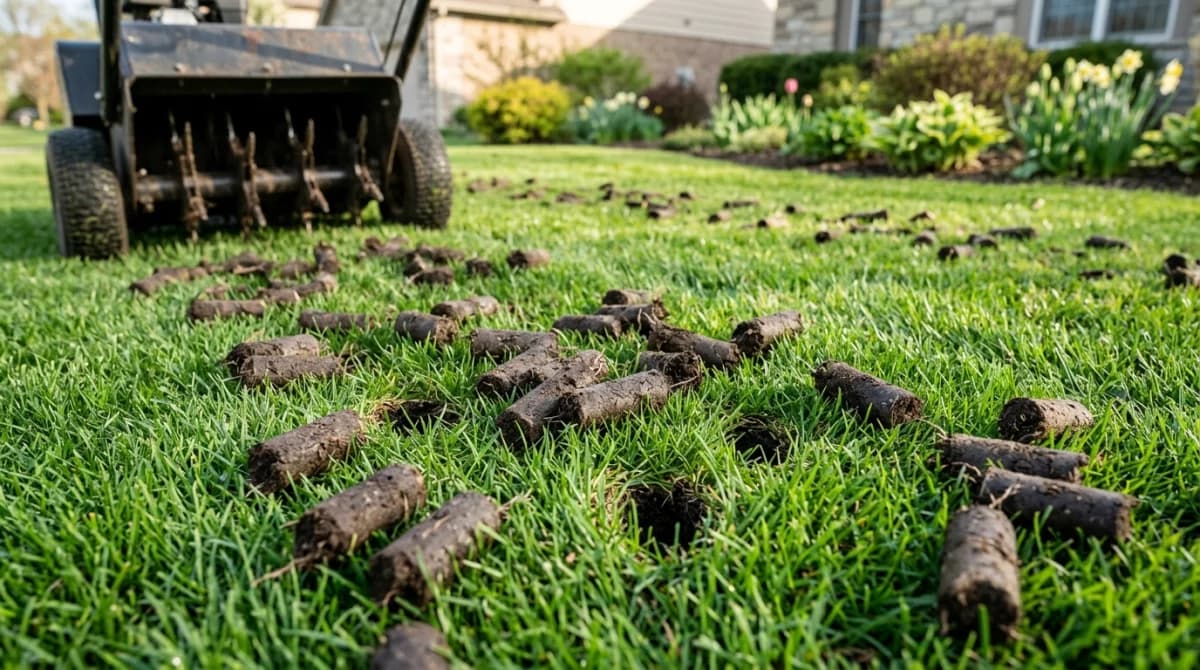
Aeration (pulling small cores of soil from the lawn to relieve compaction) benefits lawns with heavy foot traffic, clay soil, or thatch buildup. It allows water, air, and nutrients to reach the root zone.
When to aerate: Fall is better than spring for cool-season lawns. If you must aerate in spring, wait until the lawn is actively growing and do it early enough that the lawn recovers before summer heat.
How to tell if you need it: Push a screwdriver into the soil. If it goes in easily, you don’t need to aerate. If the soil resists, aeration will help.
Leave the cores. Those plugs of soil sitting on the lawn look messy but they break down within a week or two and return nutrients to the soil.
The Case for Reducing Your Lawn
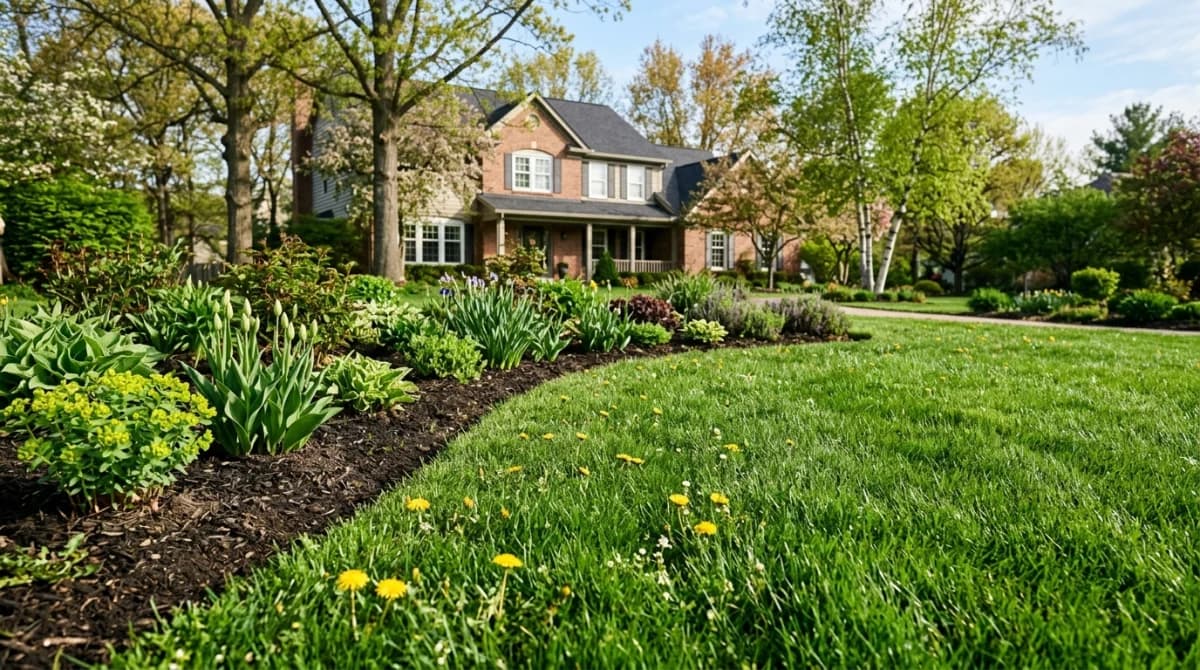
This isn’t an anti-lawn argument; it’s a practical one. Lawn is the highest-maintenance, lowest-reward element in most landscapes. Every square foot of lawn you convert to garden beds, groundcover, native planting, or hardscape reduces your weekly workload and increases your garden’s ecological value.
Consider reducing lawn to the area you actually use: the play area, the entertaining space, the functional pathway. Convert the rest to plantings that take care of themselves.
If you’re rethinking your lawn and garden balance, tools like Gardenly can help you visualize different proportions of lawn to garden before you start digging.
The Spring Lawn Care Checklist
- Wait until the lawn is actively growing (mid-April or later in most areas)
- Mow at 3 to 3.5 inches for cool-season grass, leaving clippings
- Skip spring fertilizer if you fertilized in fall. Apply a light feeding only if the lawn looks pale after full green-up
- Skip spring overseeding. Plan to overseed in September instead
- Spot-treat weeds rather than blanket-spraying
- Don’t aerate unless you have confirmed compaction
- Don’t water until the lawn actually needs it; most spring lawns get enough moisture from rainfall
Less is more with spring lawn care. A lawn that’s mowed tall, fertilized in fall, and left to do its thing in spring will outperform a lawn that’s constantly treated, fussed over, and cut too short.