How to Start a Wildflower Meadow from Seed This Spring
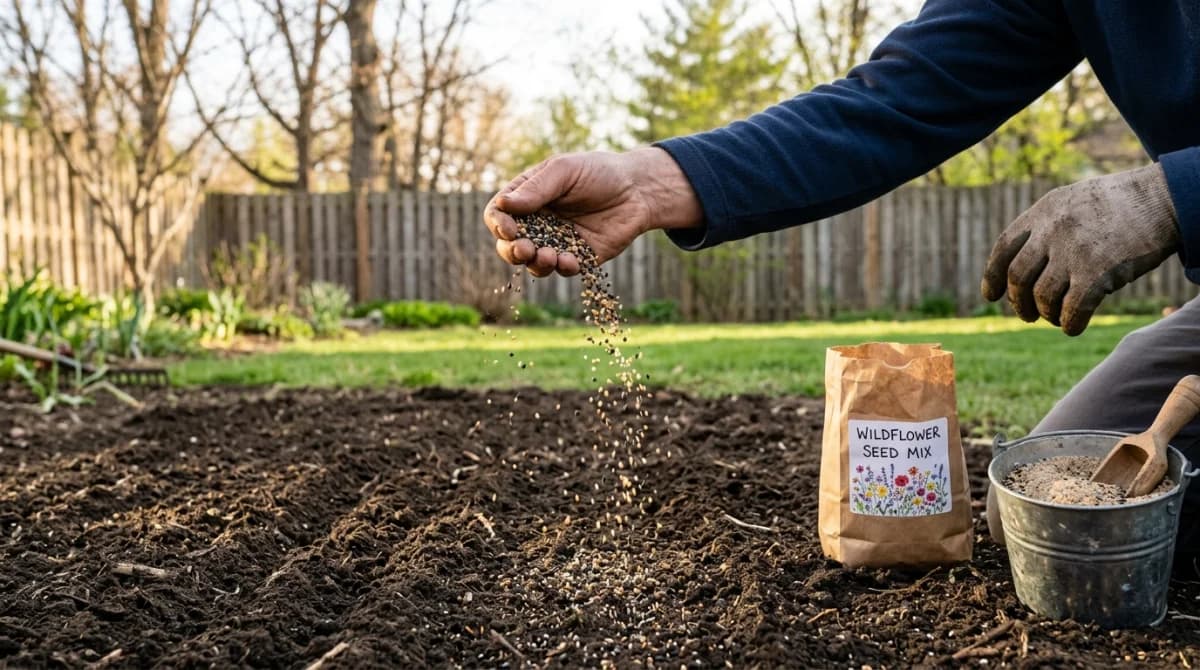
There is something deeply satisfying about replacing a patch of lawn with wildflowers. Less mowing, less watering, and by midsummer, a shifting canvas of color that changes every week from June through September. A meadow also pulls in pollinators — bees, butterflies, hoverflies — that benefit the rest of your garden.
The catch is that “just scatter some seeds” rarely works. A successful wildflower meadow needs a bit of groundwork in spring to outcompete the weeds that will otherwise smother your seedlings. The good news: the work is front-loaded. Once established, a meadow needs almost nothing from you.
Choosing the Right Seed Mix
Not all wildflower mixes are equal, and the cheapest packet at the hardware store is usually the worst investment.
Regional Native Mixes
The single most important decision is buying a mix designed for your region. Native wildflowers are adapted to your soil, your rainfall, and your climate. They establish faster, reseed more reliably, and support local pollinators that evolved alongside them. A “California wildflower mix” planted in Virginia will give you one mediocre season and then disappear.
Look for mixes from regional seed suppliers who list every species on the label. You want to see Latin names, not just “wildflower blend.” Reputable sources include Prairie Moon Nursery (Upper Midwest), Ernst Conservation Seeds (Mid-Atlantic and Northeast), Roundstone Native Seed (Southeast), and Native American Seed (Texas and Southern Plains).
Annuals vs. Perennials
Most mixes include both. Annuals — like black-eyed Susan (Rudbeckia hirta), cosmos, and California poppy (Eschscholzia californica) — germinate fast, bloom the first summer, and fill in while slower perennials get established. Perennials — like purple coneflower (Echinacea purpurea), bee balm (Monarda fistulosa), and blazing star (Liatris spicata) — take a year or two to reach full size but come back indefinitely.
A good ratio is roughly 50/50 annuals to perennials by seed count. The annuals give you color in year one. The perennials take over by year two and three, and the meadow matures into something much more interesting than its first season.
Grasses Matter
A pure wildflower meadow without grasses looks sparse and weedy by August. Native bunch grasses — like little bluestem (Schizachyrium scoparium), sideoats grama (Bouteloua curtipendula), or prairie dropseed (Sporobolus heterolepis) — fill the gaps, prevent erosion, and provide winter structure when the flowers have gone to seed. Aim for 20-30% grass seed by weight in your mix.
Preparing the Ground
This is the step that separates a meadow from a weed patch. Wildflower seeds are small, and they cannot compete with established grass or perennial weeds during germination. The soil surface must be mostly bare before you sow.
Removing Existing Vegetation
Smother method (best for small areas): Cover the area with cardboard or black plastic the previous fall. By spring, the grass underneath is dead and decomposing. Remove the covering, rake lightly, and you have a clean seedbed.
Sod removal: For immediate results, use a sod cutter or flat shovel to strip the top two inches of grass and roots. This is hard work over large areas but gives you the cleanest start.
Repeated shallow tilling: Till the top two inches in fall, let weeds germinate, then till again two weeks later. Repeat once or twice. Each pass depletes the weed seed bank near the surface. Do not till deeper than two inches — that brings up more weed seeds from below.
Avoid herbicides if you can. They work, but they also kill soil biology that your wildflowers need to establish.
Soil Conditions
Wildflowers generally prefer lean soil — not rich, amended garden soil. Fertile ground favors weeds and aggressive grasses that will crowd out wildflowers. If your soil is average to poor, that is actually ideal. Do not add compost, fertilizer, or topsoil.
If the ground is severely compacted (construction site, heavy foot traffic), loosen the top inch with a rake. You want good seed-to-soil contact, not a fluffy seedbed.
Sowing
Mid-March through mid-April is the ideal window in most of the country (zones 5-8). Seeds need cool, moist conditions and some exposure to frost and fluctuating temperatures to break dormancy — exactly what early spring provides.
How to Sow
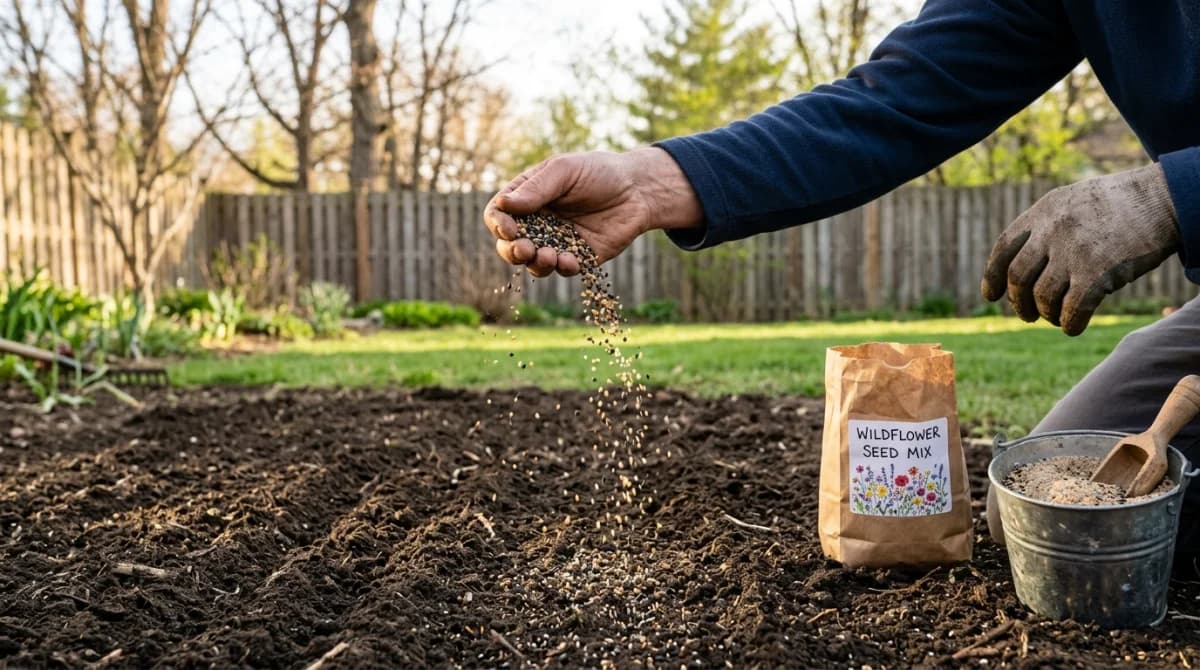
- Mix seeds with sand: Wildflower seeds are tiny and hard to distribute evenly. Mix the seed with four parts dry sand or vermiculite to one part seed. This bulks up the volume and makes even coverage much easier.
- Divide the mix in half: Sow the first half walking in one direction (north-south, say), then sow the second half walking perpendicular (east-west). This cross-hatch pattern prevents bare stripes.
- Do not bury the seeds: Most wildflower seeds need light to germinate. After sowing, press the seeds into the soil surface by walking over the area, rolling with a lawn roller, or pressing with a flat board. Contact with the soil is essential. Covering with a layer of soil is not.
- Water gently: If rain is not expected within a day or two, water with a fine spray. The goal is to settle seeds into the soil surface, not wash them into puddles.
Seeding Rates
For a dense, colorful meadow, sow about 60-80 seeds per square foot, which works out to roughly one ounce of seed per 200-300 square feet for most mixes. Check your supplier’s recommendation — it varies by species composition.
The First Season: What to Expect
Manage your expectations for year one. The annuals will bloom, and the meadow will have color, but it will also look a bit rough and unfinished. There will be some weeds. The perennials will mostly be small rosettes close to the ground, storing energy in their roots for next year.
Weed Management
Mow the meadow to about six inches tall whenever weeds reach 12 inches. This cuts the tops off fast-growing weeds before they can shade your wildflower seedlings, but it leaves the low-growing wildflower rosettes untouched. Most meadows need two or three mowings in the first summer. It feels counterintuitive to mow a wildflower planting, but it is the most effective weed control you have.
Do not pull weeds by hand in a newly seeded meadow — you will uproot wildflower seedlings along with them.
Watering
In most climates, natural rainfall is sufficient after the first few weeks. If you hit a dry spell longer than two weeks during the first growing season, one deep watering helps. After year one, a meadow should never need irrigation.
Year Two and Beyond
This is when the meadow starts to look like you imagined it. The perennials bloom for the first time. The grasses fill in. The annual species reseed themselves and pop up in new spots. The overall composition becomes denser, more varied, and more resilient.
Annual Maintenance
A wildflower meadow needs exactly one maintenance event per year: a late-winter mow. Cut everything down to four to six inches in February or early March, before new growth begins. Leave the clippings in place for a few days so any remaining seeds can drop to the soil, then rake and remove the debris.
That is the entire maintenance schedule. No fertilizing, no watering, no weeding, no edging. Compare that to the weekly mowing, fertilizing, and watering a lawn demands.
Designing the Meadow into Your Yard
A meadow does not have to replace your entire lawn. Even a 10x10 patch along a fence line or a strip between the driveway and the sidewalk makes an impact. Some of the best-looking meadow plantings are framed by a mowed edge — the contrast between the tidy lawn border and the wild, textured meadow reads as intentional rather than neglected.
Think about where the meadow is visible from: the kitchen window, the patio, the street. Position taller species (bee balm, black-eyed Susan, coneflower) toward the back and shorter ones (wild strawberry, low-growing asters) at the edges.
If you are working out where a meadow fits in your overall garden layout, Gardenly can help you visualize how a wildflower area looks alongside your existing beds, paths, and lawn before you commit to tearing anything out.
Worth the Wait
A wildflower meadow is a two-year project that pays off for decades. The first spring is about preparation and patience. The first summer is about managing expectations. But by the second June, when the coneflowers and bee balm are chest-high and the meadow is humming with pollinators, you will not miss the lawn it replaced.
Get the ground ready now, scatter the seeds, and let spring do the rest.
Sources & Further Reading
- Wildflower Meadows — Penn State Extension
- Pollinator Habitat — USDA Natural Resources Conservation Service
- Planting and Maintaining a Prairie — University of Minnesota Extension