Modern Minimalist Gardens in Australia: TCL & Sitta Inspired

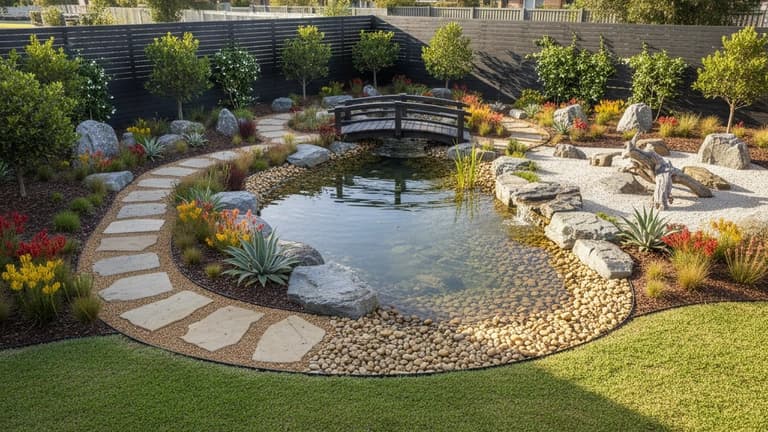
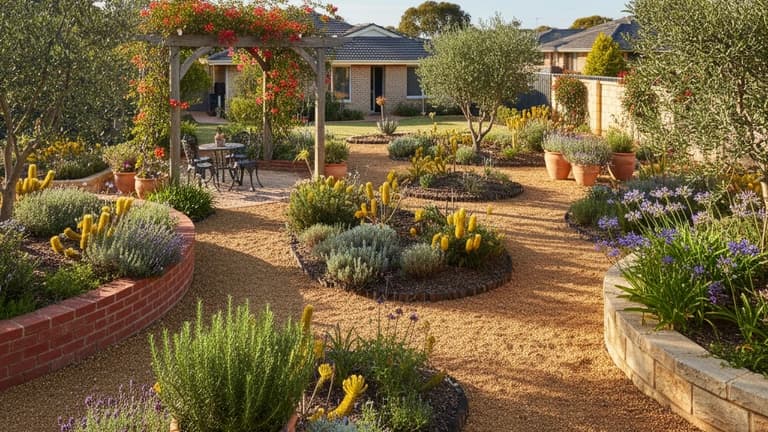
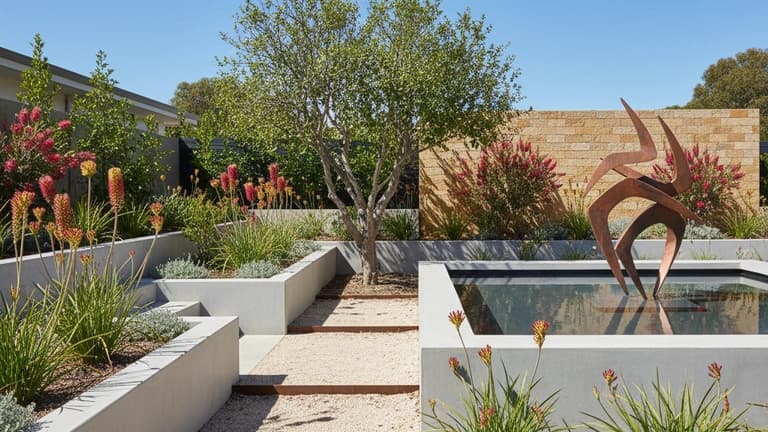
Australia has produced some of the world's most rigorous minimalist landscape architecture. Taylor Cullity Lethlean (TCL), based in Melbourne and Adelaide, has shaped public and private minimalist spaces internationally — from the Australian Garden at Cranbourne to the Adelaide Riverbank — demonstrating that the spare, material-led aesthetic is not an import but a genuinely Australian mode of practice. Vladimir Sitta, a Ukrainian-Australian practitioner at Terragram in Sydney, has built a global reputation for poetic minimalism that fuses raw industrial material — Corten steel, weathered concrete, rammed earth — with precisely chosen, climatically hard native plantings. The Australian minimalist garden is not a reduction of complexity; it is a discipline that forces every element to earn its place under intense light, in a landscape with its own authority.

Modern Minimalist in Australia

Why Choose This Style for Australia?

Intense Australian sunlight produces dramatic shadow play across minimalist hardscape surfaces for most of the day, maximising the visual return from simple geometric forms

🌱

Australia has a deep national culture of outdoor living that treats the garden as a primary inhabited room — minimalist design addresses this directly with resolved, low-maintenance outdoor spaces

💚

TCL and Vladimir Sitta have demonstrated that Australian-made materials — Sydney sandstone, SA limestone, Kimberley stone, Corten steel — are among the world's finest for contemporary minimalist garden making

Climate Adaptation for Australia

Australian minimalist gardens are most powerful as year-round propositions — the discipline of the palette means the garden cannot rely on seasonal colour to rescue weak composition. In Melbourne, spring (September–November) brings the soft flush of ornamental grasses and the first flush of Dianella berries against Corten steel. Summer (December–February) in Melbourne and Sydney is the most demanding season: UV exposure stresses under-specified concrete and composite materials, and plants must be genuinely drought-tolerant rather than merely drought-adapted. Established Lomandra and Westringia survive Melbourne's dry summers on weekly deep watering; Xanthorrhoea and Allocasuarina need nothing at all once established. Autumn (March–May) returns cooler temperatures and the grass colours shift to bronze and gold — the season when Corten steel is at its most vivid. Winter (June–August) in Melbourne reveals the permanent bone structure of the garden: geometric forms, material surfaces and evergreen architectural plants carry the design without colour support.

Key Challenges
  • Melbourne (Zone 9a) experiences hot, dry summers averaging 26 °C and four-season rainfall variability — garden structure must look resolved regardless of season
  • Sydney (Zone 10a, warm temperate) demands drought-tolerant plantings that survive extended dry periods without supplementary irrigation, as tank water and greywater reuse are increasingly the only viable irrigation sources
  • UV Index in Australian cities regularly reaches 12–14 in summer — cheap concrete fades, cheap composite timber warps, and cheap steel welds fail; material quality is a functional requirement, not an aesthetic preference
  • Bushfire Attack Level (BAL) ratings in peri-urban Melbourne, Sydney and the Adelaide Hills restrict the use of combustible mulch and dense planting within the Inner Protection Area — minimalism and fire resilience are aligned by design
  • Water restrictions in Melbourne (Melbourne Water seasonal restrictions) and Sydney (DPIE water-wise guidelines) make high-density planting schemes unsustainable long-term
Regional Advantages
  • Intense Australian sunlight produces dramatic shadow play across minimalist hardscape surfaces for most of the day, maximising the visual return from simple geometric forms
  • Australia has a deep national culture of outdoor living that treats the garden as a primary inhabited room — minimalist design addresses this directly with resolved, low-maintenance outdoor spaces
  • TCL and Vladimir Sitta have demonstrated that Australian-made materials — Sydney sandstone, SA limestone, Kimberley stone, Corten steel — are among the world's finest for contemporary minimalist garden making
  • Australian native plants with inherently architectural form — Lomandra, Dianella, Allocasuarina, Xanthorrhoea — are supremely well-suited to repetitive mass planting, the central minimalist technique
  • Melbourne and Sydney have strong construction and landscape industries with experienced contractors who regularly execute contemporary minimalist residential work

Key Design Principles

Material Honesty Over Surface Decoration

Following TCL's practice philosophy, use materials that age honestly rather than requiring maintenance to stay presentable. Corten steel develops a stable patina after 18–24 months that looks intentional and requires no treatment. Rough-sawn Corten, board-formed concrete and split-face sandstone all improve under UV exposure, bushfire smoke and rain — they record the Australian climate rather than resisting it.

Indigenous Country as Design Reference

A growing movement in contemporary Australian landscape architecture — led by practices including TCL — draws on Indigenous Country as a framework for minimalist design. Country is an Aboriginal concept describing the holistic relationship between people, land, plants, water and time. In design terms, this means reading and revealing the underlying geology, hydrology and ecology of a site rather than imposing an external order. Rammed earth walls that use the actual subsoil from the site, gravel groundcovers derived from local aggregate, and plantings drawn exclusively from local provenance natives are all expressions of Country in a minimalist vocabulary.

Geometric Restraint With Material Warmth

Vladimir Sitta's work demonstrates that minimalism need not be cold. Precisely cut Corten steel beds set against rough-sawn sandstone walls and soft Lomandra masses create a tension between industrial precision and natural warmth that is distinctly Australian. Limit the structural palette to two materials and allow their contrast to generate visual interest rather than adding further elements.

Drought-Tolerance as Non-Negotiable Constraint

In the context of climate change and ongoing water restrictions across southeastern Australia, drought-tolerance is not a design preference — it is a design constraint equivalent to structural load-bearing. Every planted element must survive on weekly deep watering in Melbourne and fortnightly deep watering in Sydney once established. This constraint, rigorously applied, naturally produces the repetitive, low-density planting that is central to minimalist aesthetics.

Negative Space as Primary Design Element

Australian minimalist gardens at their best — TCL's Adelaide Riverbank Precinct, Sitta's Mosman residential work — use unplanted mineral surface as a primary design material. Expanses of decomposed granite, honed concrete or gravel are not background; they are foreground. The ratio of planted to unplanted surface should be explicitly designed, not arrived at by default. In residential gardens, a 60:40 hardscape-to-planting ratio produces a resolved minimalist composition.

Night-Lighting as Spatial Architecture

Australian outdoor entertaining culture extends well into summer evenings. Integrate lighting at the design stage — not as an afterthought. Recessed LED ground lights in concrete surfaces create horizontal drama; uplights directed at architectural specimens (Xanthorrhoea grass trees, single Allocasuarina specimens) produce vertical punctuation. TCL's Federation Square and Australian Garden both deploy lighting as a spatial tool that transforms the scale and mood of the space after dark.

Recommended Plants for Australia

These plants are specifically selected to thrive in your region's climate and complement this garden style perfectly.

Lomandra
Lomandra

Lomandra longifolia

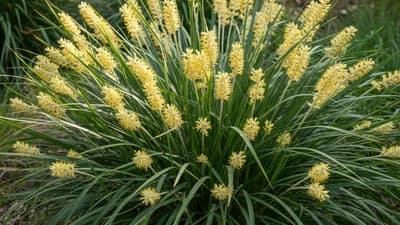
Australia's premier minimalist mass-planting groundcover. Extremely tolerant of Melbourne and Sydney summers once established — survives without irrigation on rainfall alone after 18 months. The cultivar 'Tanika' produces a finer texture suitable for contemporary work; 'Breeze' is more compact. Mass plant at 500 mm centres for a resolved geometric field.

Sun: Full sun to part shade

Water: Very low — no supplementary irrigation needed once established

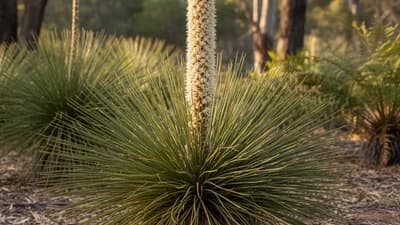
Grass Tree
Grass Tree

Xanthorrhoea australis

The most powerful architectural specimen in the Australian minimalist garden. A mature Xanthorrhoea (30–40 years old) with a 1.5 m black trunk is irreplaceable — no other plant produces this scale of primitive sculptural authority. Used by TCL and Sitta as anchor specimens in public and private minimalist work. Source only from licensed nurseries to ensure legal provenance.

Sun: Full sun

Water: Very low — fire and drought adapted, no summer irrigation needed

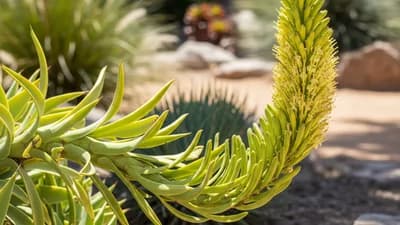
Agave
Agave

Agave attenuata

The spineless agave is widely used in Sydney and Melbourne minimalist gardens for its clean, architectural rosette and tolerance of neglect. Unlike spined species, Agave attenuata is safe around children and pets. Produces a dramatic flowering spike (3–4 m) before dying; remove and replace with offsets. Grows well in Sydney and coastal Melbourne; may need frost protection in cold Melbourne winters.

Sun: Full sun to light shade

Water: Very low — drought tolerant once established

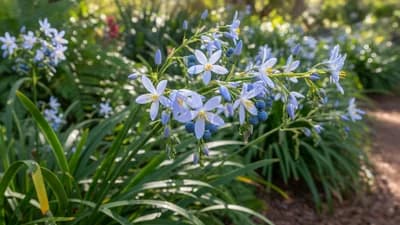
Dianella
Dianella

Dianella caerulea

Australian flax lily with strappy blue-green foliage and iridescent blue berries. Performs well under large deciduous trees and in shaded Corten steel planter beds in Melbourne and Sydney. The cultivar 'Little Rev' is compact and suited to geometric border planting. An excellent underplanting for Allocasuarina or feature Eucalyptus specimens.

Sun: Full sun to shade

Water: Low — drought tolerant once established

Blooms: Spring–summer

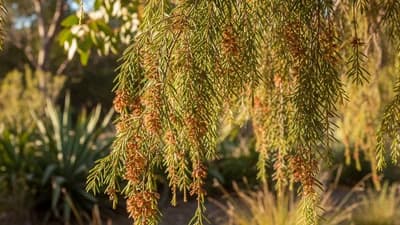
She-oak
She-oak

Allocasuarina verticillata

A native coastal she-oak with fine, weeping grey-green foliage and a distinctly melancholy silhouette that reads as architectural in minimalist compositions. Tolerates coastal exposure, salt spray and severe drought. At 6–8 m, it provides filtered shade over a concrete terrace. Rare in residential gardens but used by Australian landscape architects as a signature native tree.

Sun: Full sun

Water: Very low — fully drought tolerant once established

Westringia
Westringia

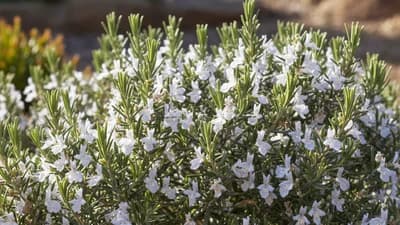
Westringia fruticosa

Australia's most architecturally reliable clipping subject for geometric hedges. Holds a crisp line under monthly trimming, tolerates coastal exposure and full drought, and produces small white flowers year-round. The cultivar 'Smokey' has grey-white foliage that reads silver in strong Australian light — a compelling contrast against Corten steel edging.

Sun: Full sun to part shade

Water: Very low — no irrigation needed once established

Blooms: Year-round

Blue Fescue
Blue Fescue

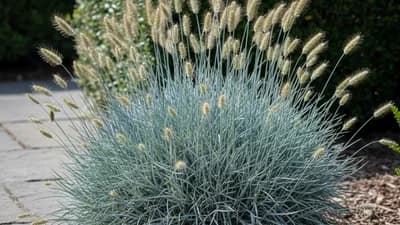
Festuca glauca

Compact blue-silver ornamental grass ideal for repetitive edge planting in Melbourne and Sydney minimalist gardens. The silver-blue colour creates strong contrast against ochre decomposed granite or dark basalt aggregate. Plant in geometric rows at 300 mm spacing. Divide every three years in autumn to maintain density and colour intensity.

Sun: Full sun

Water: Very low — highly drought tolerant once established

Blooms: Late spring

Kangaroo Grass
Kangaroo Grass

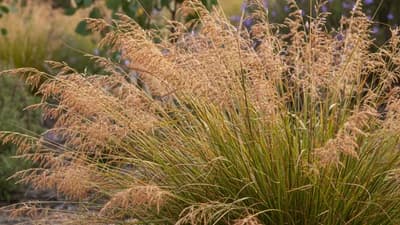
Themeda triandra

Australia's quintessential native tussock grass, used in ecological restorations and contemporary landscape design alike. In minimalist gardens, it provides seasonal colour — green in winter and spring, tawny gold from January — that conventional design grasses cannot replicate. TCL used Themeda in mass plantings at the Australian Garden, Cranbourne. Sourced from local provenance seed for best performance.

Sun: Full sun to light shade

Water: Very low — fully drought tolerant once established

Blooms: Spring–summer

Ready to Bring This Style to Life?

Upload a photo of your yard and get AI-powered modern minimalist designs with plants perfectly suited to Australia's climate.

Start Designing Now

Essential Design Features

Surfaces and Paving
  • Board-formed concrete with visible formwork texture for large terrace areas (Melbourne and Sydney)
  • Honed Sydney sandstone in large-format (600 × 900 mm) rectangular pavers
  • Local basalt (bluestone) in sawn finish for Melbourne inner-city gardens
  • Kimberley stone or WA limestone for Perth and SA residential work
  • Decomposed granite compacted to 75 mm depth as primary ground surface in planted zones
  • Corten steel strip edging (5 mm × 150 mm) to define transitions between surfaces
Water Features
  • Rectangular reflecting pool flush with surrounding paving, dark aggregate base for mirror effect
  • Blade water feature in Corten steel or honed concrete on a boundary wall
  • Narrow linear rill directing roof runoff through the garden to a concealed tank
  • Geometric plunge pool with concrete coping flush to the deck surface
  • Minimalist spout-and-basin feature in locally quarried stone
Structures and Furniture
  • Rammed earth boundary walls using local subsoil — site-specific material that connects the garden to its geology
  • Corten steel raised planting beds (400 mm height) as primary structural planting elements
  • Powder-coated aluminium pergola in matte charcoal, concealed fixings, no decorative elements
  • Board-formed concrete bench seats built into retaining walls to eliminate freestanding furniture
  • Slatted hardwood (spotted gum or Blackbutt) privacy screens for urban sites
  • Floating stone or concrete steps with open risers to reduce visual mass
Outdoor Lighting
  • Recessed 316 stainless-steel ground lights set flush into concrete or sandstone paving
  • Low-voltage LED uplights buried at the base of Xanthorrhoea and Allocasuarina specimens
  • LED strip lighting concealed under concrete bench overhangs and step nosings
  • Adjustable spike spotlights for feature planting, concealed by decomposed granite
  • Minimal wall-mounted light boxes in powder-coated aluminium for boundary walls

Seasonal Maintenance Guide

Spring (September–November)
  • Cut ornamental grasses (Lomandra, Festuca, Themeda) back to 100–150 mm in September before new growth emerges — do not cut lower or you risk killing the crown
  • Trim Westringia hedges to defined geometric form after the spring flowering flush (October); use a string line to maintain sharp horizontal and vertical faces
  • Inspect and recommission drip irrigation systems before Melbourne and Sydney summer dry periods — flush filters, check emitters and test controller scheduling
  • Top up decomposed granite in planting zones where winter rain has migrated material from beds to paths
  • Apply a single application of slow-release native fertiliser (Osmocote for Native Plants or equivalent) to Lomandra and Dianella beds — avoid any product with > 1.5 % phosphorus near Proteaceae
  • Clean Corten steel planter beds: brush off any black sooty deposits and check that drainage holes are clear before the summer dry season
Summer (December–February)
  • Water established plantings deeply once per week in Melbourne (before 10 am or after 8 pm under Stage 1 restrictions) and fortnightly in Sydney for drought-tolerant species
  • New plantings in their first summer require twice-weekly watering — install a temporary drip ring around each specimen and remove after first autumn
  • Remove dead Lomandra leaves from the crown by hand in January to prevent the brown accumulation that compromises the architectural line of the planting
  • Clean concrete and stone surfaces with a stiff brush and water only — do not use pressure washers on board-formed concrete as the texture is the finish
  • Check UV-exposed composite timber decking for surface chalking; apply a UV-protective oil treatment in January if the surface reads grey rather than its specified colour
  • Verify Corten steel planters are draining freely — standing water inside a Corten bed causes accelerated corrosion at the base weld
Autumn (March–May)
  • Reduce irrigation frequency from weekly to fortnightly in late March as Melbourne and Sydney temperatures drop below 20 °C overnight
  • Plant new specimens April–May — the optimal window for establishment: soil still warm from summer, rainfall increasing, minimal transplant stress
  • Apply a 25 mm top-dressing of compost to Lomandra and Dianella beds in April to replenish soil organic matter before winter rain leaches nutrients
  • Trim back any grasses or perennials that have spread beyond their designed footprint; the geometric discipline of the design depends on maintaining precise planting edges
  • Service exterior timber structures (spotted gum screens, hardwood decking) with a penetrating oil treatment before winter rain season begins
  • Review the design critically at dusk in April when the low angle of light reveals any surface irregularities or material aging issues that summer glare conceals
Winter (June–August)
  • Switch off or heavily reduce irrigation from June in Melbourne (average 48 mm June rainfall) and from July in Sydney; overwatering during winter dormancy promotes root disease in Lomandra and Agave
  • Prune deciduous feature trees (ornamental pear, Japanese maple used as accent specimens) while fully dormant in July — remove crossing branches and maintain the clean silhouette that minimalist design requires
  • Protect frost-sensitive species (Agave attenuata, Dianella in cold Melbourne suburbs) with a single layer of frost cloth on nights forecast below 2 °C
  • Clean reflecting pools and water features: remove leaf debris monthly, check pump operation and water chemistry, and inspect pool coping joints for mortar loss after frost cycles
  • Plan any structural additions for spring construction — order custom Corten steel components (planters, edging, screens) now as fabrication lead times are typically eight to twelve weeks
  • Photograph the winter garden to assess the permanent bone structure: if the composition is not resolved without foliage colour, revise the hardscape plan before spring
Investment Guide

Estimated costs for creating your modern minimalist in Australia

Small Garden
  • Plants
    AUD $700 – $1,400
    Lomandra or Dianella mass planting, 1–2 Xanthorrhoea specimens and Westringia hedging for 20–40 m²
  • Hardscaping
    AUD $2,000 – $4,000
    Board-formed concrete or sandstone pavers, decomposed granite and Corten steel strip edging (Melbourne labour AUD $70–95/hr)
  • Corten Planters
    AUD $600 – $1,200
    Two custom-fabricated Corten raised beds, 2 mm steel, unfinished to patina naturally
  • Drip Irrigation
    AUD $500 – $900
    Two-zone drip system with smart controller and rain sensor
  • Total
    AUD $3,800 – $7,500
    Resolved compact minimalist garden; materials-led, low ongoing maintenance
Medium Garden
  • Plants
    AUD $2,000 – $4,500
    Mature Xanthorrhoea feature specimens, mass Lomandra, Allocasuarina screen tree and perimeter Westringia hedge for 50–80 m²
  • Hardscaping
    AUD $6,000 – $12,000
    Large-format sandstone or concrete paving, rammed earth boundary feature, Corten edging (Melbourne AUD $70–95/hr, Sydney AUD $75–100/hr)
  • Water Feature
    AUD $2,000 – $4,500
    Rectangular reflecting pool flush with paving or Corten blade wall feature
  • Structures
    AUD $4,000 – $8,000
    Powder-coated aluminium pergola, concrete built-in bench seating, slatted hardwood privacy screen
  • Lighting
    AUD $1,500 – $3,000
    Recessed LED ground lights, specimen uplights and concealed step lighting
  • Total
    AUD $15,500 – $32,000
    Complete resolved minimalist garden with water feature and outdoor living zone
Large Garden
  • Plants
    AUD $5,000 – $12,000
    Multiple mature Xanthorrhoea specimens, Allocasuarina grove planting, extensive Lomandra and Dianella masses for 100+ m²
  • Hardscaping
    AUD $15,000 – $30,000
    Premium Sydney sandstone or basalt paving, board-formed concrete walls, rammed earth feature walls at multiple levels (Sydney AUD $75–100/hr)
  • Water Features
    AUD $6,000 – $12,000
    Geometric plunge pool with flush sandstone coping or multiple integrated water elements
  • Structures
    AUD $8,000 – $18,000
    Designer steel-and-timber pergola, minimalist outdoor kitchen in concrete, floating stone staircase
  • Lighting
    AUD $3,500 – $7,000
    Professional architectural lighting scheme with recessed, uplighting and concealed LED elements
  • Total
    AUD $37,500 – $79,000
    Large-scale minimalist garden requiring a professional landscape architect; allow AUD $5,000–15,000 for design fees (TCL, Terragram and similar practices)

Frequently Asked Questions

Transform Your Yard Today

Get personalized modern minimalist designs created by AI, featuring plants that thrive in Australia. Upload your yard photo and see your dream garden come to life in minutes.

Start Your Design