





Canadian Cottage Garden Design | Explorer Roses to Butchart Gardens

Canada has both the world's most famous cottage-influenced garden and the world's coldest productive rose program. Butchart Gardens in Victoria, BC — carved from an exhausted limestone quarry beginning in 1904 — demonstrates what cottage garden abundance looks like at its fullest expression in a Zone 8b Pacific climate. At the opposite extreme, Agriculture Canada's Explorer Rose breeding program, developed from the 1960s onward by researchers in Ottawa and Morden, Manitoba, produced cold-hardy shrub roses (Zone 3–4) that bloom from June to frost — a uniquely Canadian contribution to rose breeding that every prairie cottage gardener should know. Between these two poles lies the full diversity of Canadian cottage gardening: luxurious heritage plantings in Victoria and the Cowichan Valley, zone-5 perennial borders in southern Ontario, and hard-edged prairie cottage gardens where daylilies, Siberian iris, and hardy geraniums replace the delphiniums and foxgloves of the British original.

Cottage Garden in Canada

Why Choose This Style for Canada?

Cool, moist summers in BC and the Maritimes extend the flowering period of perennials such as delphinium, foxglove, and heritage roses beyond anything achievable in southern England in hot years

🌱

Canada's genuine four-season climate delivers the full seasonal arc of a cottage garden: spring bulbs, summer abundance, autumn aster and sedum, and elegant winter seedhead structure

💚

The Explorer Rose series (Zone 3–4), developed by Agriculture Canada, gives prairie gardeners access to repeat-flowering shrub roses that survive without winter protection — a plant group unavailable to British cottage gardeners

Climate Adaptation for Canada

Canadian cottage gardens must be designed for maximum impact during a compressed summer peak while maintaining interest across all four seasons. In coastal BC, the season opens in February with hellebores and early bulbs, runs through autumn salvias, and ends in December — almost indistinguishable from a British cottage garden year. In Ontario and Quebec (Zone 5–6), plant reliably from mid-May to mid-October: focus peak flowering on July–August when the garden is most used. In prairie provinces (Zone 2b–4a), the effective bloom window is June through September; every plant must deliver in that window or earn its space for foliage, structure, or seedhead interest. The Upper Canada Village in Morrisburg, Ontario, preserves a 19th-century cottage garden tradition transplanted from Britain — its early Victorian-style kitchen and ornamental cottage plots demonstrate how heritage Canadian gardeners adapted English plants to Zone 5 conditions over two centuries. Reference this history when planning an historically authentic Canadian cottage garden.

Key Challenges
  • Climate extremes force completely different plant selections: what succeeds at Butchart Gardens (Zone 8b) will die in Saskatoon (Zone 3a) — there is no single Canadian cottage garden plant list
  • The British cottage garden ideal relies on cool, moist summers and mild winters; the Prairies deliver the opposite — hot, dry summers with -35°C winters — requiring a fundamentally different interpretation
  • Short prairie growing seasons (100–120 frost-free days) compress the bloom succession that English cottage gardens spread over eight months
  • Late spring frosts in Ontario and Quebec regularly damage early perennial growth and emerging rose canes well into May
  • Continental summer heat in southern Ontario and Quebec can cause premature dormancy in cool-season cottage garden classics like delphinium and aquilegia
Regional Advantages
  • Cool, moist summers in BC and the Maritimes extend the flowering period of perennials such as delphinium, foxglove, and heritage roses beyond anything achievable in southern England in hot years
  • Canada's genuine four-season climate delivers the full seasonal arc of a cottage garden: spring bulbs, summer abundance, autumn aster and sedum, and elegant winter seedhead structure
  • The Explorer Rose series (Zone 3–4), developed by Agriculture Canada, gives prairie gardeners access to repeat-flowering shrub roses that survive without winter protection — a plant group unavailable to British cottage gardeners
  • Long summer daylight hours in all Canadian provinces drive vigorous perennial growth and intensify flower colour, particularly in high-latitude gardens
  • Canada's rich seed catalogue tradition (Stokes Seeds, T&T Seeds, Veseys) provides excellent heritage and cottage garden seed selections bred for northern growing conditions

Key Design Principles

Explorer Roses as the Prairie Backbone

Agriculture Canada's Explorer and Parkland rose series are a genuinely Canadian contribution to horticulture — bred specifically for Zone 3–4 survival without winter protection. 'William Baffin' (climber, Zone 3), 'John Cabot' (climber, Zone 3), 'Morden Blush' (shrub, Zone 3), and 'Champlain' (shrub, Zone 4) deliver classic cottage garden rose form with repeat bloom from June to frost. In prairie and continental climates, build the cottage garden framework around these varieties before any other choice.

Zone-Appropriate Abundance

The defining character of a cottage garden is densely packed, overlapping abundance. Achieving this in Zone 3–4 means selecting a different cast of plants than Zone 8b, not abandoning the principle. Pack prairie borders with daylilies, Siberian iris, hardy geraniums, achillea, and wild bergamot as tightly as a British garden packs with foxglove and delphinium. The crowded, generous effect is the goal; the specific species adapt to your zone.

Succession Planting Within a Short Window

Where the growing season is compressed (prairie provinces, northern Ontario), succession planting is not a refinement — it is a necessity. Plant early spring bulbs (Narcissus, Allium, Muscari) for April–May interest, mid-season perennials for the June–July peak, and a strong autumn layer of asters, sedum, and ornamental grasses to extend the season to October. In Zone 5–8, overlap these layers generously so there is never a gap in flower colour.

Heritage and Canadian-Bred Varieties First

Prioritise plants bred for Canadian conditions or with a long Canadian performance record. Alongside Explorer roses, consider: Morden series daylilies (bred in Manitoba), AA-grade BC nursery delphiniums bred by West Coast breeders for Pacific conditions, Quebec-selected columbine strains, and prairie-tested achillea. These plants have been selected against Canadian winters, not just catalogued from British or Dutch sources and shipped north.

Productive Integration

The English cottage garden tradition blended ornamental and productive planting — a tradition equally at home in Canada. Include cold-hardy herbs (chives, thyme, lovage, French tarragon) that double as garden plants and kitchen ingredients. Plant sour cherries ('Carmine Jewel', bred in Saskatchewan, Zone 3) or hardy crabapples at the back of a border. Asparagus makes an excellent feathery backdrop for June borders. This productive layer connects Canadian cottage gardening to its practical roots.

Structure for Winter and the Neighbours

Canadian cottage gardens are viewed under snow for four to six months. Leave ornamental seedheads (echinacea, rudbeckia, sedum) standing through winter — they feed birds and create frost-outlined structure visible from inside the house. Use a cedar picket fence, split-rail fence, or simple arbor to give the garden a defined boundary that reads as intentional design even when the beds are bare. Neighbours will accept an informal cottage garden more readily when they can see a structural framework beneath it.

Recommended Plants for Canada

These plants are specifically selected to thrive in your region's climate and complement this garden style perfectly.

Explorer Rose (Agriculture Canada series)

Rosa (Explorer series)

Canadian-bred shrub and climbing roses developed by Agriculture Canada specifically for Zone 3–4 hardiness. 'William Baffin', 'John Cabot', 'Champlain', and 'Martin Frobisher' deliver cottage garden rose form and scent with repeat bloom from June to October without the winter protection required by European varieties. The definitive rose choice for any Canadian cottage garden outside coastal BC.

Sun: Full sun — minimum 6 hours daily

Water: Moderate; deep weekly watering during dry spells is better than frequent shallow watering

Blooms: June through October with strong repeat flushes

Delphinium
Delphinium

Delphinium elatum

The quintessential cottage garden vertical accent. Performs better in Canadian cool summers (especially BC and the Maritimes) than in England's recent hot years. The Pacific Hybrid series bred by West Coast nurseries for BC conditions produces towering 1.8m spikes in blue, white, and pink. In Ontario and prairie provinces, the Belladonna group is shorter and more wind-resistant.

Sun: Full sun with afternoon shade welcome in Zones 7–8

Water: Moderate to high; appreciates consistent moisture at the root zone

Blooms: June–July; reblooms August–September if cut back after first flush

Siberian Iris
Siberian Iris

Iris sibirica

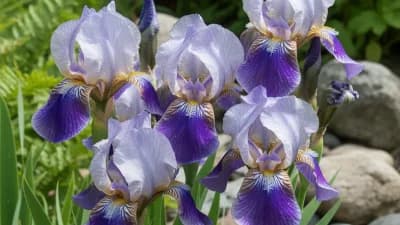
Hardy to Zone 2 and among the most reliable cottage garden plants across all Canadian regions. Elegant blue-purple flowers in late May–June, followed by upright seed pods that remain attractive through winter. 'Caesar's Brother' (deep blue), 'White Swirl', and 'Butter and Sugar' are classic cottage garden cultivars available from Canadian nurseries.

Sun: Full sun to part shade

Water: Moderate; tolerates wet margins as well as normal border conditions

Blooms: Late May through June; seed pods persist through autumn

Hardy Geranium
Hardy Geranium

Geranium pratense

The workhorse cottage garden perennial for Canadian borders — hardy to Zone 3, long-blooming, and self-supporting. Geranium pratense 'Johnson's Blue' delivers the clear blue tone that British cottage gardens achieve with delphiniums, at a fraction of the maintenance. Spreads to fill gaps between shrubs without becoming invasive. Completely reliable from BC to Newfoundland.

Sun: Full sun to part shade

Water: Low to moderate; drought-tolerant once established

Blooms: May through August; shear back after first flush for rebloom

Daylily
Daylily

Hemerocallis cultivars

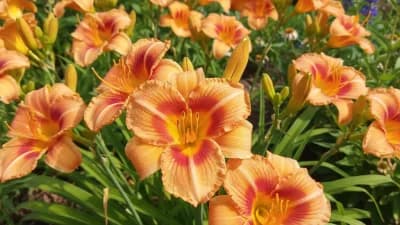
Virtually indestructible in all Canadian zones (Zone 2–8) and available in hundreds of cottage-appropriate colours. Morden Nursery in Manitoba bred several Canadian-developed cultivars for prairie conditions. For classic cottage garden effect, choose single-flowered varieties in soft yellow, peach, or pink rather than the overwrought modern doubles. 'Stella de Oro' reblooms reliably; 'Happy Returns' is the best continuous-blooming yellow.

Sun: Full sun to part shade (shade reduces bloom count)

Water: Low to moderate; very adaptable

Blooms: June through August with repeat varieties continuing into September

Purple Coneflower
Purple Coneflower

Echinacea purpurea

Native to the eastern prairies and reliable from Zone 3 to Zone 8 — its pink-purple flowers are a cottage garden classic from July through September. Seed heads standing through winter feed goldfinches and chickadees. Do not deadhead in autumn. 'Magnus' (large, flat-petalled) and 'White Swan' are the most cottage-garden-appropriate cultivars.

Sun: Full sun

Water: Low; very drought-tolerant once established

Blooms: July through September; seed heads persist through winter

Foxglove
Foxglove

Digitalis purpurea

The iconic cottage garden biennial thrives in BC and the Maritimes with reliable self-seeding in mild, moist conditions — the Pacific Northwest climate is close to its native Welsh and Irish hillside habitat. In Ontario and Quebec (Zone 5–6), treat as a biennial started fresh each year. On the prairies, grow as an annual from early-started seed indoors. 'Camelot' series has the strongest stems for the wind-exposed conditions common across most of Canada.

Sun: Part shade to full sun; prefers afternoon shade in hot continental summers

Water: Moderate to high; does not tolerate drought

Blooms: June–July in the biennial second year

Meadow Sage
Meadow Sage

Salvia nemorosa

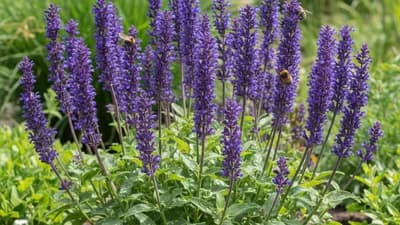
One of the most reliable cottage garden perennials for the prairie provinces (Zone 3–4). Dense spikes of violet-blue in June–July followed by a strong rebloom if sheared. 'Caradonna' has exceptional upright form and dark stems that read as architectural even when not in flower. Completely drought-tolerant in prairie summers.

Sun: Full sun

Water: Low; very drought-tolerant once established — ideal for prairie cottage gardens

Blooms: June–July; reblooms August–September if sheared after first flush

Hollyhock
Hollyhock

Alcea rosea

The ultimate heritage cottage garden plant, documented in Canadian gardens since the 19th century. Short-lived perennial (biennial in cold zones) that self-seeds freely in established cottage gardens. A planted-against-a-fence hollyhock is the defining image of the Canadian cottage garden tradition from Ontario to BC. Hardy to Zone 3 when roots are mulched in autumn.

Sun: Full sun

Water: Moderate; tolerates dry summers once established

Blooms: July–August in the first or second year depending on start time

Ready to Bring This Style to Life?

Upload a photo of your yard and get AI-powered cottage garden designs with plants perfectly suited to Canada's climate.

Start Designing Now

Essential Design Features

Hard Landscaping
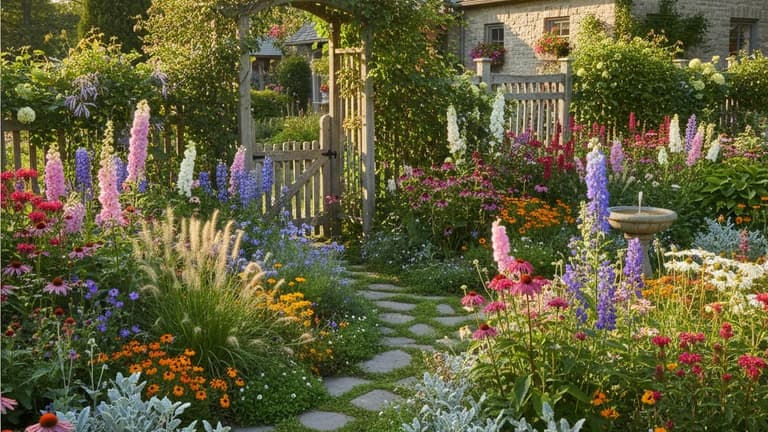
  • Cedar picket fence — the single most evocative cottage garden boundary in the Canadian tradition, stained or left to silver naturally
  • Split-rail cedar fence as a rural Canadian alternative with a heritage character authentic to Upper Canada Village-era gardens
  • Frost-resistant natural flagstone or concrete-aggregate stepping stone paths set on compacted gravel below frost depth (minimum 600mm in Zone 5)
  • Raised beds of naturally rot-resistant cedar or Douglas fir improve drainage for roses, extend the season by 2–3 weeks in warm years, and are critical in heavy clay soils
  • Gravel paths with a compacted granular base that drains freely through freeze-thaw cycles without heaving
  • Poured concrete or clay brick edging between path and planting beds — a clean edge makes informal planting read as designed rather than neglected
Structures
  • Cedar arbour over a gate planted with 'William Baffin' Explorer climbing rose — the single most Canadian cottage garden image possible
  • Cold frame or hoop house for starting annuals, extending the season by 3–4 weeks in Zone 5–6, and protecting Zone 7 plants through borderline winters
  • Insulated garden shed with south-facing window for overwintering tender perennials and storing tools through -30°C winters
  • Compost bins with front-access panels that function even when frozen — critical for maintaining soil health in a dense cottage border
  • Trellis panels attached to south-facing house or garage walls for espaliered fruit, climbing roses, or clematis — south walls create Zone +1 microclimates
  • Pergola with open-weave cedar or painted timber rafters supporting hardy grape 'Valiant' (Zone 3) or 'Bluebell' clematis
Plant Palette by Region
  • BC Coast (Zone 7b–8b): Full British palette — David Austin roses, delphiniums, foxgloves, heritage roses, hollyhocks, digitalis, nepeta; reference Butchart Gardens for scale and density
  • Ontario/Quebec (Zone 5b–6a): Explorer and Parkland roses, delphinium 'Belladonna', Siberian iris, hardy geraniums, daylilies, phlox, monarda, astilbe in part-shade sections
  • Prairies (Zone 2b–4a): Explorer roses as backbone, Siberian iris, daylilies, achillea, hardy geraniums, meadow sage, echinacea, ornamental grasses, and native wildflowers as cottage understory
  • All regions: spring bulbs (Narcissus, Allium, Muscari), self-seeding annuals (Nigella, Calendula, Cosmos) to fill gaps through the season
  • Avoid in Zone 3–4: Rosa (standard hybrid tea and David Austin without winter protection), Delphinium elatum Pacific Hybrids, tender fuchsia as permanent planting
  • Canadian-bred varieties to prioritise: Explorer/Parkland roses, Morden daylilies (Manitoba), 'Verity' and 'Polaris' clematis (Canadian selections)
Ecological Integration
  • Heated birdbath (or glycol-resistant heated element in existing stone basin) for year-round wildlife support through Canadian winters
  • Native bee nesting blocks installed by April — 70% of Canadian native bee species are solitary ground or cavity nesters that serve cottage gardens as primary pollinators
  • Dedicated herb section with chives, lovage, French tarragon, thyme, and mint (contained) blended into the cottage border in cottage tradition
  • Leaving echinacea, rudbeckia, and sedum seedheads standing through winter for goldfinch feeding — particularly important in Zone 3–4 where bird feeding stations are a Canadian winter tradition
  • Rain barrel collection from downspouts for summer irrigation of containers and new plantings, drained and stored before freeze-up

Seasonal Maintenance Guide

Spring (mid-April in BC; mid-May in Ontario/Quebec; late May on Prairies)
  • Remove winter mulch gradually over two weeks as overnight lows rise above -5°C — removing too early in March exposes crowns to late frost; waiting until May in Zone 5 means missing optimal division windows
  • Prune Explorer and Parkland roses when forsythia blooms or buds swell visibly on the canes — in Zone 3–4 this is typically mid-May, cutting back to live wood only (green cambium visible when scratched)
  • Divide daylilies, hostas, and Siberian iris clumps when new growth is 50–100mm tall — this is the optimal division window before root competition intensifies
  • Start tender annuals (Cosmos, Lathyrus, Nicotiana) indoors 6–8 weeks before your last frost date — late April for Zone 7–8, late April for Zone 6 (last frost early June), May 1 for Zone 3–4
  • Apply 50–75mm of aged compost to all planting beds before plants fully emerge — this single step does more for cottage garden performance than any other practice
  • Plant bare-root roses and perennials from mail-order catalogues as soon as soil can be worked — bare-root stock establishes better than potted if planted early
Summer (June–August)
  • Deadhead roses and most perennials every 7–10 days to extend bloom — Explorer roses in particular rebloom strongly if spent trusses are removed before hips form
  • Water newly planted specimens deeply twice weekly in dry spells (less than 25mm rain/week); established cottage garden plantings rarely need supplemental irrigation in most Canadian provinces
  • Stake delphiniums and hollyhocks before they flower — in Canada's wind-prone climate (especially prairies and coasts), staking is not optional for tall cottage garden perennials
  • Cut back first-flush perennials (hardy geraniums, meadow sage, catmint) to half their height immediately after flowering to trigger rebloom in 4–6 weeks
  • Succession-plant Cosmos and Calendula direct from seed in early June to fill gaps left by spring bulbs — both germinate quickly in warm Canadian June soil
  • Monitor for black spot on roses every two weeks from July — remove affected leaves immediately and avoid overhead watering on roses; Explorer roses are relatively disease-resistant but not immune in humid eastern summers
Autumn (September–October)
  • Plant spring-flowering bulbs before ground hardens — in Zone 6 this means October; in Zone 3–4 aim for September before soil temperature drops below 10°C, as bulbs need 4–6 weeks to root before freeze
  • Leave echinacea, rudbeckia, and Siberian iris seed pods standing — do not cut back in autumn; these structures feed birds through winter and provide frost-outlined beauty from indoors
  • Apply 100–150mm of shredded leaf or coarse bark mulch to rose bases after the first hard frost (below -5°C for two consecutive nights) — hilling soil around rose crowns is not necessary for Explorer roses but is advisable for any Zone 5-borderline European varieties
  • Pot up half-hardy herbs (rosemary, lemon verbena, tender salvias) for indoor overwintering before first frost — place in the sunniest south window available
  • Divide and transplant perennials in early September in Zone 5–6 (before October cold limits root establishment); in Zone 3–4 prioritise spring division to give roots a full season before first winter
  • Plant garlic cloves in October for harvest the following July — an authentic cottage garden edible tradition and a very productive use of beds cleared of summer annuals
Winter (November–March)
  • Monitor snow cover on marginally hardy plants (Zone 5 plants in Zone 4 gardens) — 300mm of snow cover provides roughly 3–4°C of insulation and can mean the difference between survival and loss
  • Brush heavy wet snow (more than 200mm) from cedar arbours and pergolas before it refreezes into ice — a single ice storm can destroy structures that have stood for decades
  • Maintain bird feeders through winter — this is a Canadian cottage garden tradition that is also ecologically important, as many cottage garden pollinators overwinter as adults in leaf litter that your unseeded perennials protect
  • Order seeds and plants from catalogues in January — Stokes Seeds, T&T Seeds, Veseys, and William Dam Seeds all carry cottage garden heritage varieties bred for Canadian conditions, and popular varieties sell out by February
  • Plan next season's changes on paper — note which plants underperformed and which thrived; the cottage garden is always evolving toward a more regionally appropriate plant palette
  • Read the Butchart Gardens annual design notes (available on their website) for inspiration and plant ideas applicable to BC and mild Ontario gardens

Investment Guide

Estimated costs for creating your cottage garden in Canada

Small Garden
  • Plants
    CAD $400 – $1,000
    Explorer/Parkland roses (3–4), hardy perennials, spring bulbs, annuals for 20–35m² — Prairie and Maritime provinces at lower end; BC lower mainland at higher end
  • Hard Landscaping
    CAD $350 – $850
    Cedar picket or split-rail fence section, flagstone stepping stone path, raised bed lumber
  • Structures
    CAD $300 – $700
    Simple cedar arbour, two raised beds, basic plant supports and peony rings
  • Soil and Mulch
    CAD $200 – $450
    Aged compost, quality bark mulch, soil amendment for beds (more needed in heavy prairie clay)
  • Total
    CAD $1,250 – $3,000
    Charming small Canadian cottage garden; materials and plants only, DIY labour
Medium Garden
  • Plants
    CAD $1,400 – $3,200
    Comprehensive cottage planting for 50–80m² including 6–8 roses, established perennials, spring bulb underplanting, climbing plants
  • Hard Landscaping
    CAD $1,800 – $4,000
    Flagstone or aggregate paths, cedar edging, raised beds, frost-resistant materials throughout
  • Structures
    CAD $1,200 – $3,000
    Cedar arbour with gate, garden shed, cold frame — Ontario and Quebec at mid-range, BC higher
  • Water Feature
    CAD $600 – $1,500
    Wildlife pond with seasonal de-icer, or recirculating stone water feature with winterizable pump
  • Soil and Mulch
    CAD $500 – $1,100
    Comprehensive soil improvement, initial and first-year mulch supply
  • Total
    CAD $5,500 – $12,800
    Established Canadian cottage garden with primary structure in place
Large Garden
  • Plants
    CAD $4,000 – $9,000
    Mature specimen shrubs, 12–15 roses, extensive perennial borders, established climbers for 100–200m²
  • Hard Landscaping
    CAD $6,000 – $13,000
    Premium flagstone or natural stone paving, extensive paths, raised vegetable beds, cedar fencing
  • Structures
    CAD $4,000 – $8,500
    Custom cedar pergola, insulated garden shed, cold frames, professional arbour
  • Water Features
    CAD $2,500 – $5,500
    Naturalistic wildlife pond with filtration, stone surround, and winter heating element
  • Soil and Mulch
    CAD $1,200 – $2,500
    Comprehensive soil programme for all beds; annual mulch budget year one
  • Total
    CAD $17,700 – $38,500
    Showcase Canadian cottage garden; professional design and landscaping contractor included in higher range

Frequently Asked Questions

Transform Your Yard Today

Get personalized cottage garden designs created by AI, featuring plants that thrive in Canada. Upload your yard photo and see your dream garden come to life in minutes.

Start Your Design