


Seasonal Maintenance Guide
Spring (April in BC; mid-May in Ontario/Quebec; late May on Prairies)
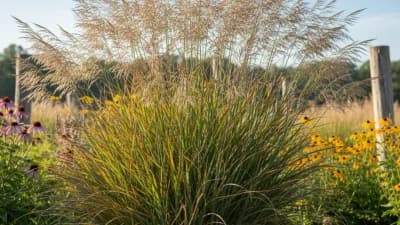
- Cut back all ornamental grasses to 100–150mm before new growth reaches 50mm — in Zone 4–5, this means late April; in Zone 3, early May; in coastal BC, mid-March; use hedge shears for the cleanest cut geometry
- Inspect all paving for frost-heave damage immediately after soil thaws (March in BC, April–May elsewhere) — re-level heaved slabs or pavers on fresh compacted granular base while the ground is still workable
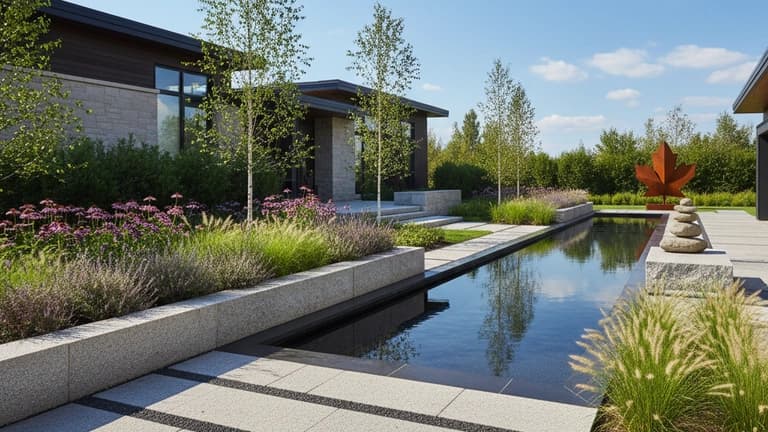
- Clean Corten steel elements with a stiff brush to remove any winter salt residue that has been blown or tracked from adjacent paths — road salt disrupts the protective patina formation
- Restart water features only when overnight lows are reliably above 2°C — pump seals fail if the water freezes in the housing after restart; test at 4°C minimum
- Apply a 50mm layer of composted bark mulch to all planting beds in a single pass — do this before new growth emerges to avoid damage, and maintain the 75–100mm clear zone around plant stems
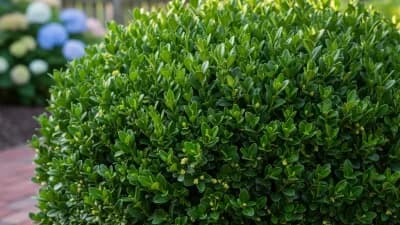
- Prune Korean boxwood hedges to their geometric target shape as new growth begins — a single precision trim in May is more effective than repeated shaping throughout summer
Summer (June–August)
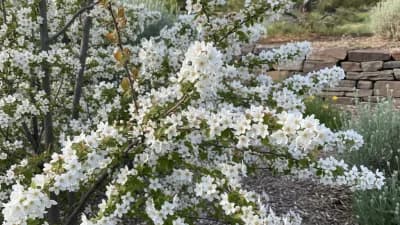
- Water newly installed plants deeply every 7–10 days in dry spells — established minimalist plantings (grasses, echinacea, serviceberry, blue oat grass) rarely need supplemental irrigation in most of Canada after the first full season
- Maintain crisp edges between paving and planting beds using a half-moon edging tool monthly — the precision of these lines is the most visible maintenance indicator of a minimalist garden
- Trim columnar conifers and boxwood hedging a second time in July only if growth exceeds the geometric target by more than 75mm — over-trimming removes the natural density that creates winter visual weight
- Remove only genuinely diseased or structurally damaged plant material — do not deadhead echinacea, grasses, or serviceberry, as the seed heads are essential to the winter composition
- Clean concrete and paving surfaces with a pressure washer in July when algae staining is most visible — use a pH-neutral cleaner to avoid disrupting the Corten steel patina nearby
- Check lighting fixture operation and adjust seasonal timers to account for extended daylight (sunset past 9pm in June at Toronto latitude) — minimalist lighting should be subtle, not dominating
Autumn (September–October)
- Leave all ornamental grasses, echinacea, and switchgrass standing through winter — do not cut back in autumn; these are the primary visual elements of the winter garden
- Plant spring-flowering bulbs (Allium giganteum, Narcissus 'Thalia') in disciplined geometric groupings in early October before soil temperature drops below 8°C — plant in precise clusters at path intersections or within defined bed sections for maximum spring impact
- Winterize all water features when overnight temperatures first reach -2°C for three consecutive nights — blow out all supply lines with compressed air, remove pumps for indoor storage, drain all exposed pipes and basins
- Apply protective root mulch (100mm coarse bark or gravel) around marginally hardy specimens after the first hard frost (-5°C) — timing is critical: too early prevents hardening, too late allows root freeze damage
- Store outdoor furniture with precision-fit covers or move furniture to protected storage — waterlogged cushions and unprotected metal furniture degrade through Canadian freeze-thaw cycles faster than any other climate
- Adjust landscape lighting timers for autumn: sunset advances from 7:30pm in October to 4:30pm in December in southern Canada — lighting should activate at sunset automatically
Winter (November–March)
- Brush accumulated snow from evergreen hedging and columnar conifers after each heavy snowfall (more than 150mm) — wet spring snow in March is the most damaging, snapping decades of hedge-form cultivation in a single overnight event
- Never use chloride-based road salt (NaCl or CaCl2) on paving adjacent to Corten steel or planted areas — use calcium magnesium acetate (CMA) or sand; chloride salt disrupts Corten patina formation and causes severe soil chemistry damage
- Photograph the garden at first snowfall and after each major storm — these winter documentation images are the primary design reference for assessing whether the structural composition is achieving its intended effect
- Monitor snow load on pergola or overhead beam structures — 300mm of compacted snow generates approximately 1.0 kPa load; a standard residential pergola is rated for 1.5–2.0 kPa, but ice-lens formation under the rafters can concentrate loads unpredictably
- Observe the winter shadow patterns of specimen trees and grasses at different times of day — the low winter sun (solar altitude 20–25° in December at Toronto latitude) creates long dramatic shadows that reveal whether tree and grass placement achieves the intended compositional relationships
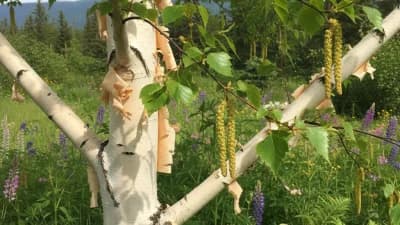
- Order plants from specialist nurseries in January — Karl Foerster grass, Korean boxwood, columnar Swedish aspen, and blue oat grass from reputable Ontario, BC, or Prairie nurseries sell out by February