


Cottage Gardens in India: Hill Stations to Tropical Plains

The English cottage garden has deep roots in India — not just as an imported style but as a living tradition. Ooty Botanical Gardens, established in 1848, has been cultivating delphiniums, roses, and hollyhocks at 2,240 m altitude for nearly 180 years; the Rose Society of India traces cottage garden rose culture through the Raj era and into contemporary Indian horticulture. For hill stations — Ooty, Kodaikanal, Darjeeling, Munnar, Shimla — the cottage garden translated almost perfectly because the climate genuinely supports it. For the majority of India on the plains, the honest approach is what might be called the tropical abundance garden: the same philosophy of joyful informality and productive beauty, expressed through Bougainvillea, Plumbago, Ixora, and the country's most culturally significant flower, the marigold (genda phool), which threads through every Indian festival and garland tradition and belongs in every Indian cottage garden regardless of climate zone.

Cottage Garden in India

Why Choose This Style for India?

Hill stations (Ooty, Darjeeling, Kodaikanal, Shimla, Munnar) support authentic English cottage plants including roses, delphiniums, hollyhocks, and sweet peas at 1,500-2,500 m altitude

🌱

Year-round growing season in tropical plains means continuous succession planting — no true winter dormancy to manage

💚

India's extraordinary diversity of flowering plants — jasmine, Plumbago, Pentas, Zephyranthes, Portulaca — provides a tropical cottage palette with zero cold hardiness concerns

Climate Adaptation for India

Hill station cottage gardens follow a near-European seasonal rhythm: spring planting (February-April) with cool-season annuals and roses; monsoon lushness (June-September) with vigilant fungal management; autumn best season (October-November) for peak rose performance; winter dormancy management (December-January) at elevations above 2,000 m. On the plains, the cottage calendar is inverted: the "peak season" is October-February when temperatures drop to a manageable 15-28°C and roses, cosmos, sweet alyssum, and annuals perform at their best. Summer (April-June) is a survival season — mulch to 10 cm, shade sensitive plants, and rely on heat-tolerant tropicals. Monsoon (July-September) brings explosive growth requiring weekly deadheading and fungal prevention every 7-10 days on roses.

Key Challenges
  • Plains summers (April-June) exceed 40°C across most of northern and central India, ruling out classic cottage perennials like lupins, delphiniums, and foxgloves outside hill stations
  • Monsoon humidity (June-September, 80-95% RH) causes blackspot, powdery mildew, and botrytis on roses and dense cottage plantings — requires preventive fungicide regime
  • Seasonal water scarcity in Rajasthan, Gujarat, and parts of Maharashtra during dry months limits the irrigation-dependent cottage aesthetic
  • Soil variability: black cotton soil (Vertisols) in Maharashtra/Karnataka waterlog badly; add grit and organic matter before cottage planting
Regional Advantages
  • Hill stations (Ooty, Darjeeling, Kodaikanal, Shimla, Munnar) support authentic English cottage plants including roses, delphiniums, hollyhocks, and sweet peas at 1,500-2,500 m altitude
  • Year-round growing season in tropical plains means continuous succession planting — no true winter dormancy to manage
  • India's extraordinary diversity of flowering plants — jasmine, Plumbago, Pentas, Zephyranthes, Portulaca — provides a tropical cottage palette with zero cold hardiness concerns
  • Marigold (Tagetes erecta, genda phool) flowers year-round in warm climates, self-seeds prolifically, and is culturally woven into Indian life through festivals, garlands, and temple offerings

Key Design Principles

Zone-Calibrated Informality

The cottage garden spirit — joyful, productive, overflowing — translates across all Indian zones, but the plant palette must match the climate honestly. Hill stations: use authentic English cottage species. Plains: use the tropical abundance approach with Bougainvillea, Ixora, Pentas, and Zephyranthes as the backbone. The aesthetic goal — beds that spill over paths, climbers reaching through shrubs, self-seeders filling gaps — is the same everywhere.

Marigold as Cultural Anchor

Tagetes erecta (genda phool, African marigold) is India's most culturally significant garden flower, central to Dussehra, Diwali, weddings, and daily temple worship. In a cottage garden it serves as the perfect self-seeding annual: planted in October, it blooms through February, scatters seed, and reappears the following season without intervention. The deep orange and yellow complement every other cottage planting and attract pollinators. Every Indian cottage garden should include at least one dedicated marigold drift.

Roses as Regional Stars

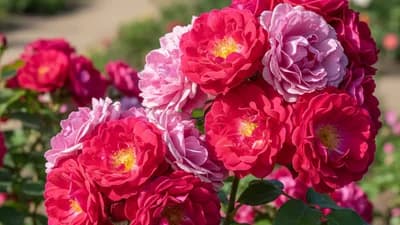
The Rose Society of India has been selecting heat-tolerant varieties for Indian conditions since the Raj era. In hill stations, old garden roses and modern climbers thrive without special treatment. On the plains, select proven performers: polyantha varieties, miniature roses, and heat-tolerant shrub roses. Avoid high-maintenance hybrid teas on the plains — they struggle with monsoon humidity. Combine roses with jasmine (Jasminum sambac) for continuous fragrance and cultural resonance.

Vertical Layering for Shade and Abundance

Three-dimensional planting is essential in Indian cottage gardens both for aesthetic abundance and practical shade provision. Use pergolas with Bougainvillea or Rangoon Creeper for canopy; mid-height Ixora, Pentas, and Plumbago for the middle layer; Portulaca and Zephyranthes for the ground plane. Bamboo and coconut coir supports are traditional and low-cost. Climbing roses through trees or over arches provide the quintessential cottage moment in hill stations.

Productive Beauty Integration

Traditional Indian kitchen gardens (bagichi) already blend flowers, herbs, and vegetables — the cottage garden philosophy requires no cultural translation. Interplant tulsi among roses, thread curry leaf through the mid-border, grow gourds on bamboo arches at the back of beds. Ooty cottage gardeners have always grown vegetables between flowers. This productive informality is both authentically Indian and authentically cottage.

Monsoon as Design Opportunity

Rather than treating the monsoon as a threat to manage, design beds that peak in monsoon beauty: Balsam (Impatiens balsamina), Portulaca, Celosia, and native rain lilies (Zephyranthes) all flower at their best during rains. Raised paths of brick or Kota stone prevent waterlogging in cottage beds. Self-seeding annuals scatter and establish most effectively during monsoon rains — design open soil areas to receive them.

Recommended Plants for India

These plants are specifically selected to thrive in your region's climate and complement this garden style perfectly.

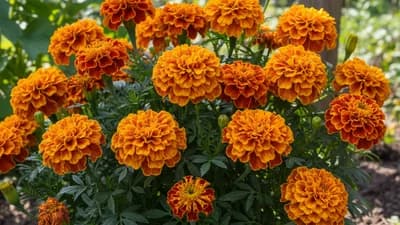
African Marigold
African Marigold

Tagetes erecta

Genda phool — India's most culturally significant garden flower, essential for festivals, garlands, and temple offerings. Self-seeds prolifically in all Indian zones, flowers best October-March on plains and April-October in hill stations. The orange-yellow colour range complements all cottage palettes.

Sun: Full sun

Water: Low to moderate — tolerates dry spells well

Blooms: October-March (plains), April-October (hill stations)

Indian Rose
Indian Rose

Rosa × indica

Heat-tolerant rose varieties developed for and naturalised in Indian conditions, with continuous flowering through winter. The polyantha and shrub types perform best on the plains; in hill stations Ooty Botanical Gardens has proven that old garden roses thrive at altitude. The Rose Society of India recommends "Gold Coin", "Climbing Cécile Brünner", and "The Fairy" for most Indian conditions.

Sun: Full sun — minimum 5 hours

Water: Moderate — reduce during monsoon to prevent fungal issues

Blooms: October-May peak (plains); May-November (hill stations)

Bougainvillea
Bougainvillea

Bougainvillea spectabilis

The quintessential tropical cottage plant for Indian plains — vigorous, drought-tolerant once established, and available in a range of colours from deep magenta to white. Trained over pergolas or through chain-link, it creates the overflowing abundance central to cottage aesthetics. Stress slightly by reducing water for maximum bract production.

Sun: Full sun — will not bloom in shade

Water: Low — blooms best when slightly drought stressed

Blooms: Near year-round in warm climates; peak in dry season

Plumbago
Plumbago

Plumbago auriculata

Sky-blue cottage perennial that thrives in Indian heat and provides continuous colour where delphiniums cannot survive. Use as a large mid-border shrub or trained on low fencing. The cool blue colour cools the eye amid orange marigolds and red Bougainvillea. Prune hard after monsoon to encourage a flowering flush through winter.

Sun: Full sun to part shade

Water: Low to moderate

Blooms: Near year-round, peak October-April

Indian Jasmine
Indian Jasmine

Jasminum sambac

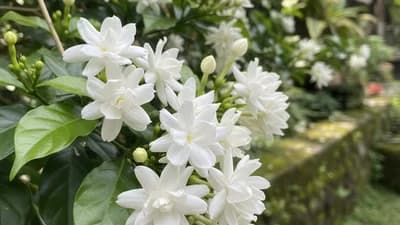
Mogra — intensely fragrant cottage climber central to Indian culture, used in garlands, hair adornment, and temple offerings. Blooms most prolifically in warm months. Trains easily over arches and pergolas. Combined with a climbing rose, it creates the classic Indian cottage entry arch with fragrance and flower in one.

Sun: Full sun to part shade

Water: Moderate — regular watering for best flowering

Blooms: March-November, peak in summer

Rain Lily
Rain Lily

Zephyranthes rosea

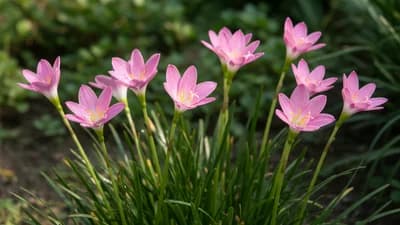
The magical monsoon pop-up bulb of Indian cottage gardens — dormant as bare soil through summer, then producing hundreds of pink flowers within 48 hours of the first monsoon rain. Plant bulbs 5 cm deep in October for best establishment. Naturalises freely and fills the front of borders with zero effort after the first season.

Sun: Full sun

Water: Low — triggered into bloom by rainfall

Blooms: June-October (monsoon-triggered)

Delphinium (hill stations only)

Delphinium elatum

The defining tall cottage perennial of Ooty Botanical Gardens — spires of blue, purple, and white that make the cottage aesthetic unmistakable. Thrives at 1,500 m+ altitude in Ooty, Kodaikanal, Darjeeling, and Shimla. Cannot survive Indian plains heat. In hill stations, plant in autumn for a March-May flowering peak, staking against monsoon winds.

Sun: Full sun

Water: Moderate — good drainage essential

Blooms: March-May (hill stations)

Pentas
Pentas

Pentas lanceolata

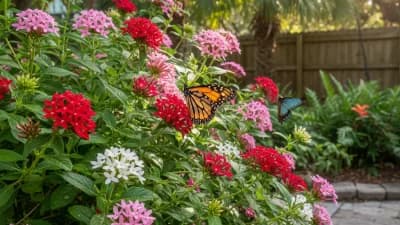
The reliable tropical cottage substitute for phlox in Indian plains gardens — clusters of star-shaped flowers in pink, red, and white that attract butterflies year-round. Unlike most temperate cottage perennials, it actively improves in monsoon humidity. Use as a mid-border filler or low edging plant in cottage beds throughout peninsular India.

Sun: Full sun to light shade

Water: Low to moderate — excellent heat tolerance

Blooms: Year-round in warm climates

Ready to Bring This Style to Life?

Upload a photo of your yard and get AI-powered cottage garden designs with plants perfectly suited to India's climate.

Start Designing Now

Essential Design Features

Hard Landscaping
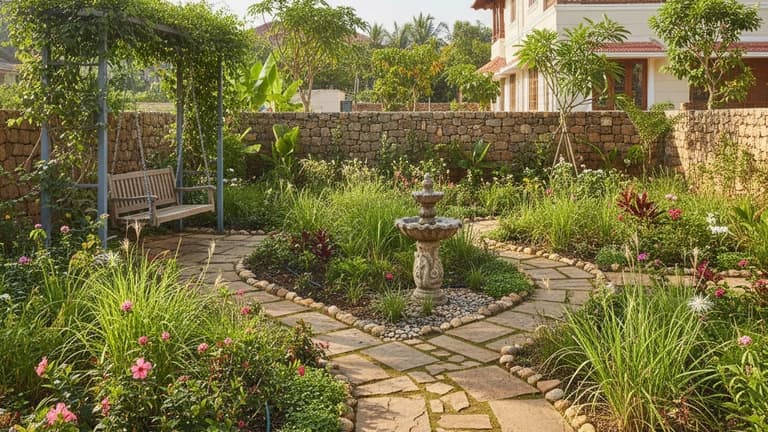
  • Brick or reclaimed Kota stone paths with thyme or Portulaca growing in joints
  • Raised beds using local laterite stone (South India) or brick — essential on waterlogging-prone black cotton soil
  • Bamboo or teak pergola draped with Bougainvillea, climbing rose, or Rangoon Creeper
  • Terracotta pot groupings in varying heights — cottage detail that works at every scale
  • Rustic gate with rose or jasmine arch — the signature Indian cottage entrance
  • Gravel or kadappa stone path edged with marigolds for the back kitchen garden section
Water Features
  • Traditional terracotta or stone birdbath — attracts sunbirds, bulbuls, and butterflies year-round
  • Small wildlife pond with Nelumbo nucifera and native aquatic plants
  • Rainwater harvesting tank disguised with climbing Quisqualis indica (Rangoon Creeper)
  • Simple fountain in reclaimed stone basin — sound provides cooling effect in hot weather
  • Earthen pot (matka) water feature — iconic Indian material with cottage informality
  • Shallow clay dish at ground level for butterflies to drink
Plant Palette by Zone
  • Hill stations (1,500 m+): roses, delphiniums, hollyhocks, sweet peas, foxgloves, lavender — full English cottage palette
  • Bangalore Plateau: roses, Pentas, Plumbago, Bougainvillea, Ixora, Salvia farinacea, marigold
  • Delhi plains: Bougainvillea, Plumbago, Pentas, Zephyranthes, marigold, Celosia, winter annuals
  • Kerala coast: Ixora, Pentas, Balsam, Portulaca, Zephyranthes, Bougainvillea, Heliconia accents
  • All zones: marigold (genda phool), tulsi, jasmine (mogra), Portulaca self-seeder
  • Herbs throughout: tulsi, curry leaf, mint, coriander edging — productive beauty integration
Garden Structures
  • Potting shed with Mangalore tile roof — traditional Indian roof material that reads as cottage
  • Bamboo or coconut coir plant supports for tall cottage perennials and climbing roses
  • Shaded seating corner under a mature mango or jackfruit tree — natural cottage canopy
  • Kitchen garden section with raised beds combining vegetables, marigolds, and herbs
  • Composting area screened by tall Celosia or climbing Bougainvillea

Seasonal Maintenance Guide

Pre-Monsoon / Spring (February-May)
  • Apply slow-release rose fertiliser by 15 February in plains, 1 March in hill stations, before active growth begins
  • Stake delphiniums and hollyhocks in hill stations before March winds — use 1.2 m bamboo canes
  • Sow marigold (Tagetes erecta) seeds direct in prepared beds in February for a May-June flowering display
  • Mulch all beds to 8-10 cm depth by 31 March in plains to protect through April-June heat
  • Prune Bougainvillea hard by end of February to trigger a flowering flush before summer
  • Apply copper oxychloride fungicide preventively to roses and dense cottage beds before monsoon humidity builds
Monsoon (June-September)
  • Spray roses with systemic fungicide (propiconazole or mancozeb) every 7-10 days when humidity exceeds 80% RH — blackspot establishes within 4 days on unprotected foliage
  • Deadhead marigolds and Pentas every 5-7 days — prolific bloomers need constant deadheading to maintain momentum
  • Support tall cottage perennials against monsoon wind with additional bamboo canes by 15 June
  • Remove waterlogged debris from cottage beds immediately after heavy rains — botrytis spreads overnight on wet plant material
  • Transplant Zephyranthes bulb clumps that have exceeded 30 cm diameter — divide and replant at 15 cm spacing
  • Sow seeds of winter annuals (cosmos, sweet alyssum, pansies) in trays under cover from August for October planting out
Post-Monsoon (October-November)
  • Plant out winter annuals — cosmos, sweet alyssum, snapdragons, petunias — once night temperatures drop below 25°C (typically mid-October)
  • Plant bare-root roses in October-November for best establishment before peak winter flowering season
  • Refresh mulch after monsoon compaction — top up to 5-8 cm to protect through cool-dry season
  • Prune Bougainvillea and Plumbago to tidy form after monsoon growth flush — this triggers pre-winter flowering
  • Hill stations: cut back delphiniums after first flowering to encourage second autumn flush before frost
  • Collect and store marigold seeds for next season — allow heads to fully dry on the plant before harvesting
Winter (October-February)
  • Peak rose season in plains — deadhead every 5 days for continuous flowering through December and January
  • Plant spring-flowering bulbs: Zephyranthes, Crinum, and Gladiolus in October for January-March flowers
  • Hill stations: protect roses and tender cottage perennials with frost fleece when night temperatures drop below 2°C
  • Apply compost and vermicompost top dressing to all cottage beds — winter is the prime enrichment season
  • Collect seeds from favourite cosmos, pansies, and hollyhocks for next season
  • Plan layout changes for the following year — cottage gardens benefit from annual editing of what is and is not working
Investment Guide

Estimated costs for creating your cottage garden in India

Small Garden
  • Plants
    ₹6,000 - ₹15,000
    Roses, marigolds, Pentas, jasmine, Plumbago, and annuals for 20-30 m²
  • Hard Landscaping
    ₹5,000 - ₹12,000
    Brick or Kota stone path, bamboo pergola, raised bed edging
  • Structures
    ₹3,500 - ₹9,000
    Bamboo plant supports, rose arch over gate, terracotta pot groupings
  • Soil and Mulch
    ₹2,500 - ₹6,000
    Vermicompost, coco peat, organic mulch, grit for drainage amendment
  • Total
    ₹17,000 - ₹42,000
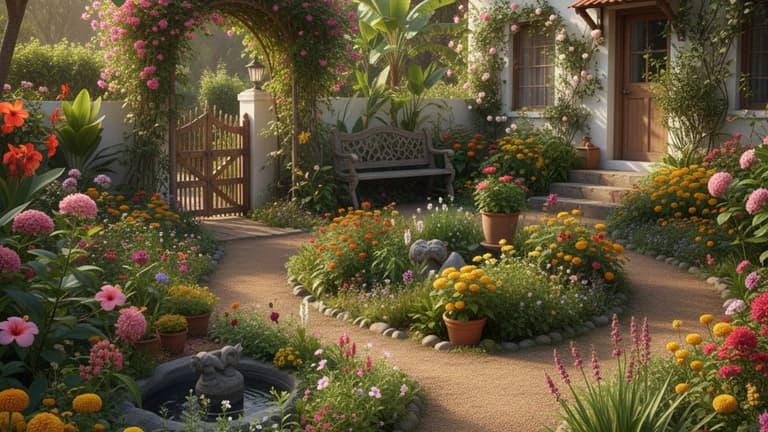
    Charming small cottage garden with roses and tropical abundance
Medium Garden
  • Plants
    ₹20,000 - ₹50,000
    Established roses, Bougainvillea, climbing jasmine, Pentas, bulbs for 50-80 m²
  • Hard Landscaping
    ₹22,000 - ₹55,000
    Kota stone paved path, brick raised beds, gravel kitchen garden section
  • Structures
    ₹14,000 - ₹35,000
    Teak or bamboo pergola, rose arch entrance, seating corner
  • Water Features
    ₹9,000 - ₹22,000
    Stone birdbath, small fountain, wildlife pond or matka water feature
  • Soil and Mulch
    ₹6,000 - ₹14,000
    Extensive soil improvement with vermicompost, grit, and organic mulch
  • Total
    ₹71,000 - ₹1,76,000
    Established cottage garden with full planting palette and structures
Large Garden
  • Plants
    ₹55,000 - ₹1,10,000
    Mature specimen roses, Bougainvillea climbers, tree specimens for 100+ m²
  • Hard Landscaping
    ₹75,000 - ₹1,50,000
    Kadappa or Kota stone paving, brick pathways, raised kitchen garden
  • Structures
    ₹45,000 - ₹90,000
    Custom teak pergola, potting shed, multiple rose arches, seating areas
  • Water Features
    ₹28,000 - ₹55,000
    Large wildlife pond with lotus, stone fountain, birdbath stations
  • Soil and Mulch
    ₹14,000 - ₹28,000
    Comprehensive soil improvement programme across all beds
  • Total
    ₹2,17,000 - ₹4,33,000
    Show-quality Indian cottage garden with full infrastructure

Frequently Asked Questions

Transform Your Yard Today

Get personalized cottage garden designs created by AI, featuring plants that thrive in India. Upload your yard photo and see your dream garden come to life in minutes.

Start Your Design