
Modern Minimalist Garden Design in India: Aangan to Correa

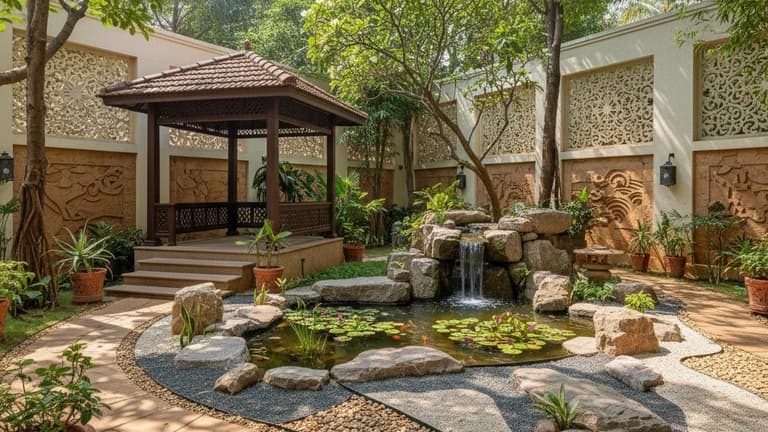
Modern minimalist garden design in India has two distinct intellectual roots. The first is contemporary international minimalism — restrained, geometric, material-focused — brought to Indian architecture through figures like Charles Correa, the internationally recognised Mumbai-born architect who elevated the traditional aangan (आँगन, inner courtyard) into a design principle, arguing that Indian architecture had always understood the garden as a contemplative void within a built mass. The second root is indigenous: the aangan itself is India's ancient answer to minimalist landscape design — a square or rectangular space, often paved in stone or brick, containing a single tulsi plant, a water vessel, or nothing at all. It is space as presence. Contemporary Indian minimalist gardens draw on both traditions: clean geometry from international modernism, material warmth from Indian stone and craft, and the philosophical understanding of emptiness as a design element from the aangan tradition. Chandigarh's Rock Garden, created by Nek Chand from found materials, demonstrates a distinctly Indian form of minimalism through constraint and material honesty. The Lutyens Delhi bungalow gardens — their sweeping lawns punctuated by single specimen trees and reflecting pools — represent an early Indo-minimalist landscape synthesis.

Modern Minimalist in India

Why Choose This Style for India?

India's extraordinary native stone variety — Kota stone, Kadappa black stone, Jaisalmer sandstone, Deccan basalt, Rajasthan granite — gives Indian minimalist gardens a material richness unavailable in most countries

🌱

The traditional aangan (inner courtyard) provides a cultural framework for understanding garden space as intentional void — minimalism is not imported but indigenous

💚

Charles Correa's internationally published work on Indian climate-responsive architecture has created a design vocabulary for contemporary Indian minimalism that integrates interior and exterior seamlessly

Climate Adaptation for India

Indian minimalist gardens are designed around three functional seasons. Pre-monsoon and summer (March-June): the garden's structural elements dominate as plants conserve energy in the heat — this is the season when stone, water, and shade architecture are most important. Monsoon (July-September): explosive plant growth and dramatic rainfall — grasses and foliage plants reach their most lush; drainage management ensures the garden performs rather than floods. Cool season (October-February): the prime outdoor living period when the garden functions as a room extension — entertaining, morning yoga, evening gathering. Minimalist design's emphasis on year-round structural clarity means the garden is coherent and usable in all three seasons, unlike traditional planted gardens that peak briefly and decline.

Key Challenges
  • Northern plains (Delhi, Lucknow, Chandigarh) reach 45°C+ in May-June — large paved surfaces absorb and radiate heat, requiring light-coloured stone selection and shade structures as mandatory design elements
  • Monsoon intensity (100+ mm in 24 hours in Delhi; 200+ mm in Mumbai) requires drainage systems designed for extreme events, not average rainfall — 1-in-10-year storm standard recommended
  • Dust and particulate pollution in Delhi NCR, Mumbai, and Kolkata coat clean minimalist surfaces within days — material selection must account for maintenance practicality
  • Wide regional variation: minimalist tropical Kerala needs different plant choices than minimalist arid Rajasthan — there is no single Indian minimalist palette
Regional Advantages
  • India's extraordinary native stone variety — Kota stone, Kadappa black stone, Jaisalmer sandstone, Deccan basalt, Rajasthan granite — gives Indian minimalist gardens a material richness unavailable in most countries
  • The traditional aangan (inner courtyard) provides a cultural framework for understanding garden space as intentional void — minimalism is not imported but indigenous
  • Charles Correa's internationally published work on Indian climate-responsive architecture has created a design vocabulary for contemporary Indian minimalism that integrates interior and exterior seamlessly
  • Year-round growing season supports evergreen architectural plantings — the clean minimalist form is maintained throughout the year without seasonal gaps

Key Design Principles

The Aangan as Design Precedent

Charles Correa consistently argued that the traditional aangan — India's inner courtyard — is the most sophisticated climate-responsive space in Indian architecture: open to sky, shaded by surrounding walls, cooled by a central water vessel or plant, usable year-round despite extreme climate. Contemporary minimalist garden design simply extends this principle outward. Start by defining a central void — an empty paved area, a reflecting pool, a single specimen tree in gravel — and build the garden composition around that emptiness rather than filling it with plants.

Material Hierarchy: Indian Stone First

The defining material choice of Indian minimalist gardens is stone selection. Kadappa black stone (Andhra Pradesh) creates the most dramatic minimalist surfaces — dark, dense, polished or honed. Kota stone in blue-green provides a cooler, more restrained palette. Jaisalmer sandstone in golden yellow brings warmth to feature walls. Mangalore clay tiles offer a softer, more organic minimalism. All are quarried domestically, competitively priced, and naturally suited to Indian climate extremes — they have proven thermal performance across centuries of Indian architecture.

Geometry Drawn from Indian Tradition

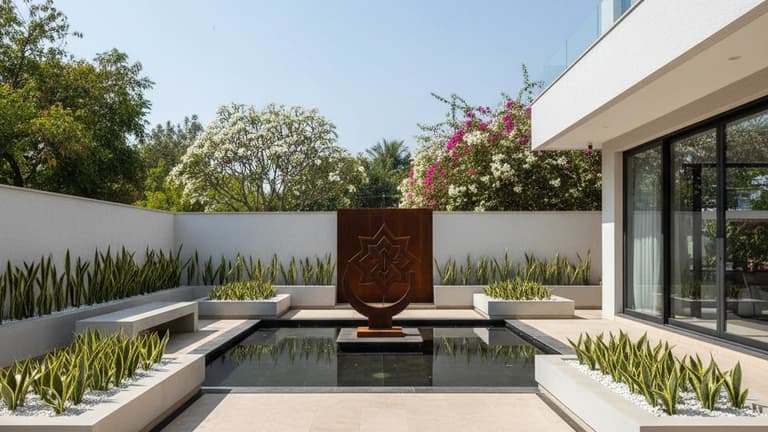
Mughal garden geometry — the charbagh quadripartite plan, the central water axis (nahr), the symmetrical planting beds — provides a ready-made design vocabulary for contemporary minimalism. A single rectangular reflecting pool on a central axis, flanked by two clipped specimen trees and edged in black granite, is simultaneously Mughal in precedent and minimalist in execution. The Lodi Garden in Delhi, with its geometric paths through stone pavilions and specimen trees, shows how Indian garden heritage translates directly into contemporary minimalist principles.

Sculptural Plants as Architecture

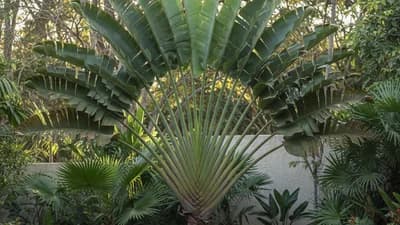
Minimalist planting in India means selecting species whose form has the quality of sculpture: Agave americana as a steel-blue rosette in gravel; Polyalthia longifolia (mast tree / false ashoka) as a perfect green column; Ravenala madagascariensis (traveller's palm) as a precise geometric fan. Each plant is chosen for its year-round structural contribution, not its seasonal flowering. Place plants as singular specimens against clean surfaces, allowing their form to register completely rather than competing with a mixed border.

Water as Contemplative Element

The Mughal nahr (water channel) is the most powerful design element available to Indian minimalist gardens — a narrow rectilinear channel of water along a central axis, lined in dark stone, creates reflection, sound, and axis simultaneously. Contemporary Indian minimalist gardens reinterpret this: a flush-paved rectangular pool, a slot drain with a thin sheet of water, a single column-mounted spout. Avoid elaborate water features that require constant maintenance — simplicity of mechanism is as important as simplicity of form.

Climate-Responsive Structural Design

Minimalist gardens in India cannot ignore climate — a pergola that provides no summer shade is a design failure, not a minimalist statement. Orient covered structures to block the intense western afternoon sun (the dominant heat vector across India). Use Mangalore tile roofs on pergolas — their thermal mass moderates the temperature beneath them far better than metal roofing. Design seating areas in the northeast corner of the garden for morning use; northwest corner for evening use. These are functional decisions that define whether the garden is actually used.

Recommended Plants for India

These plants are specifically selected to thrive in your region's climate and complement this garden style perfectly.

Mast Tree
Mast Tree

Polyalthia longifolia

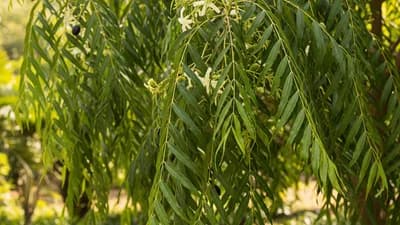
The perfect Indian minimalist tree — a natural column of dense weeping foliage requiring no pruning to maintain its vertical form. Widely used in Lutyens Delhi avenue planting and in contemporary minimalist gardens across India. Provides a vertical green wall with minimal footprint. Available in variety "pendula" with more pronounced weeping form. Suited to all Indian zones from Bangalore to Delhi to Kerala.

Sun: Full sun to part shade

Water: Low to moderate once established

Traveller's Palm
Traveller's Palm

Ravenala madagascariensis

The most architectural palm available to Indian gardens — its fan-form fronds align precisely in a single plane, creating a living geometric screen. Used extensively in contemporary Mumbai and Bangalore minimalist gardens. Provides a dramatic focal element with genuine sculptural quality. Suited to tropical and subtropical India; requires protection from severe cold in northern regions.

Sun: Full sun to part shade

Water: Moderate — tolerant once established

Agave
Agave

Agave americana

The quintessential minimalist plant for arid and semi-arid Indian zones — Rajasthan, Gujarat, the Deccan Plateau. Its blue-grey architectural rosette in a gravel bed requires zero maintenance and zero irrigation after establishment. A single Agave specimen against a white-lime-washed wall is among the most powerful minimalist compositions available in an Indian garden.

Sun: Full sun

Water: Very low — survives on rainfall in most Indian zones

Sago Cycad
Sago Cycad

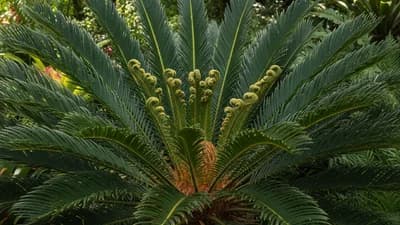
Cycas revoluta

Slow-growing prehistoric plant with a precisely symmetrical rosette of dark green fronds on a stout trunk. Regarded as a permanent sculptural element rather than a plant in minimalist design — it will outlive the garden design cycle without changing form. Tolerant across all Indian climate zones. Place as a singular specimen in a raised stone planter or gravel bed.

Sun: Full sun to part shade

Water: Low — drought tolerant once established

Plumeria
Plumeria

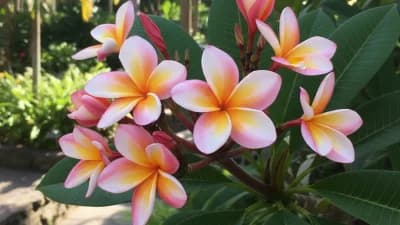
Plumeria rubra

Deciduous specimen tree with sculptural bare branching in winter and intensely fragrant flowers in summer. Its clean, architectural branch structure is ideal for minimalist design — in winter the bare skeleton against a white wall provides a Japanese-influenced silhouette quality rarely available in tropical gardens. Widely used in contemporary Bangalore and Mumbai minimalist gardens.

Sun: Full sun

Water: Low — tolerates dry periods well

Blooms: May-October

Fountain Grass
Fountain Grass

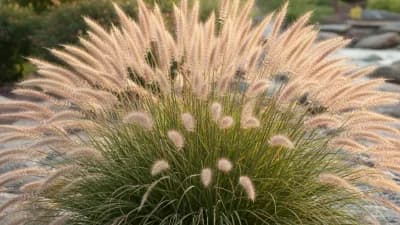
Pennisetum setaceum

Graceful ornamental grass creating soft vertical movement against hard minimalist surfaces. Planted in linear drifts or singular clumps, it provides the textural contrast that prevents minimalist gardens from feeling sterile. Suited to Bangalore Plateau, Deccan, and Rajasthan. Prune back to 15 cm in February before monsoon growth flush.

Sun: Full sun

Water: Low — drought tolerant

Blooms: August-November (feathery plumes)

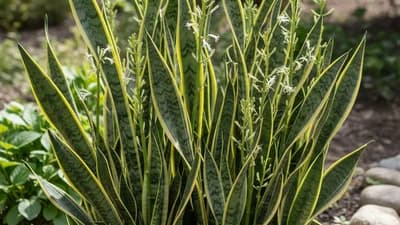
Snake Plant
Snake Plant

Sansevieria trifasciata

Upright sword-form leaves with strong graphic patterning create precise vertical lines in containers or raised beds. Virtually indestructible across all Indian climate zones — tolerates extreme heat, drought, and deep shade. Use as dense geometric masses in long planters flanking a path or entrance. The strong form reads clearly in night lighting.

Sun: Full sun to full shade — remarkable adaptability

Water: Very low — thrives on neglect

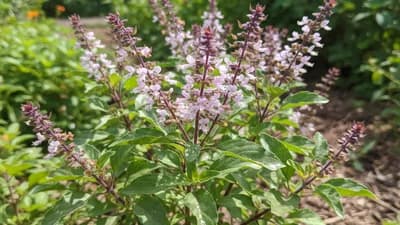
Holy Basil
Holy Basil

Ocimum tenuiflorum

Tulsi (तुलसी) — the single plant of the traditional aangan — belongs in any contemporary Indian minimalist garden as the cultural anchor. A single tulsi plant in a hand-thrown terracotta pot in the centre of a stone courtyard is the most minimalist Indian garden composition: one plant, one container, one tradition. Requires full sun and regular watering; replace annually in most Indian zones.

Sun: Full sun

Water: Moderate — consistent moisture

Blooms: Year-round in warm climates

Ready to Bring This Style to Life?

Upload a photo of your yard and get AI-powered modern minimalist designs with plants perfectly suited to India's climate.

Start Designing Now

Essential Design Features

Paving and Surfaces
  • Kadappa black stone in large-format slabs (600 × 900 mm minimum) with 5 mm joints — the most distinctively Indian minimalist surface
  • Kota stone in brown or blue-green finish for broader terrace areas — cost-effective and thermally stable
  • Jaisalmer sandstone feature walls in golden yellow — warm tonal counterpoint to dark paving
  • White Makrana marble chips as gravel infill around specimen plants — echoes Mughal garden tradition
  • Corten steel edging strips separating stone paving from planted gravel beds — defines hard-soft transition precisely
  • Flush permeable paving joints with Dichondra repens groundcover — allows drainage while maintaining clean surface reads
Water Features
  • Rectangular reflecting pool in Kadappa stone liner — Mughal nahr reinterpreted for contemporary minimalism
  • Narrow water channel (30 cm wide) running along a path axis — the central organising element of the garden
  • Single spout fountain against a white-plastered wall with concealed plumbing — maximal effect, minimal form
  • Flush-deck bubbling jets set in black granite paving — water at grade level, invisible mechanism
  • Corten steel water trough as a linear planter-fountain hybrid — structural material, sculptural water element
Structures and Screens
  • Steel-frame pergola with Mangalore tile infill panels — modern structure, Indian thermal performance
  • Laser-cut Corten steel jaali screen casting geometric shadow patterns — contemporary Indian craft
  • Plastered boundary walls in white or warm grey lime finish — the essential minimalist backdrop
  • Built-in stone seating bench along a garden wall — continuous horizontal element at 45 cm height
  • Teak or sal wood slat screen for natural privacy without visual heaviness
  • Recessed Corten steel planter boxes integrated into garden walls — flush with surface, material continuity
Lighting and Accents
  • Recessed ground uplights in Kadappa stone surrounds — illuminate specimen plants dramatically from below
  • Linear LED strip along water channel edge — defines the water axis at night
  • Warm 2700K wall wash lights on feature stone walls — reveals texture without colour distortion
  • Brass or phosphor-bronze accent fixtures — traditional Indian metal against contemporary stone
  • Single pendant lantern in hand-beaten copper over primary seating area — the one decorative element allowed in minimalist gardens

Seasonal Maintenance Guide

Pre-Monsoon / Spring (March-May)
  • Cut back Pennisetum and other ornamental grasses to 15 cm before monsoon growth surge — typically 15-31 March
  • Inspect and clear all drainage channels, permeable paving joints, and soakaway beds before 1 June
  • Clean stone surfaces with pressure washer to remove pre-monsoon dust accumulation — Kadappa and Kota stone show dust clearly
  • Apply 5 cm gravel top-dressing to all specimen plant beds before April heat peaks — reduces surface temperature by 8-12°C
  • Prune mast tree and traveller's palm of dead fronds before monsoon wind loads arrive
  • Service drip irrigation system — replace any emitters showing blockage from mineral deposits in hard water areas
Monsoon (July-September)
  • Inspect drainage channels after every rainfall event exceeding 30 mm — clear within 24 hours
  • Trim Pennisetum and Sansevieria back to maintained proportions — monsoon growth can double plant volume in 8 weeks
  • Remove organic debris from water features immediately — decomposing leaf matter disrupts the clean water reflection quality
  • Watch for fungal issues on Plumeria during humid periods — remove affected branches and apply copper oxychloride
  • Avoid fertilising during peak monsoon — accelerated growth destroys the precise forms that define minimalist composition
  • Regrout any Kadappa or Kota stone joints that have opened due to thermal expansion — prevents monsoon water penetration under paving
Post-Monsoon (October-November)
  • Clean and repair monsoon damage to stone surfaces — re-seal Kadappa stone with penetrating stone sealer annually in October
  • Plant new specimens in warm post-monsoon soil — optimal root establishment conditions before winter
  • Trim mast tree and traveller's palm to restore precise forms after monsoon growth
  • Service water feature pumps — clear monsoon sediment from pump inlets and check impeller
  • Adjust lighting timers for earlier sunset — October sunsets 45 minutes earlier than August in most Indian zones
  • Review garden composition from primary viewing angles — remove or relocate any elements that have shifted out of proportion
Winter (December-February)
  • Enjoy prime outdoor living season — the garden is at its most usable and visually coherent
  • Prune Plumeria into desired branching form while leafless — this is the only window for structural pruning
  • Deep water established Agave and Cycad once monthly if no winter rain occurs — minimal but necessary
  • Clean and oil all metal elements (Corten steel surrounds, brass fixtures) to prevent corrosion in dew-heavy nights
  • Northern India: protect Plumeria from frost below 5°C with horticultural fleece — wrap trunk and primary branches
  • Plan design improvements and source plants for October planting — January is the best planning window
Investment Guide

Estimated costs for creating your modern minimalist in India

Small Garden
  • Plants
    ₹18,000 - ₹35,000
    Cycad, Agave, Pennisetum, Sansevieria, tulsi specimen for 15-25 m²
  • Hardscaping
    ₹45,000 - ₹90,000
    Kadappa or Kota stone paving in large format slabs, Corten steel edging
  • Lighting
    ₹12,000 - ₹25,000
    LED ground uplights, path lighting, feature wall wash
  • Irrigation
    ₹9,000 - ₹18,000
    Drip irrigation with timer — mandatory for arid zones, useful everywhere
  • Total
    ₹84,000 - ₹1,68,000
    Compact aangan-inspired minimalist courtyard or terrace garden
Medium Garden
  • Plants
    ₹45,000 - ₹90,000
    Mast tree, Cycad, traveller's palm, ornamental grasses, evergreen hedging for 40-70 m²
  • Hardscaping
    ₹1,30,000 - ₹2,70,000
    Premium Kadappa stone, Jaisalmer sandstone feature wall, Corten steel elements
  • Water Features
    ₹40,000 - ₹85,000
    Reflecting pool or Mughal-style water channel with recirculation system
  • Structures
    ₹65,000 - ₹1,30,000
    Steel pergola with Mangalore tile panels, laser-cut jaali screens, built-in seating
  • Lighting
    ₹28,000 - ₹55,000
    Comprehensive LED lighting scheme with dimmer controls
  • Total
    ₹3,08,000 - ₹6,30,000
    Complete residential minimalist garden with outdoor living and water feature
Large Garden
  • Plants
    ₹1,10,000 - ₹2,20,000
    Mature specimen trees, Agave groupings, extensive grass plantings for 100+ m²
  • Hardscaping
    ₹3,30,000 - ₹6,60,000
    Premium natural stone throughout, multi-level terracing, architectural walls
  • Water Features
    ₹90,000 - ₹2,00,000
    Large reflecting pool or full Mughal water axis with professional filtration
  • Structures
    ₹1,65,000 - ₹3,85,000
    Custom pergola, outdoor kitchen, premium laser-cut screens, multiple shade elements
  • Lighting
    ₹65,000 - ₹1,30,000
    Professional lighting design with smart automation and scene control
  • Total
    ₹7,60,000 - ₹15,95,000
    Large-scale minimalist landscape for villa or farmhouse property

Frequently Asked Questions

Transform Your Yard Today

Get personalized modern minimalist designs created by AI, featuring plants that thrive in India. Upload your yard photo and see your dream garden come to life in minutes.

Start Your Design