





Seasonal Maintenance Guide
Spring
- Apply slug nematodes (Phasmarhabditis hermaphrodita) in late March when soil temperature exceeds 5°C — Delphinium, Hosta, and emerging Dahlia are most vulnerable; repeat in May and August for season-long control
- Stake Delphinium with hazel poles to 600mm before growth reaches 200mm — late staking in May after growth is tall enough to see causes damage when inserted; mark positions with canes in autumn
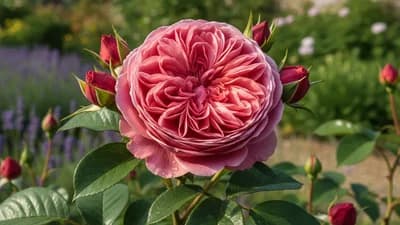
- Feed David Austin roses in late March with a proprietary rose fertiliser or a top-dressing of well-rotted horse manure — Roses That David Austin sells alongside his plants is specifically formulated for UK conditions
- Lift and divide hardy geraniums and Hosta when clumps exceed 450mm diameter — division every three to four years prevents central dieback
- Sow sweet peas direct outdoors in mid-April where soil has warmed above 10°C, or plant out October-sown plugs — erect 1.8m hazel poles or bamboo canes before planting
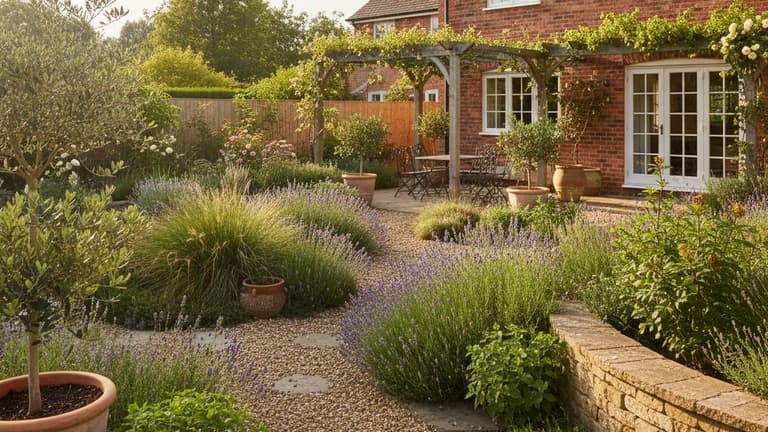
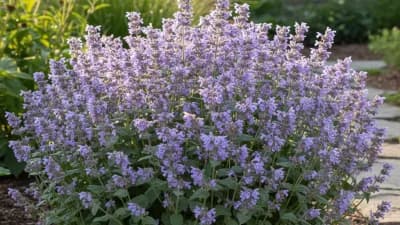
- Deadhead and remove winter-damaged growth from lavender and catmint in April once the risk of hard frost has passed — do not cut into old woody growth which will not regenerate
Summer
- Cut delphiniums to ground level immediately after first flowering in late June/early July — within ten days, new shoots emerge for August's second flowering; feed with liquid tomato fertiliser at this point
- Pick sweet peas every two to three days without exception — even one pod forming terminates flowering; in damp UK summers, botrytis can destroy unpicked flowers overnight
- Apply the Great Dixter technique to roses: immediately after first flush, prune repeat-flowering varieties back by one-third, feed, and water deeply for a stronger August second flush
- Monitor for black spot and powdery mildew on roses from July — in UK conditions, remove and bin affected leaves immediately (do not compost); switch to AGM disease-resistant varieties on replacement
- Harvest herb paths of thyme, sage, and marjoram regularly in July–August — hard cutting in summer encourages fresh growth and prevents legginess in UK's mild autumn conditions
- Deadhead annuals and tender perennials daily — Cosmos, Zinnia, and Verbena bonariensis all flower continuously through UK summer if deadheaded; allow Verbena to self-seed at season end
Autumn
- Plant David Austin bare-root roses from November to February — autumn planting (November) gives the best establishment, with roots active during mild spells through December and January
- Lift and store dahlias after the first frost blackens the foliage (typically late October in southern England, late September in Scotland) — store in dry compost or vermiculite at 5–10°C
- Leave ornamental seed heads standing through November for birds — Echinacea, Verbena bonariensis, Digitalis, and Fennel all provide seeds for goldfinches and tits; remove when structure collapses in December
- Plant spring bulbs in October: Tulipa (below 100mm of soil), Narcissus, and Alliums between perennials — mark positions to avoid disturbing in spring
- Take hardwood cuttings of roses in October–November: 250mm lengths inserted 150mm deep in free-draining soil in a sheltered spot root reliably by spring with no special treatment
- Apply a 100mm bark mulch top-dressing once soil is moist but not frozen — mid-October to mid-November is the ideal window for most UK regions
Winter
- Prune hybrid tea and floribunda roses in February — traditionally coinciding with forsythia flowering as a biological calendar trigger; David Austin English Roses need only light pruning to maintain shape
- Order seeds from Higgledy Garden, Chiltern Seeds, or Thompson & Morgan in January — popular cottage garden varieties sell out by February; sweet pea varieties especially
- Repair and repaint timber arbors, arches, and cold frames during dry spells in January–February — use a timber preservative that will not harm emerging plants once applied
- Prune and train climbing roses in January–February while dormant: fan out main stems horizontally to maximise flowering laterals; tie in loosely with soft jute twine
- Check stored dahlias and tender cuttings for rot monthly — remove affected sections immediately; ideal storage temperature is 5–8°C
- Sharpen all cutting tools in January: secateurs, shears, and loppers — the UK's persistent damp leads to rapid rust if tools are stored without oiling through winter