




Seasonal Maintenance Guide
Spring
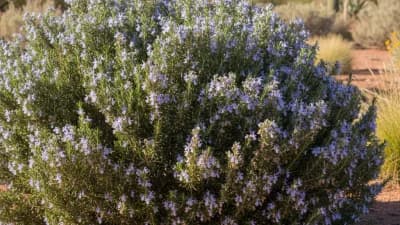
- Clip Lavandula angustifolia in April (not March) — wait until new growth is clearly visible at the base before cutting to avoid cutting into dead wood; remove winter damage at this point
- Cut Phlomis, Salvia, and Santolina back by one-third in April after last frost risk — do not cut hard into old wood which will not regenerate on Mediterranean shrubs
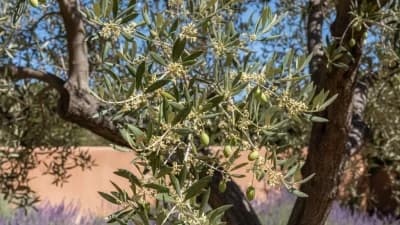
- Move containerised olive trees and citrus outdoors from mid-April when overnight temperatures reliably stay above 5°C — acclimatise gradually, placing in shade for the first week
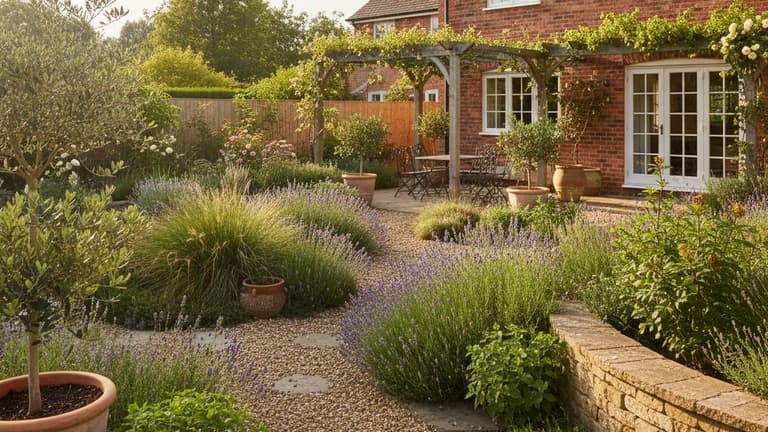
- Top up gravel mulch to restore 75mm depth where winter rain and footfall have compacted it — a 25kg bag of 10mm gravel covers approximately 0.5 sqm at this depth
- Plant new Mediterranean subjects in May when soil has warmed — spring planting requires careful watering through the first summer to establish; autumn planting in September requires less intervention
- Apply slow-release fertiliser very sparingly to containerised plants only — Mediterranean plants in the open ground require no feeding; feeding promotes soft growth susceptible to winter damage
Summer
- Water newly planted specimens only during the first summer — established Mediterranean plants in UK conditions require no irrigation except in the driest southeast England summers (below 25mm per month)
- Harvest Lavandula for drying at the point where one-third of flowers are open on each spike — cutting for harvest doubles as the annual clipping that maintains compact form
- Deadhead Agapanthus as flowers fade to maintain the display and prevent exhausting energy on seed production
- Clip Santolina and compact Salvia after flowering in July to maintain tight mounding form — these respond well to hard clipping
- Check containerised olives and large terracotta pots weekly in hot, dry spells — container-grown Mediterranean plants dry out within three days without rain in July–August
- Allow Verbena bonariensis and Phlomis seedheads to develop for autumn and winter architectural interest — resist deadheading the most structural species
Autumn
- Move containerised olives and citrus under cover before the first frost — typically October in southern England, September in the Midlands and north; a cool, light frost-free space (5–10°C minimum) is sufficient
- Apply a deep gravel mulch (100mm) around the crowns of marginally hardy plants — Agapanthus, Phormium, and Phlomis can all be killed not by cold alone but by cold combined with wet at the crown
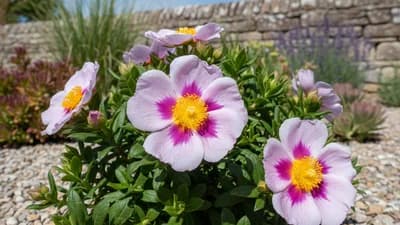
- Plant hardy Mediterranean subjects (Lavandula, Santolina, Cistus) in September–October for spring establishment — autumn-planted drought-tolerant plants develop stronger root systems than spring-planted equivalents
- Clean and seal terracotta pots before the first hard frost — unsealed terracotta absorbs water and can crack; check pots described as "frost-proof" carry a guarantee before leaving outdoors
- Clear dead summer annuals and tender plants that will not survive winter — leave structural seedheads of Verbascum, Verbena bonariensis, and Phlomis standing
- Reduce watering of containerised plants drastically — Mediterranean plants in pots are more susceptible to root rot in overwatered autumn conditions than from cold
Winter
- Check drainage around Mediterranean plants after heavy rain — standing water at any time from November to March is more damaging than cold; adjust gravel mulch to direct water away from crowns
- Protect borderline-hardy plants with two layers of horticultural fleece during spells below -8°C — Cistus and Phlomis in particular benefit from protection in severe winters; remove during mild spells to prevent overheating
- Bring olive tree containers to a cool, bright frost-free location when temperatures forecast below -5°C for more than two nights consecutively
- Do not prune Mediterranean plants in winter — all pruning on dormant Mediterranean shrubs is done in April; winter pruning removes the frost protection provided by the dead foliage
- Plan additions to the garden in January and order from specialist suppliers (Derry Watkins Special Plants, Hardy Exotics Nursery, Edulis) for spring delivery
- Review the design in winter from the house — the structural skeleton of the Mediterranean garden is visible now; note where planting or hardscaping needs reinforcement